
Canine Lymphoma in Dogs: Earliest Signs with Treatment that Pet Owners Should Know
Learn the earliest signs of canine lymphoma in dogs, including enlarged lymph nodes, skin problems, diagnosis, and treatment options for pet owners.


Canine lymphoma in dogs is one of the most commonly diagnosed cancers in dogs, yet many pet owners fail to recognize its early warning signs. Early detection can significantly improve a dog’s quality of life and treatment success. Understanding the symptoms, causes, and available treatment options can help dog owners make informed decisions and act quickly when it matters most.
This guide explains canine lymphoma in dogs, its earliest symptoms, treatment options, and when to consult a veterinarian; using reliable, vet-backed information every dog owner should know.
What Is Canine Lymphoma in Dogs?
Canine lymphoma is a cancer that affects the lymphatic system, which is a vital part of a dog’s immune system. The disease causes abnormal growth of lymphocytes (white blood cells), leading to enlarged lymph nodes and impaired immune function.
Lymphoma in dogs is similar to non-Hodgkin’s lymphoma in humans and can affect dogs of any age, breed, or size; though middle-aged and older dogs are more commonly diagnosed.
Earliest Warning Signs of Canine Lymphoma
One of the most dangerous aspects of canine lymphoma is how subtle the early symptoms can be. Many signs are mistaken for minor infections or common skin problems in dogs.
1. Enlarged Lymph Nodes (Most Common Early Sign)
The earliest and most noticeable symptom is enlarged lymph nodes, especially:
- Under the jaw
- In front of the shoulders
- Behind the knees
- In the groin area
These nodes feel firm but usually painless, which is why many dogs don’t show discomfort initially.
2. Unexplained Weight Loss
Sudden or gradual weight loss without a change in diet or exercise is a major warning sign of canine lymphoma.
3. Lethargy and Reduced Energy
Dogs may become unusually tired, less playful, or reluctant to go on walks; often mistaken for aging.
4. Loss of Appetite
A decrease in appetite or picky eating can indicate internal lymphoma affecting organs such as the liver or spleen.
5. Common Skin Problems in Dogs That May Signal Lymphoma
Certain forms of lymphoma affect the skin (cutaneous lymphoma), leading to:
Persistent rashes
- Hair loss
- Scaly or crusty skin
- Non-healing sores
- Red or darkened patches
If skin problems in dogs don’t improve with standard treatments, further testing may be necessary.
6. Gastrointestinal Issues
Vomiting, diarrhea, or bloating may occur when lymphoma affects the digestive tract.
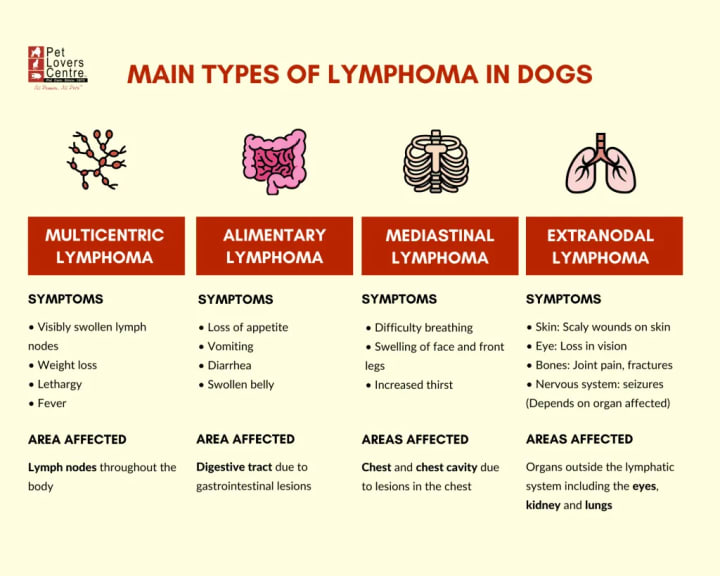
Types of Canine Lymphoma
Understanding the type helps determine treatment options:
- Multicentric lymphoma (most common): Enlarged lymph nodes throughout the body
- Alimentary lymphoma: Affects the gastrointestinal tract
- Mediastinal lymphoma: Affects the chest and respiratory system
- Extranodal lymphoma: Appears as skin lesions or chronic skin problems
Also Know: Cognitive Dysfunction in Older Cats: How to Recognize and Manage
How Is Canine Lymphoma Diagnosed?
Veterinarians may use:
- Physical examination of lymph nodes
- Fine-needle aspiration or biopsy
- Blood tests
- Ultrasound or X-rays
- Immunophenotyping for accurate classification
Early diagnosis significantly improves treatment outcomes.
Treatment Options for Canine Lymphoma
While canine lymphoma is not usually curable, it is highly treatable, and many dogs achieve remission.
1. Chemotherapy (Most Effective)
Chemotherapy is the gold standard treatment and is generally well-tolerated by dogs. Most dogs experience minimal side effects compared to humans.
Average remission time: 6 - 12 months (sometimes longer)
2. Steroid Therapy (Prednisone)
Steroids may temporarily reduce symptoms but are not a long-term solution and can interfere with chemotherapy if used early.
3. Targeted Therapy and Immunotherapy (Emerging Options)
New treatments such as monoclonal antibodies and personalized medicine are becoming more available in advanced veterinary care.
4. Palliative Care
For dogs unable to undergo aggressive treatment, supportive care can help manage pain and maintain quality of life.
Can Canine Lymphoma Be Prevented?
There is no guaranteed way to prevent lymphoma, but pet owners can reduce risks by:
- Avoiding unnecessary exposure to pesticides and chemicals
- Feeding a balanced, high-quality diet
- Scheduling regular veterinary checkups
- Monitoring for early warning signs of cancer in dogs

When Should You See a Veterinarian?
Contact your vet immediately if you notice:
- Enlarged lymph nodes lasting more than a few days
- Persistent skin problems in dogs that don’t heal
- Sudden weight loss or lethargy
- Appetite changes or digestive issues
Early veterinary intervention can make a significant difference.
Final Thoughts
Canine lymphoma in dogs is a serious but manageable condition when detected early. Being aware of the earliest warning signs, especially enlarged lymph nodes and unexplained skin issues, empowers pet owners to act quickly and seek timely veterinary care.
With proper treatment and monitoring, many dogs with lymphoma can continue to live happy, comfortable lives.
About the Creator
David Carter
I am a native of the USA who has lived on four continents. I cover topics such as animal health, nutrition, breeds, behaviors, preventative treatments, and more. I work as a content writer at PetCareClub for your pet's well-being.
Keep reading
More stories from David Carter and writers in Petlife and other communities.
How to Manage Flea Allergy Dermatitis in Pets During this Winter Season
Many pet owners assume fleas disappear in winter but for pets suffering from Flea Allergy Dermatitis (FAD), colder weather does not always bring relief. Indoor heating, mild winters, and hidden flea life cycles can allow infestations to persist year-round. Understanding how to manage flea allergy dermatitis in pets during winter is essential to maintaining your pet’s comfort, skin health, and overall well-being.
By David Carter2 months ago in Petlife
THE CREW
Walking you out of the shelter, leash in hand, felt like stepping back into the light. You walked beside me with an innate grace, your strong frame a comforting presence. The world outside, so recently a muted landscape of sorrow, suddenly held a promise of shared adventures. The happiness in your eyes wasn't just for me; it was a reflection of the joy you were ready to bring into my life, a silent vow to fill the void, not by replacing Keva, but by forging a new path, a new story, together.
By Vera Myles5 days ago in Petlife
Understanding the Causes, Symptoms, and Treatment Options for Colitis in Dogs
Colitis in dogs is a common gastrointestinal condition that affects the large intestine (colon). When the colon becomes inflamed, it can lead to uncomfortable and sometimes alarming symptoms for your pet.
By Dominion Valley Animal Hospital2 days ago in Petlife
Staying sane in the insane world.
”It is no measure of health to be well adjusted to a profoundly sick society.” Jiddu Krishnamurti This quote has been one of my favourites since the moment I first laid my eyes on it. To me, it cuts right through the fog of the illusion of normality that permeates our lives. And since I am someone who has never felt (well) adjusted to this society, Krishnamurti’s words gifted me with the realisation that there isn’t anything inherently wrong with me.
By Eva Smittea day ago in Humans




Comments
There are no comments for this story
Be the first to respond and start the conversation.