
Canine Impulse Control During Mealtime: Understanding the Science Behind It
How to Stop Your Dog's Barking When Preparing Their Food

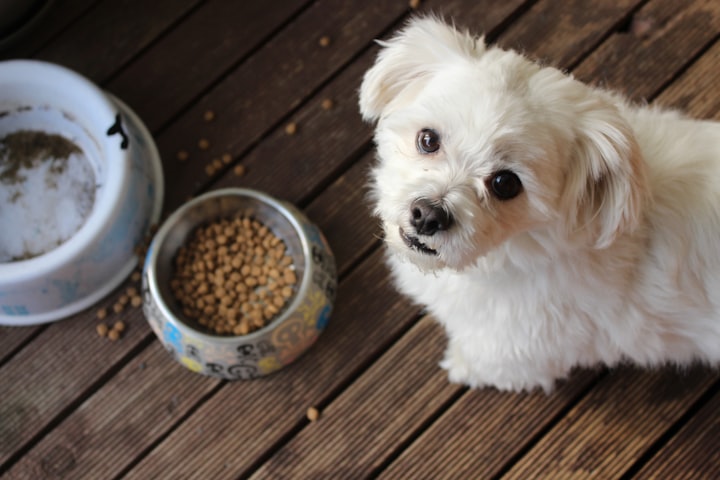
Dogs are amazing animals that have been man's best friend for centuries. They are loyal and loving companions who add a lot of value to our lives. However, there are times when their behavior can be challenging, especially when they start barking uncontrollably during meal preparation.
Most dog owners have experienced this scenario at some point, with some dogs patiently waiting for their meal while others bark, whine, and pace in anticipation. The question that most dog owners ask is, what causes this behavior, and how can it be addressed?
The answer lies in the dog's level of impulse control, which is directly linked to the amount of training they have received. When you train a dog, you teach them to control their impulses better, just like you would teach them to heel and control their impulse to pull ahead. Similarly, you can train your dog to wait for their meal calmly and sit before being provided with it.
Impulse control is particularly challenging for puppies and juvenile dogs who struggle to master the art of delayed gratification. Just like human children, it takes time for them to learn how to master this skill. However, dog owners can take a proactive approach by teaching them some basics about the concept that "patience pays." Although this may require a lot of time and dedication, the long-term benefits are worth it.
One of the biggest challenges that dog owners face when their dog barks uncontrollably during meal preparation is the fear of reinforcing the barking behavior. If the dog continues to bark, does it mean that feeding them will reinforce the barking-for-food behavior? If so, how can it be stopped? The reality is that not feeding the dog is not an option, and if the barking is allowed to continue, it will only get worse.
Reinforcement is a powerful tool that strengthens and repeats behaviors that are rewarded. If dogs get to rehearse their barking behavior during mealtime, the barking behavior becomes habit-forming and establishes itself. This is why scolding or punishing the dog for barking is not an effective solution, as it is confusing and intimidating for the dog.
Research has shown that aversive training methods tend to backfire and create side effects and negative reactions such as escape, avoidance, aggression, and counter-control. Therefore, it is better to inform the dog that barking doesn't expedite meal preparation but rather makes the owner work in slow-motion or even stop. This approach can help extinguish the barking behavior and teach the dog the virtue of "patience pays."
To stop a dog from barking uncontrollably during meal preparation, the owner needs to dedicate time to train the dog. The training involves preparing the dog's meal and having them watch as the owner does it. The moment the dog barks, the owner should stop in their tracks and freeze like a statue, waiting for about eight to ten seconds of quiet.
Once the dog has been quiet for those seconds, the owner can resume preparing the food. The owner should repeat this process, freezing when the dog barks, resuming and expediting when the dog is quiet for at least eight to ten seconds. If the barking persists, the owner can walk away from the food station and come back only when the dog is quiet for at least ten seconds.
The reason for waiting for those eight to ten seconds of quiet before resuming meal preparation is to prevent a behavior chain from forming. Dogs are adept at associating one event with another, forming what is known as "behavior chains." If the owner resumes meal preparation immediately after the dog stops barking, there is a risk that the dog will learn to bark repeatedly and be quiet for the owner to resume meal preparation. By adding a delay between the barking and restarting meal preparation, the dog is taught that barking does not get them food.
Why Do Dogs Struggle With Impulse Control?
Dogs, especially puppies and juvenile dogs, are notorious for struggling to control their impulses. This is also true with human children. It takes some time to learn how to master the art of delayed gratification. With juvenile dogs, this is a work in progress, but we can take a proactive approach by teaching them some basics about the concept that "patience pays."
If your dog barks when you prepare their meal, you may have to dedicate some time to the purpose of inculcating this concept, but it's certainly worth it in the long run!
Interestingly, the same principle applies to humans. We often expect instant gratification, but taking time to train our dogs pays off in the long run; you get a nice return on your investment!
The Problem With Allowing Dogs to Rehearse Barking Behavior
One thought that may come to mind is: "If meal preparation continues while my dog barks, does it mean we'll end up rewarding the barking-for-food behavior? If so, how can we put a stop to it? We still need to feed our dogs food; not feeding them isn't an option!"
This observation is correct. Feeding our dogs after a barking spell will reinforce the barking behavior, causing them to bark more in the future.
This is the power of reinforcement. Behaviors that are reinforced strengthen and repeat themselves.
Think about it, sometimes you become impatient at a restaurant because the service is slow and thus complain to your server, only to have your meal served immediately after. Now in the future, you are likely to complain again since it has helped expedite the service in the past.
Here's the thing: The more dogs get to rehearse their barking behaviors during mealtime, the more the barking behavior establishes and becomes habit-forming.
About the Creator
Keep reading
More stories from DIYStudent and writers in Petlife and other communities.
How to train a dog?
Training a dog can be a rewarding experience for both you and your furry friend. However, it requires patience, consistency, and a good understanding of dog behavior. In this article, we will discuss some tips and techniques for effectively training your dog.
By DIYStudent3 years ago in Petlife
A Dart at Dusk
Seconds ago, the sullen sun set on the two of us… my exuberant furry companion and me. A fresh breeze embraces us, delivering welcome relief from the day’s oppressive heat. His typical stumbling and staggering along — apace with a sloth — has turned into trip-trapping, high-stepping, almost skipping along.
By Angie the Archivist 📚🪶a day ago in Petlife
Why Cats Sit on Laptops, Books, and Phones — Science Explains
Have you ever been typing an important email, scrolling through your favorite social media feed, or trying to focus on a book — only to feel a soft, furry weight suddenly on your laptop or phone? You look down, and there it is: your cat, staring at you like you’re the intruder in their space. It’s frustrating, it’s adorable, and it’s downright mysterious. Why do cats insist on sitting on laptops, phones, and even the latest bestseller you were reading?
By Ahmed aldeabella7 days ago in Petlife


Comments
There are no comments for this story
Be the first to respond and start the conversation.