
Canadian Lynx: Exploring the Enigmatic Beauty of North America's Wild Cats
Wild Cats' Stories
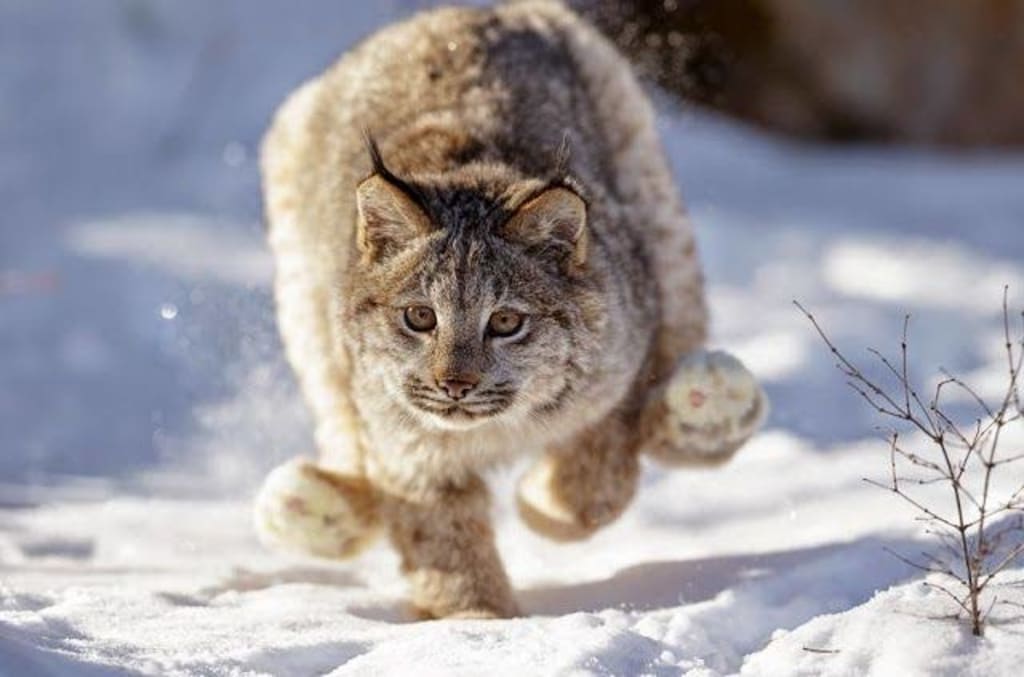
The vast and diverse landscapes of North America are home to a captivating array of wildlife, each species uniquely adapted to its environment. Among these fascinating creatures, the Canadian lynx stands out as an enigmatic beauty, symbolizing the wild spirit of the northern wilderness. In this blog, we embark on a journey to delve into the world of these elusive felines, unraveling their mystique, behavior, habitat, and significance in the delicate balance of the ecosystem.
LOOK: Discover 10 Gorgeous Cat Breeds That'll Steal Your Heart
The Elusive Enigma:
With its distinctive tufted ears, snowshoe-like paws, and a thick coat that changes with the seasons, the Canadian lynx possesses an aura of mystery that has captured the imagination of naturalists and wildlife enthusiasts alike. Known for its solitary and secretive nature, the lynx's ability to remain hidden within its surroundings has earned it the reputation of being a true wilderness phantom.
Adaptations for Survival:
Surviving in the unforgiving landscapes of the northern wilderness demands specialized adaptations. The lynx's fur, which changes from a reddish-brown in summer to a dense grayish-brown in winter, allows it to blend seamlessly with its surroundings, aiding in both camouflage and thermoregulation. Its large paws, equipped with fur-covered soles, act like built-in snowshoes, enabling it to traverse deep snow with ease, a critical advantage when hunting its primary prey - the snowshoe hare.

Life in the Northern Realm:
The relationship between the Canadian lynx and its primary prey, the snowshoe hare, is one of nature's most fascinating predator-prey dynamics. As the hare population fluctuates in cycles, the lynx population follows suit, showcasing the intricate dance of nature's checks and balances. Exploring the lynx's hunting techniques, territorial behaviors, and reproductive strategies provides a glimpse into the intricate web of life in the northern realm.
Conservation and Future:
As human activities continue to encroach upon pristine wilderness areas, the Canadian lynx faces new challenges to its survival. Climate change, habitat loss, and fragmented landscapes threaten to disrupt the delicate balance that has sustained these magnificent cats for centuries. Understanding their ecological role and advocating for responsible conservation efforts is essential to ensuring the long-term survival of the Canadian lynx and the ecosystems it inhabits.
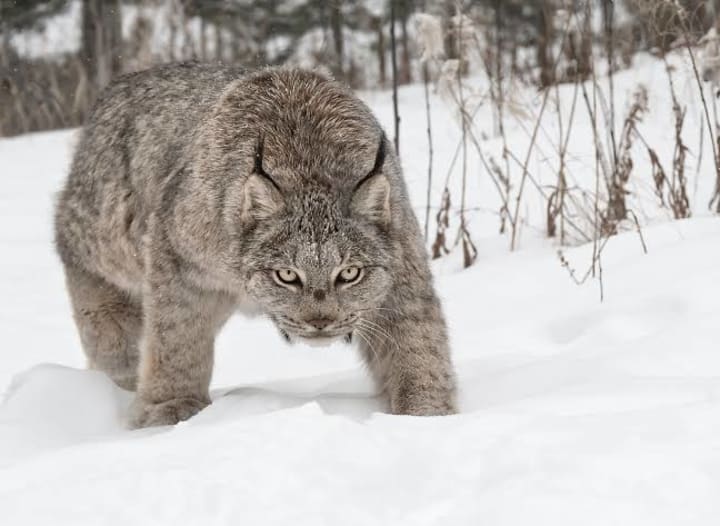
The Canadian lynx, with its enigmatic allure and remarkable adaptations, serves as a captivating emblem of the untamed beauty found in North America's wilderness. Through exploring the mysteries of its behavior, the significance of its presence in the ecosystem, and the challenges it faces in the modern world, we gain a deeper appreciation for the delicate threads that connect all living things. As we continue to admire the wild spirit of the Canadian lynx, let us also remember our role in preserving the magnificent tapestry of life that it represents.
1. **Elusive Wildcat:** The Canadian Lynx (Lynx canadensis) is a secretive and elusive wildcat native to North America. It's well adapted to living in dense forests and is often challenging to spot in the wild.
2. **Distinct Appearance:** These medium-sized cats are known for their distinctive appearance, featuring tufted ears, a short bobbed tail with a black tip, and thick, dense fur that provides insulation in cold climates.
3. **Territorial Range:** Canadian Lynx are primarily found in the boreal forests of North America, with their range extending from Alaska through Canada to parts of the northern United States, such as Maine and Montana.
4. **Snowshoe Hare Specialists:** Lynx are specialized predators of snowshoe hares. Their populations often correlate with fluctuations in snowshoe hare populations, as they are a primary food source.
5. **Silent Stalkers:** Lynx are known for their stealth and agility. They silently stalk their prey through the forest, using their keen sense of hearing and excellent eyesight.
6. **Large Paws:** Lynx have disproportionately large, snowshoe-like paws that help them navigate deep snow. These large paws distribute their weight, allowing them to move efficiently in snowy terrain.
7. **Nocturnal Hunters:** These cats are primarily nocturnal, hunting under the cover of darkness. They feed on a diet of small mammals, particularly snowshoe hares, but may also prey on rodents, birds, and sometimes larger mammals like deer.
8. **Reproduction:** Lynx typically breed in the late winter, with females giving birth to a litter of one to four kittens. The kittens are born blind and are dependent on their mother for several months.
9. **Conservation Status:** Canadian Lynx are considered a species of "Least Concern" by the International Union for Conservation of Nature (IUCN). However, their populations can be sensitive to habitat loss and changes in prey availability.
10. **Mythological Significance:** In some Indigenous cultures, the lynx holds spiritual significance and is featured in stories and legends as a symbol of patience, wisdom, and adaptability.
Canadian Lynx are truly remarkable creatures of the northern wilderness, perfectly adapted to their environment and playing a vital role in the ecosystem as apex predators.
About the Creator
James Miller
🐾 Exploring the Feline World, One Purr at a Time! Welcome to CatCraze Chronicles, your ultimate source for all things feline and fabulous. Join us on a whisker s we dive into the enchanting universe of our furry friends - cats
Keep reading
More stories from James Miller and writers in Petlife and other communities.
A Musical Odyssey: Remembering Jimmy Buffett
the world of music, few artists embody the spirit of escapism and a laid-back lifestyle quite like Jimmy Buffett. With his breezy melodies, island-inspired tunes, and an unwavering love for life's simple pleasures, Buffett has creatLook: Fans Remember Jimmy Buffett, ‘a Poet of Paradise’ed a musical legacy that spans generations. Join us as we embark on a journey to remember the man who turned "Margaritaville" into a state of mind and explore the enduring charm of Jimmy Buffett's music and persona.
By James Miller2 years ago in Men
A Dart at Dusk
Seconds ago, the sullen sun set on the two of us… my exuberant furry companion and me. A fresh breeze embraces us, delivering welcome relief from the day’s oppressive heat. His typical stumbling and staggering along — apace with a sloth — has turned into trip-trapping, high-stepping, almost skipping along.
By Angie the Archivist 📚🪶6 days ago in Petlife
Speechless Mohsen
The Loyal Dog: A Lesson in Love and Faithfulness Aamir had grown up living with his grandparents, and his daily routine revolved around family, school, and their small shop. After finishing his classes at school and the local madrasa, he would hurry to his grandfather’s small general store, carrying lunch from home for his uncle. His uncle, a teacher at a nearby school, would take over the shop in the afternoon, while his grandfather went home to rest. By night, his uncle would manage the shop alone
By Sudais Zakwan5 days ago in Petlife



Comments
There are no comments for this story
Be the first to respond and start the conversation.