
A Comprehensive Guide to Understanding Seizures in Dogs
Recognize Seizures in Dogs


When your dog has a seizure, it can be a confusing and concerning time. During a seizure episode, your dog may lose control of their body, shake violently, or appear restless. It may leave you with a flood of questions and concerns for your dog. However, you can make a significant difference in your dog’s life by acquiring the right knowledge about seizures, and we’re here to help you do just that.
In this blog, we’ll delve into the causes of seizures, common symptoms, and what you can do to help them. Having this knowledge will enable you to be of better help to your dog in their moment of distress.
Let’s get started!
What is seizures in Dogs?
Seizures, also known as epilepsy, convulsion, or fit, are temporary, sudden surges of uncontrollable electric activity within the brain. It affects how the dog looks and behaves, and these episodes can range from mild twitching or shivering to severe convulsions or loss of consciousness.
Seizures typically last for a few seconds or a few minutes, and the dog may exhibit signs such as drooling, vocalization, paddling of legs, or even temporary paralysis. It can be triggered by a number of reasons, ranging from underlying health conditions to environmental factors.
Causes of Seizures in Dogs
Typically, seizures in dogs are a form of symptom rather than a condition, which may vary. Here are the common causes of seizures:
• Infection or inflammation of the brain
• Liver disease
• Kidney disease
• Low or high blood sugar
• Low blood oxygen levels
• Anemia
• Head injury
• Heatstroke
• Brain cancer
• Eating some toxic substances, such as chocolate
Symptoms of Seizures in Dogs
Now that you are aware of the common causes of seizures, let’s go over the symptoms to help you recognize a seizure in your dog and promptly help them.
Pre-ictal phase (aura)
This is the initial period, commonly called the aura, in which you will notice an altered behavior in your dog. They may exhibit the following symptoms:
• Appear restless
• Attempt to hide
• Start whining or shaking
• Stare vacantly into space
Ictal phase
This phase is the seizure itself, which can last from a few seconds to several minutes. A typical seizure episode can range from minor changes in mental awareness to a complete loss of consciousness. You may notice the following symptoms:
• Falling over and becoming still
• Shaking and licking lips
• Biting at the air
• Paddling their limbs
• Urinating, defecating, or salivating
Postictal phase
This follows immediately after the episode has ended. The postictal phase can last from a few minutes to a few hours, and you will notice:
• Confusion
• Lethargy
• Disorientation
• Restlessness
• Unsteady pacing
• Temporary blindness
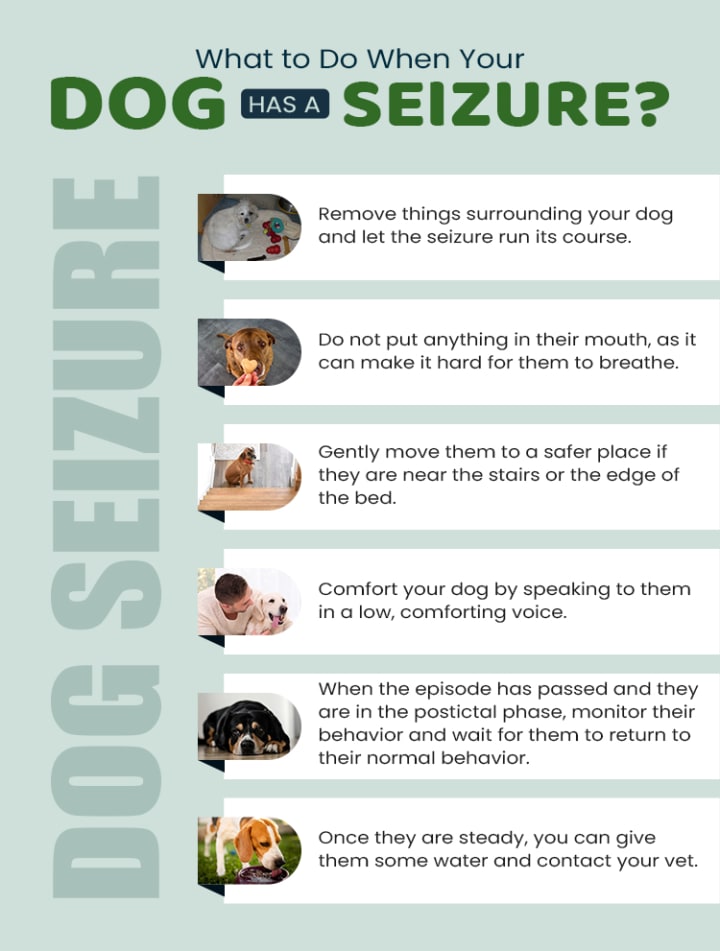
What to Do When Your Dog Has a Seizure?
The first and probably the hardest thing to do is to not panic. Most seizures don’t last longer than a few minutes and don’t have any long-term issues. However, to comfort your dog during a seizure episode, you can:
Key Takeaways
Seizures may appear dramatic or violent, but they’re not painful, and your dog will return to normal after a few minutes. However, if it lasts longer than five minutes or your dog experiences multiple seizures together (seizure cluster), promptly take them to the vet.
Long seizures increase the chances of a rise in temperature and create breathing problems. Your vet will take prompt measures to stop the seizures and work on the underlying issues causing the seizures.
FAQs
What can trigger a seizure in dogs?
There are varied reasons that can trigger seizures in dogs, such as liver disease, head injury, toxins, heat exhaustion, etc.
Are seizures common in every dog?
All dogs can have seizures, but certain dog species are at a higher risk of developing severe issues. Some of these species include Beagles, Schnauzers, Basset Hounds, Poodles, Saint Bernards, and Golden Retrievers.
What can be mistaken for a seizure in dogs?
Behaviors like shivering, twitching and kicking can all be mistaken for a seizure.
Can seizures be cured?
Seizures in dogs are most commonly controlled instead of cured. The attempt is to understand the causes and manage the symptoms. In most cases, when the underlying issues are addressed, it diminishes the recurrence of seizures.
About the Creator
Freddie Mattinson
A pet enthusiast and blogger passionate about making your and your pets' lives easier and more enjoyable. I have been blogging on the side to share my expertise on pet-related matters.
Keep reading
More stories from Freddie Mattinson and writers in Petlife and other communities.
Bailey's Journey: Overcoming Arthritis
Bailey, a 10-year-old Labrador, was known in the neighborhood as the “gentle giant.” His large frame and soft, chocolate-colored coat made him stand out. Every morning, Bailey’s owner, Mr. Thompson, would take him for a long walk around the lake. It had been their routine since Bailey was just a pup, and both man and dog cherished these peaceful moments.
By Freddie Mattinsonabout a year ago in Petlife
Cat Sanctuary vs. Cat Shelter
Many people assume a cat sanctuary and a cat shelter are the same—but they serve very different purposes. Understanding the difference between a cat sanctuary and a cat shelter can help you decide where to adopt, volunteer, or donate.
By Special Little Whiskers Kitten Sanctuary4 days ago in Petlife
Off the Leash: The Essential Gear Guide for Adventurous Dogs
There’s something wildly freeing about unclipping the leash and letting your dog move the way they were built to. If you’re hiking in areas that truly allow off-lead exploration, your gear list shifts. No harness. No leash dragging through dust. Instead, it’s about smart, lightweight essentials that keep your dog safe, hydrated, and easy to manage when adventure gets messy. Long walks off lead are less about control and more about preparation.
By Shabbir Ahmadabout 15 hours ago in Petlife
Top tipple tricks
Been thinking a lot about drinking, lately. Not least because of a recent episode of over-indulgence and the inevitable after effects. Some readers may recall the earlier articles I wrote about beating the booze. Here I set out an experiment in techniques for cutting down on my alcohol intake. The experiment was successful, the techniques worked, and I have armed myself with an arsenal of weapons in the war against the demon drink. I have yet to fire the first round however. It's all a question of timing (perhaps procrastination).
By Raymond G. Taylorabout 21 hours ago in Psyche




Comments
There are no comments for this story
Be the first to respond and start the conversation.