
Cat Sanctuary vs. Cat Shelter
What’s the Difference?

Many people assume a cat sanctuary and a cat shelter are the same—but they serve very different purposes. Understanding the difference between a cat sanctuary and a cat shelter can help you decide where to adopt, volunteer, or donate.
What Is a Cat Shelter?
A cat shelter is a temporary facility designed to house, rehabilitate, and rehome stray and surrendered cats. Most shelters focus on adoption, medical care, sterilization, and maintaining intake capacity so they can serve as many animals as possible.
What Is a Cat Sanctuary?
A cat sanctuary is a permanent refuge for cats who aren't suitable for traditional adoption. These often include senior cats, feral cats, disabled cats, or those with chronic medical or behavioral issues. Sanctuaries provide lifelong care for these cats.
Complementary Roles
Let's start with the similarities. Both shelters and sanctuaries provide care and refuge for stray and surrendered cats. This is vital because without these systems in place, adoption pipelines would also disappear.
So, while it's tempting to ask which model is better, the truth is animal welfare depends on both to save lives. However, their structure, mission, and long‑term goals differ significantly. Understanding these differences helps you decide where your support can make the greatest impact.
Here are the two main differences between a cat sanctuary and a cat shelter: housing and intake.
Adoption vs. Permanent Residence
This is the biggest difference between cat shelters and sanctuaries because it has a direct impact on the cats' outcome and future care.
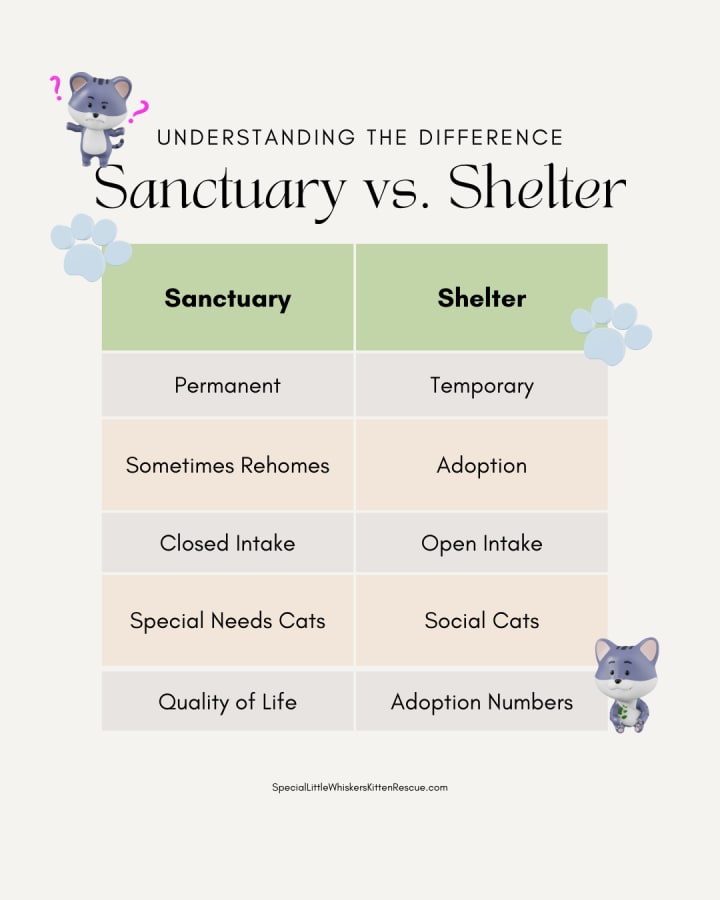
Traditional cat shelters are designed as a temporary refuge. Their goal is to rehabilitate and rehome over 3.2 million cats that enter shelters each year (ASPCA, 2019). As such, they focus on medical treatment (including vaccinations), sterilization services, adoption placement, and maintaining intake capacity. While this is an important service, it makes movement (e.g., adoption, foster placements, return to owner) essential. Success is measured when adoptions occur and space becomes available for another animal.
Cats who may do well in cat shelters are those who are young and who've always been indoors. However, if the cats have behavioral issues, minor health conditions, or have been outdoors or abused, they're more likely to thrive in a cat sanctuary like ours.
When cats enter a cat sanctuary, they enter a permanent refuge. Typically, this is for cats who will never be suitable for traditional adoption because they're unsocialized (a.k.a., feral), seniors, or disabled. In our case, we focus on cats with minor chronic illnesses or significant behavioral challenges. These are the cats that traditional systems deem “unadoptable.”
Intake and Capacity
Sanctuaries measure their success by the quality of life they're able to provide for their cats. They do not breed, sell, trade, or adopt out animals. The focus shifts from placement to permanence. This is why sanctuaries operate with limited or closed intake. Each cat represents a lifelong commitment (10-20 years).
On the other hand, many municipal shelters operate as open‑intake facilities. This means that they must accept all cats regardless of age, health, or temperament. Therefore, they face an ongoing challenge regarding capacity and resource allocation.
While a shelter may assist thousands of cats annually, a cat sanctuary houses dozens of cats for decades.
Why Cat Sanctuaries Are Needed
Cat sanctuaries and shelters complement one another by filling in gaps in each other's systems where needed. Without sanctuaries like Special Little Whiskers, shelters are overwhelmed by long-term cases. Special Little Whiskers provides cats with chronic illnesses and behavioral challenges the safety net they need.
About the Creator
Special Little Whiskers Kitten Sanctuary
SpecialLittleWhiskersKittenRescue.com is a cage‑free, no‑kill cat sanctuary offering lifelong refuge and a loving, donation‑funded home for cats in need.
Writing by Chaplain Bre Hoffman, Buddhist dharma teacher at TheRisingPhoenix.site
Keep reading
More stories from Special Little Whiskers Kitten Sanctuary and writers in Petlife and other communities.
Welcome to Our World!
Before diving in, let me take a moment to introduce myself. I'm Bre, co-owner of Special Little Whiskers Kitten Rescue – a cat sanctuary located in Decatur, Illinois. Now wait, don't start admiring me and my life until you really understand what it's like to live in a cat sanctuary. Sure, there's a beautiful magic between the humans and the cats here, but the house is never truly neat and orderly since there's always someone up to some crazy antics somewhere. Welcome to my life, where every day is an adventure, whether you're walking on two legs or four paws.
By Special Little Whiskers Kitten Sanctuary17 days ago in Petlife
Unofficial Challenge: Black History Celebration
Forward: February 28th, 10:53 PM, EST... The final hour of Black History Month, 2026. Hello fellow writers. I've had this challenge waiting in my drafts for most of the month. But I held off on publishing it, until now.
By Sam Spinelli5 days ago in Writers



Comments
There are no comments for this story
Be the first to respond and start the conversation.