
7 Dog Gestures and Their Meanings
Decode Your Dog’s Body Language to Strengthen Your Bond


Dogs are known for their loyalty and companionship, but they communicate in ways that go beyond barks and whines. Understanding your dog’s body language is key to building a stronger relationship with your furry friend. Here, we’ll explore seven common dog gestures and their meanings to help you better interpret your pet’s needs and emotions.
1. The Wagging Tail
Perhaps the most well-known dog gesture, a wagging tail can indicate several emotions. Contrary to popular belief, a wagging tail doesn’t always mean happiness. Here’s a breakdown:
High and rapid wagging: Excitement or eagerness. Your dog might be thrilled to see you or anticipating a treat.
Low and slow wagging: A sign of uncertainty or nervousness.
Stiff wagging: This could indicate aggression or dominance. Be cautious if the tail is rigid while wagging.
By observing the position and speed of your dog’s tail movements, you can gauge their emotional state more accurately.
2. Raised Hackles
When the fur along your dog’s spine stands up, it’s called raised hackles. This gesture often signals heightened emotions such as fear, excitement, or aggression. Think of it as your dog’s way of being on high alert.
Context matters: If your dog’s hackles rise during play, it could simply indicate excitement. However, if they’re growling or exhibiting other signs of distress, it’s likely a warning sign.
3. The Play Bow
The play bow is when a dog lowers their front legs while keeping their rear end in the air. This is a universal gesture signaling a desire to play.
Friendly invitation: Your dog is likely trying to initiate playtime with you or another dog. It’s a sign of happiness and friendliness.
Breaks tension: In some cases, dogs use the play bow to diffuse potentially tense situations with other dogs.
4. Yawning
While yawning might seem like a sign of sleepiness, it can also indicate stress or discomfort in dogs.
Stress indicator: If your dog yawns in a new environment or around unfamiliar people, they might be feeling anxious.
Mirror behavior: Dogs sometimes yawn when their owners do. This could be a sign of empathy or bonding.
Pay attention to the context to distinguish between a tired yawn and a stress-related one.
5. Licking Lips
Dogs often lick their lips to communicate discomfort, submission, or anticipation.
Discomfort or anxiety: If your dog licks their lips frequently in a stressful situation, they may be feeling uneasy.
Anticipation: If food or treats are involved, lip licking is likely a sign of eagerness.
Observing this subtle gesture can help you address your dog’s needs more effectively.
6. Exposing Their Belly
When a dog rolls over to expose their belly, it’s often interpreted as a request for belly rubs. However, this gesture has deeper meanings.
Submission: Exposing the belly is a sign of trust and submission. Your dog is showing vulnerability and acknowledging you as the leader.
Playful behavior: In some cases, rolling over is an invitation to play.
Responding appropriately to this gesture can reinforce your bond with your dog.
7. Pawing at You
When your dog paws at you, they’re likely trying to communicate something specific.
Seeking attention: Your dog might be asking for pets, playtime, or simply your presence.
Comforting gesture: Dogs often paw at their owners when they sense sadness or distress, offering comfort.
Understanding this gesture requires paying attention to your dog’s overall behavior and the situation.
Strengthening Your Connection
Interpreting your dog’s gestures is not just about understanding their needs—it’s about deepening the bond you share. Here are some tips:
Observe patterns: Spend time noticing how your dog reacts in various situations. This helps you learn their unique body language.
Respond appropriately: Acknowledge your dog’s gestures and provide reassurance, play, or discipline as needed.
Positive reinforcement: Reward your dog’s good behavior to encourage clear communication.
By being attentive to these gestures, you’ll not only improve your understanding of your dog but also create a happier and healthier relationship with them. Dogs are always “talking” through their body language—all you need to do is listen.
About the Creator
Keep reading
More stories from INFO INSIDER and writers in Petlife and other communities.
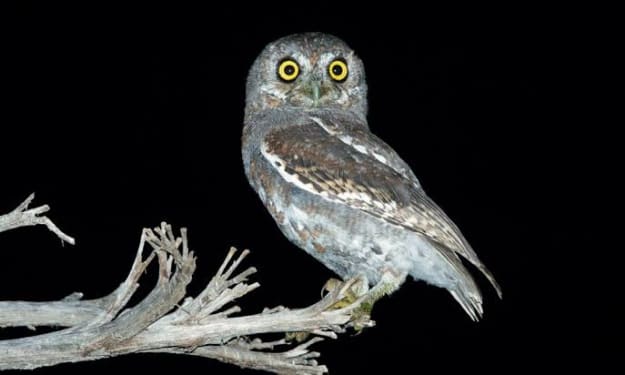
Elf Owl: The Tiniest Owl in the World
When we think of owls, we often imagine large, majestic birds with wide wingspans and piercing eyes. However, the world of owls is diverse, and some species are much smaller than expected. The elf owl (Micrathene whitneyi) holds the title of the smallest owl in the world, standing at just 5 to 6 inches (13 to 15 cm) tall and weighing about 1.4 ounces (40 grams)—roughly the size of a sparrow. Despite its small stature, this little raptor is a skilled predator and plays a vital role in its ecosystem.
By INFO INSIDER 12 months ago in Petlife
A Dart at Dusk
Seconds ago, the sullen sun set on the two of us… my exuberant furry companion and me. A fresh breeze embraces us, delivering welcome relief from the day’s oppressive heat. His typical stumbling and staggering along — apace with a sloth — has turned into trip-trapping, high-stepping, almost skipping along.
By Angie the Archivist 📚🪶a day ago in Petlife
Wild Card Weekend Recap: What Happens Now?
I think I figured out why I love Wild Card Weekend so much. It's because it's the first playoff anything of the calendar year. The NFL season starts in the fall, and once upon a time, the champion was crowned either on or slightly before New Year's. The evolution of the NFL schedule has resulted in the playoffs starting just into the New Year, and currently, the final week of the season falls on the first weekend of the New Year, with Wild Card Weekend coming a week after that. So yes, chronologically, the NFL's Wild Card Weekend serves as the first playoff anything of the calendar year.
By Clyde E. Dawkins2 days ago in Unbalanced



Comments
There are no comments for this story
Be the first to respond and start the conversation.