
5 facts about cats you probably didn’t know
Domestic and big cats

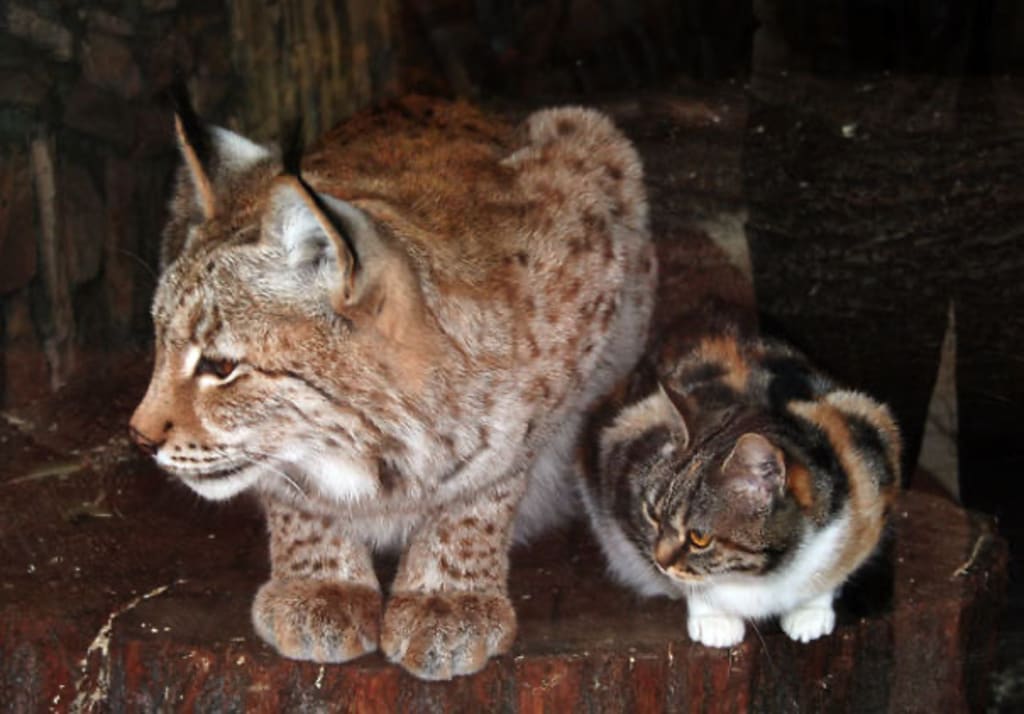
Whether you’re a cat owner or just curious about the feline world, here are 5 facts that prove there is more to them than they let on.
1) Cats have whiskers on their ankles

Cats are famous for their whiskers, even though they are not the only ones, but did you know they also have whiskers on their ankles? They use these for stealth, hunting and special awareness. If, for example they pounce and their prey is underneath them, the whiskers can pick up even the tiniest of movements. When running, jumping or climbing these whiskers can provide them with extra information they’re paws couldn’t provide about distances. Just like their tails help with balance, the carpel whiskers can give sensory feedback, especially in tight spaces or low light levels about body position. Each whisker on their body is connected to a nerve ending that sends the information straight to the brain.
2) Cats are obligate carnivores

There are 12 essential amino acids that all animals need. Most of these, the body can produce itself, however one that cats cannot produce, so it has to be provided in their diet. This is Taurine, it is found in meat products and in other animal products but only in small amounts, not a significant source. Whether it comes in the form of a gazelle or in a tin, all cat food contains taurine which is why you don’t come across vegetarian cat food as you would in the dog food industry.
3) Cats rarely “meow” to each other

Cats don’t talk to each other like they talk to us. When they’re kittens they will meow for their mother when they want something or to find her. It is very similar to when they meow at humans, whenever they want something, whether it’s food or attention they will call you. They even have their own “vocabulary” of sounds. Next time your cat is meowing at you, see if you can differentiate between the calls.
4) Cats are double coated

Most cats have a double layer of fur. There’s a short undercoat which is soft and dense, keeping them warm in cold weather and a topcoat or the guard hairs which are longer and coarser that protects them from water and dirt. The thicker coated cats like Siberians and Maine Coons will, like dogs, shed heavily in spring to avoid overheating as the weather gets warmer this is called “blowing coat”. Even short haired cats have the two layers but it’s less obvious. Cats are very good at keeping themselves groomed, this is partly innate and partly learned from their mother, but brushing them can help reduce hairballs.
5) Only some big cats can roar

Big cats like lions and tigers that are in the Panthera genus have a flexible hyoid bone in their throat. This bone with the elastic vocal fold, makes them able to produce low, resonant roars. Domestic cats, along with cheetahs and snow leopards have rigid hyoid bone, which makes them unable to roar. Roaring is useful in lions in particular because it can help them communicate with their pride, or can scare off rival males without a physical fight.
From micro signals, in their hidden whiskers to roaring, cats are endlessly surprising. Whether they’re curled up next to you while you write, or prowling in the wild, they all show how fascinating they really are. 🐾 Follow me on Vocal for more animal facts and information 🐾
About the Creator
Animals by Sophie
Animal Management graduate, sharing fun facts, real knowledge and appreciation for everything furry, scaled and feathered.
Keep reading
More stories from Animals by Sophie and writers in Petlife and other communities.
30 Days in a Shelter
By day 3, the barking changes. The first 48 hours are chaos. Intake processing. New smells. Metallic doors slamming. By day 3, some dogs bark constantly. Others stop almost entirely. One paces the kennel line until the pads on his feet redden. Another stands motionless, eyes half-lidded, ignoring visitors.
By Dr. Mozelle Martin7 days ago in Petlife




Comments
There are no comments for this story
Be the first to respond and start the conversation.