
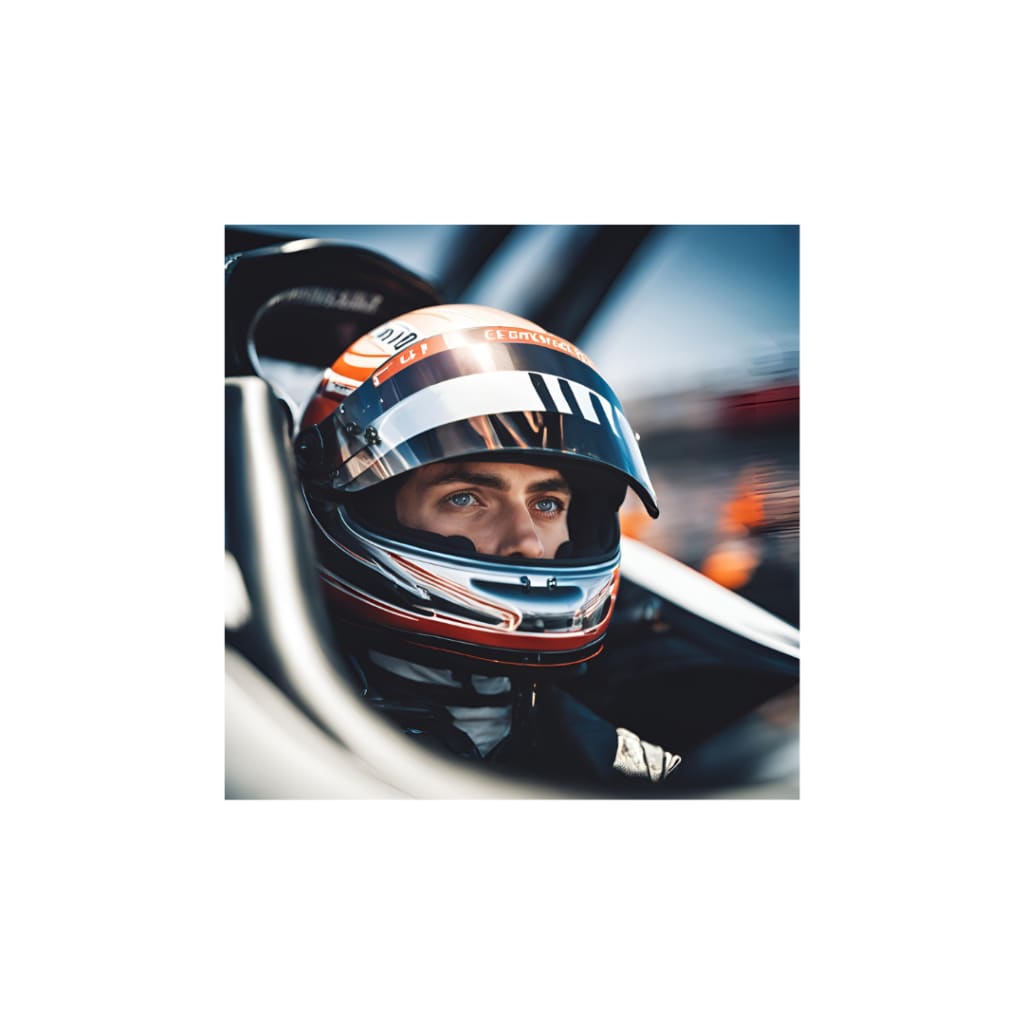
In a small village at the foot of Mount Etna, a boy named Luca dreamed of becoming a pilot. But not an airplane pilot—Luca wanted to race. He loved cars, the roar of engines, and the smell of gasoline. He spent hours watching Formula 1 races on TV, imagining himself behind the wheel of a racing car speeding at 300 kilometers per hour. Whenever the silence of his village was broken by the sound of a sports car engine, Luca would rush outside, trying to discover where that thrilling sound was coming from.
Luca didn’t come from a wealthy family. His father was a mechanic, and his mother worked as a seamstress. He often heard people say that becoming a professional driver was too big a dream for someone like him. “Racing is too expensive,” they told him. But Luca wasn’t the type to give up.
At 16, he started working part-time in his father’s garage to save some money. In the afternoons, he would dismantle old cars, learning everything he could about engines. He enrolled in a safe driving course, the first step toward his dream. Every time he watched a documentary about motorsports, he took notes in notebooks already full of sketches of circuits and racing cars.
One day, fate smiled upon him. A former rally driver, Mr. Riccardo, brought his car to Luca’s father’s garage. Hearing the boy talk passionately about racing and engines, Riccardo offered him a chance: “There’s a local race for young talents. Why don’t you give it a try? I’ll lend you a car, but you have to prove to me that you’re ready.” Those words became a mantra for Luca.
For weeks, Luca trained tirelessly. Riccardo took him to an abandoned track and taught him the basics: how to handle curves, brake at the right moment, and feel the car. Every mistake was a lesson, every improvement a small step toward his dream. Riccardo also stressed the importance of mental focus: “On the track, your mind has to be faster than the engine,” he told him.
The day of the race arrived. Luca, helmet on and hands trembling, got into an old rally car. When the light turned green, he forgot everything except the roar of the engine and the adrenaline coursing through his veins. He crossed the finish line in second place, but for him, it was a victory. He had proven to himself that he had the talent to race. After the race, many spectators approached him, impressed by his performance. One of them, a manager for a small racing team, offered him a chance to compete in a regional race.
After that race, Luca continued participating in local competitions, earning a reputation as a promising driver. With Riccardo’s help and thanks to his family’s sacrifices, he managed to enroll in a professional driving school. The days were long and grueling, filled with intense training and circuit studies, but Luca never gave up. Every circuit he faced was a new challenge, and every victory, no matter how small, brought him closer to his dream.
Finally, the day of his debut in a national competition arrived. Before he got into the car, Riccardo said to him, “Welcome to the clouds, kid.” It wasn’t a blue sky Luca was about to soar through but a scorching asphalt track full of twists and turns. Yet, for him, it was the same dream. That race was the most intense of his life: every turn, every straight was a test of his skill and determination. When he crossed the finish line in third place, the crowd erupted in applause. He had proven he could compete with the best.
Today, Luca races on tracks around the world, but he never forgets his roots. Every time he returns to his hometown, he stops by his father’s garage, parks his sports car, and watches the kids dreaming in front of a screen, remembering that he was once one of them. He often organizes events for young enthusiasts, giving them a chance to get closer to the world of racing. “Never stop dreaming,” he tells them. “The clouds can be made of asphalt.”
About the Creator
Keep reading
More stories from Cristian Leonardi and writers in Motivation and other communities.
The Path Beyond
Chapter 1: The Wind of Change Lila woke up to the sound of wind rustling through the trees. It was a morning like any other, yet for her, everything felt different. Since arriving in this small mountain town, nothing had been the same. Every breath she took seemed to bring a sense of freshness that she hadn’t felt in a long time, as if the clean air had the power to wash away the invisible scars she carried inside.
By Cristian Leonardiabout a year ago in History
Saving Big on Big Purchases Without Putting Yourself in Debt
Major expenses- such as buying a car, replacing a home appliance, getting a new laptop, paying for a wedding, or planning a dream vacation- often push people toward loans or credit cards. Borrowing can seem like the quickest way to get what you want, but it usually brings interest charges, ongoing stress, and long-term financial strain. Saving ahead of time may require more patience, but it puts you in control, reduces anxiety, and often saves you money in the long run. Below is a clear, practical guide to funding big purchases without relying on debt.
By Emma Ade2 days ago in Motivation


Comments
There are no comments for this story
Be the first to respond and start the conversation.