
When Fashion Giants Unite: How Prada’s Acquisition of Versace is Reshaping the Luxury Industry
About Prada acquiring Versace

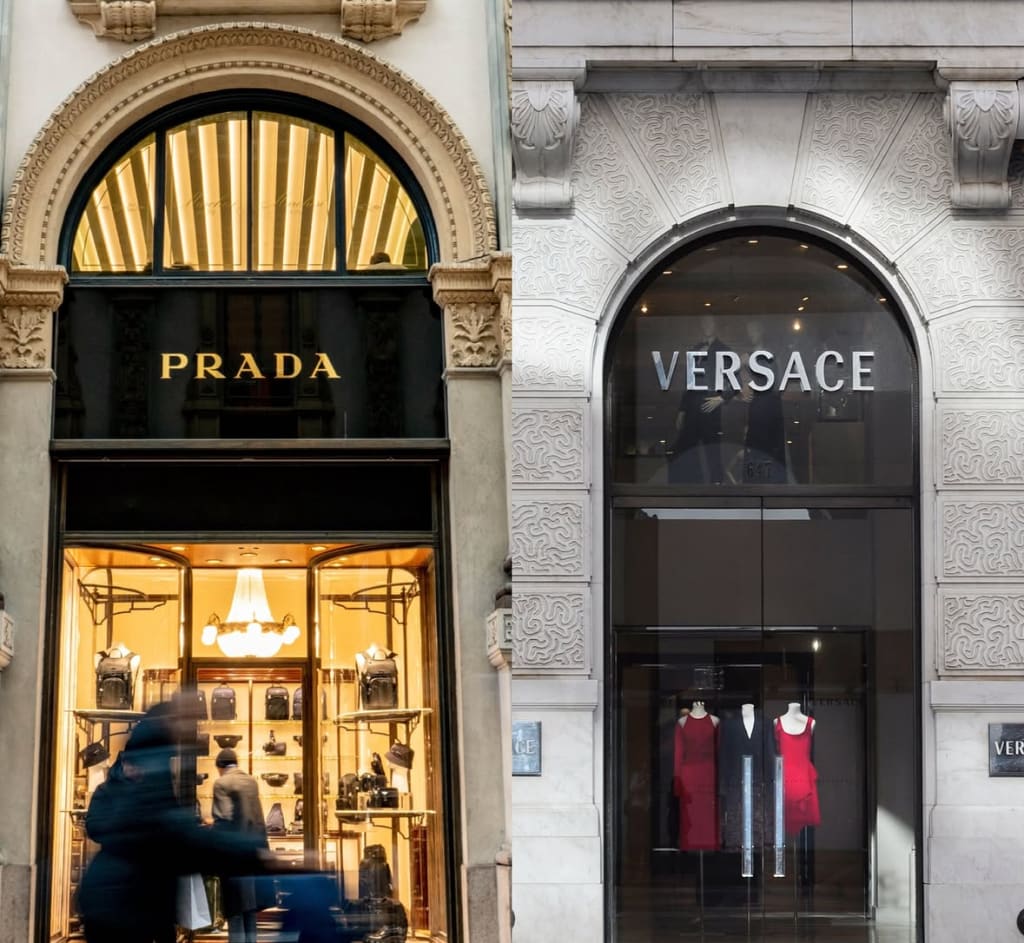
In the world of high fashion, where iconic brands dominate and the competition is fierce, the relationships between industry giants often determine the direction of the fashion market. The Prada Group and Versace have long been two of the most influential and celebrated names in luxury fashion. While these two brands have distinct identities, rich histories, and loyal followings, their paths recently crossed in a significant and strategic way. In a surprising move, Prada acquired Versace, creating a partnership that could reshape the fashion landscape. This essay explores the evolving relationship between Prada and Versace, examining the strategic motivations behind the acquisition and the potential benefits for both brands.
Prada and Versace are two of the most iconic names in luxury fashion. Founded in 1913 by Mario Prada, the Prada brand started as a high-end leather goods store in Milan, Italy. Over the years, it grew into a global powerhouse, known for its sleek, sophisticated designs and cutting-edge approach to luxury fashion. Today, Prada is synonymous with elegance and refinement, offering everything from high-end clothing and accessories to fragrances and eyewear.
In contrast, Versace was founded in 1978 by Gianni Versace, a designer known for his bold and extravagant style. Versace revolutionized the fashion world with vibrant, edgy designs that made a bold statement. His pieces were often adorned with bright colors, daring prints, and opulent fabrics. After Gianni’s tragic death in 1997, his sister Donatella Versace took over as creative director and has continued to steer the brand to prominence with her own distinctive vision. Versace is recognized for its unapologetic luxury, embracing excess and glamour in all its forms.
Though both brands share a deep Italian heritage and are known for their luxurious offerings, their aesthetics have long been distinct. Prada has cultivated a more minimalist, understated approach to luxury, while Versace leans toward flamboyant and bold designs. Despite these differences, both brands cater to high-end clientele and have established themselves as major players in the global fashion market.
The relationship between Prada and Versace has evolved over time, with the two brands occasionally crossing paths in terms of collaborations, shared events, and mutual admiration. However, the most significant change in their relationship came when Prada made the bold move to acquire Versace. The acquisition was seen as a strategic step that would not only strengthen Prada’s position in the market but also diversify its portfolio, enabling the company to tap into different consumer demographics.
Prada’s decision to acquire Versace was driven by several key factors. First, the move allowed Prada to broaden its market presence. While Prada is an established luxury brand, it has traditionally appealed to a more reserved, refined demographic. On the other hand, Versace appeals to a younger, more daring audience that craves opulence and boldness. By acquiring Versace, Prada could now reach a wider audience, expanding its consumer base to include younger buyers who might be more attracted to Versace’s bold designs and flashy aesthetic.
Another strategic reason behind the acquisition was to expand Prada’s brand portfolio. By adding Versace to its collection of luxury brands, Prada could diversify its offerings and gain a competitive edge over rival companies in the luxury fashion market. Versace’s strong presence in the high-end fashion segment, particularly in accessories, fragrances, and haute couture, complemented Prada’s existing range of products. Combining these two powerhouses would not only solidify Prada’s leadership in the luxury market but also provide cross-marketing opportunities between the two brands.
Versace’s brand equity also played a significant role in Prada’s decision to buy the company. Despite its fluctuations in recent years, Versace remains one of the most recognizable names in fashion. The brand carries immense value due to its history, iconic imagery, and cultural relevance. Prada’s acquisition of Versace allowed the company to gain access to this valuable intellectual property, which could be leveraged to create fresh, innovative designs and attract new customers.
In addition, Versace’s retail presence in key markets such as Asia and the United States was a significant factor in Prada’s acquisition. Versace has a strong retail network, with boutiques in some of the world’s most lucrative markets. By owning Versace, Prada could expand its footprint in these regions, tapping into the wealth and demand for luxury products in emerging markets like China and the Middle East. The move would also allow Prada to gain a stronger foothold in countries where it has been underrepresented.
Furthermore, Versace’s ability to innovate in the fashion space was another major draw for Prada. Under the leadership of Donatella Versace, the brand had successfully modernized its image while staying true to its roots. Versace has continually reinvigorated itself with new collections that resonate with younger generations. By acquiring Versace, Prada could inject a sense of vibrancy and forward-thinking energy into its existing lineup, allowing the brand to remain relevant and ahead of the curve in a competitive industry.
The acquisition also had financial benefits for Prada. In acquiring Versace, Prada secured a lucrative luxury brand with strong revenues from its various product lines, including fashion, fragrances, and accessories. This added value helped Prada increase its overall revenue stream and diversify its business model. Moreover, owning Versace provided Prada with opportunities for synergy and cost savings, particularly in areas such as manufacturing, distribution, and marketing.
Versace’s creative direction also played a significant role in the decision to acquire the company. Donatella Versace has built an empire based on her bold vision and distinctive aesthetic. Under her leadership, Versace remained relevant, constantly evolving and staying true to the brand’s original essence. By incorporating Donatella’s creative direction into Prada’s larger portfolio, Prada could ensure that it continued to produce innovative designs while maintaining its classic and refined identity.
After the acquisition, the relationship between Prada and Versace became one of collaboration and mutual benefit. While the two brands remained separate entities with their own creative visions and marketing strategies, there was a sense of shared purpose. Prada’s purchase of Versace allowed the two brands to work together in complementary ways, drawing on each other’s strengths to push boundaries and innovate in the luxury fashion space.
The luxury market is known for its volatility, and acquisitions like the one between Prada and Versace are often seen as ways to mitigate risks and strengthen a company’s position. By acquiring Versace, Prada secured a diversified portfolio that would allow it to withstand economic fluctuations and changing consumer preferences. This acquisition ensured that both brands could thrive in an increasingly competitive and fast-paced industry.
In conclusion, the acquisition of Versace by Prada was a strategic move driven by multiple factors, including the desire to expand market reach, diversify product offerings, and strengthen brand equity. By bringing Versace into the fold, Prada positioned itself as a dominant player in the global luxury market, with the ability to cater to different customer bases and stay relevant in an ever-changing industry. The collaboration between these two Italian giants signifies a new era for both brands, one marked by innovation, synergy, and continued success in the luxury fashion space
About the Creator
top talentmedia
We’re Stride Talent — a creator-founded agency helping influencers and UGC talent grow, partner with top brands, and turn content into careers. Built by creators, for creators. Let’s make moves. [@stridetalent | stride-social.com]
Keep reading
More stories from top talentmedia and writers in Motivation and other communities.
Keke Palmer: From Teen Star to Hollywood Powerhouse – The Journey of a Multi-Talented Icon
Keke Palmer, born Lauren Keyana Palmer on August 26, 1993, in Harvey, Illinois, has emerged as one of Hollywood’s most versatile and dynamic young stars. From her breakout role in the early 2000s to her current position as an actress, singer, producer, and activist, Palmer’s journey has been a testament to her hard work, determination, and unyielding passion for entertainment. Keke Palmer’s ability to transition across various facets of the entertainment industry, while staying authentic to herself, has solidified her as a force to be reckoned with in Hollywood.
By top talentmedia9 months ago in Interview
Lost but Trying
There are moments in life when everything feels lost—not dramatically, not loudly, but quietly. The kind of loss that settles into your bones and makes even simple breathing feel heavy. For Adam, that moment came on an ordinary Tuesday morning when he realized he had nowhere left to go. At twenty-seven, Adam wasn’t supposed to feel this tired. He wasn’t supposed to feel like life had already passed him by. Yet there he was, sitting on the edge of a narrow bed in a rented room, staring at peeling paint on the wall, wondering how everything had gone so wrong. He had once been full of plans. Big ones. Dreams of building something meaningful, of becoming someone his younger self would be proud of. But life, as it often does, had other ideas. Adam grew up in a small town where hope was common but opportunities were rare. His father worked long hours, his mother carried silent strength, and everyone believed that education would be the escape route. Adam believed it too. He studied hard, stayed out of trouble, and dreamed even harder. But dreams don’t always come with instructions. After college, rejection letters became his daily routine. Job interviews led to polite smiles and empty promises. “We’ll get back to you,” they said. Most never did. Slowly, confidence turned into doubt. Doubt turned into fear. And fear became a constant companion. When his father fell ill, Adam returned home. Medical bills piled up. Savings vanished. Dreams were postponed, then quietly buried. After his father’s death, the house felt too empty, too loud in its silence. Adam left again, this time not chasing dreams, but running from memories. The city welcomed him with indifference. He worked temporary jobs—delivery rider, warehouse helper, night security guard. None lasted long. Each job paid just enough to survive, never enough to grow. Failure followed him like a shadow, whispering reminders of what he hadn’t become. One night, after being laid off yet again, Adam walked aimlessly through the city streets. Neon lights blurred into streaks of color. Laughter spilled out of cafés he couldn’t afford. He felt invisible, like a background character in everyone else’s success story. That night, he considered giving up. Not dramatically. Not with a note or tears. Just a quiet decision to stop trying. To accept that some people were meant to struggle forever. He sat on a bench near a bus stop, head in his hands, when an old man sat beside him. “You look like someone who’s lost,” the man said gently. Adam didn’t reply. The old man continued, “Being lost isn’t the problem. Staying lost is.” Adam finally looked up. The man’s face was lined with age, but his eyes carried a calm confidence, the kind earned through survival. “I’ve tried,” Adam said bitterly. “Nothing works.” The man smiled softly. “Trying doesn’t guarantee success. It guarantees growth.” Adam wanted to argue, but something in the man’s voice stopped him. “I failed more times than I can count,” the old man added. “But each failure taught me something. Most people quit right before life changes.” The bus arrived. The old man stood up. “Don’t stop trying,” he said. “Even slow steps are steps forward.” Then he was gone. Adam sat there long after the bus left. For the first time in months, something shifted inside him—not hope exactly, but curiosity. What if stopping wasn’t the answer? What if trying, even imperfectly, still mattered? The next day, Adam did something small. He updated his resume. It wasn’t impressive, but it was honest. He applied for jobs he felt un for. He watched free online courses at night. He started writing—short thoughts, reflections, anything that helped him release the weight inside. Days turned into weeks. Rejections continued, but so did effort. One evening, Adam posted a short piece of writing online. He didn’t expect much. But comments came in. Strangers resonated with his words. Someone said, “This feels like my life.” Another wrote, “Thank you for putting my feelings into words.” For the first time, Adam felt seen. He kept writing. Months later, he landed a small content job—not glamorous, not permanent—but real. It paid little, but it paid consistently. More importantly, it gave him purpose. Life didn’t magically improve overnight. Problems didn’t disappear. Some days were still heavy. But Adam noticed something new: he no longer felt stuck. Trying had changed him. He learned that progress isn’t loud. It doesn’t announce itself. It arrives quietly, disguised as persistence. He learned that being lost doesn’t mean being broken. Sometimes it simply means you’re between versions of yourself. Years later, Adam would look back on that bench, that night, and that stranger. He would realize that the turning point wasn’t a job or success—it was a decision. A decision to keep trying, even when trying hurt. Because sometimes, the bravest thing you can do isn’t winning. It’s not quitting.
By Inayat khanabout 10 hours ago in Motivation


Comments
There are no comments for this story
Be the first to respond and start the conversation.