
Weight Training for Women
Debunking Myths and Reaping the Benefits
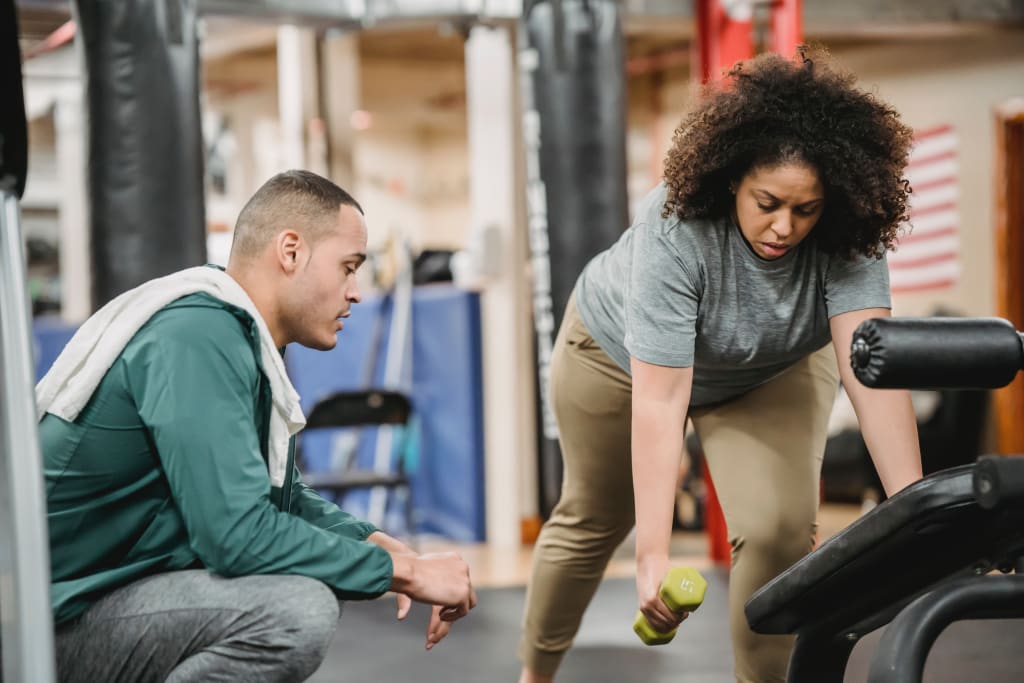
Thanks to pexels-julia-larson-6455903 for the image.
Weight training, also known as resistance training, is a form of exercise that involves the use of weights or other resistance to build muscle strength and endurance.
It is an essential component of any fitness routine, and women should not be intimidated by the idea of lifting Weight training offers numerous benefits for women, including improved bone density, increased muscle mass, and better overall health. In this article,
we will discuss the importance of weight training for women, dispel common misconceptions, and provide tips on how to get started with a weight training routine.
Explanation of the importance of weight training for women
Weight training is important for women for several reasons. One of the most significant benefits is that it can improve bone density, which is essential for preventing osteoporosis, a condition that causes bones to become brittle and weak. As women age, they naturally lose bone density, and weight-bear exercises like weight training can help slow down this process and even build new bone.
Weight training also helps women to increase muscle mass, which in turn can boost metabolism, leading to weight loss and maintenance. It also improves overall body composition, leading to a leaner and more toned physique. Additionally, weight training can also improve balance and coordination, leading to better overall physical function.
Another important benefit of weight training for women is that it can improve mental health and well-being. It can help to reduce stress, and, anxiety and depression, and improve self-esteem and body image.
Overall, weight training is an essential component of any fitness routine for women, providing numerous physical and mental health benefits that can help improve overall well-being and quality of life.
A brief overview of the benefits of weight training
Weight training, also known as resistance training, offers a wide range of benefits for overall health and fitness. Some of the main benefits include:
Increased muscle strength and endurance: Weight training helps to build muscle mass, which in turn improves overall strength and the ability to perform daily activities with ease.
Improved bone density: Weight-bearing exercises like weight training help to build and maintain strong bones, which is essential for preventing osteoporosis.
Weight loss and maintenance: Building muscle mass through weight training can increase metabolism, which can lead to weight loss and weight maintenance.
Better body composition: Weight training can help to improve overall body composition, leading to a leaner, more toned physique.
Improved cardiovascular health: Regular weight training can improve cardiovascular health by increasing heart strength and reducing the risk of heart disease.
Improved mental health: Weight training can help to reduce stress, anxiety, and depression, and improve self-esteem and body image.
Increased flexibility and balance: Weight training can also improve flexibility and balance, which can help to prevent injuries and improve overall physical function.
Overall, weight training is a powerful tool for improving overall health, fitness, and well-being, it is important to consult with a healthcare professional before starting a weight training program.
Common misconceptions about weight training for women
One of the common misconceptions about weight training for women is that it will cause them to bulk up and become overly muscular. This is a myth. Women naturally have less testosterone, which is a key hormone responsible for muscle growth, than men.
As a result, it is much more difficult for women to bulk up and develop large muscles through weight training. Additionally, most women do not have the same genetic potential for muscle growth as men do.
Another misconception is that weight training is not necessary for women, and that cardio exercise alone is sufficient for weight loss and overall fitness. However, weight training is essential for building muscle mass, improving bone density, and boosting metabolism, all of which are important for weight loss and overall health.
Another misconception is that weight training is only for young and fit people. But, weight training can be beneficial for people of all ages and fitness levels.
Women need to understand the true benefits of weight training and dispel these misconceptions about the great benefits of this effective form of exercise.
Discussion of the myth that women will bulk up from weight training
One of the most common misconceptions about weight training for women is that it will cause them to bulk up and become overly muscular. This is a myth. Women naturally have less testosterone, which is a key hormone responsible for muscle growth, than men.
As a result, it is much more difficult for women to bulk up and develop large muscles through weight training. Additionally, most women do not have the same genetic potential for muscle growth as men do.
The truth is that weight training, when done correctly and consistently, can lead to improved muscle tone and definition, not bulkiness. This is because weight training increases muscle density, which leads to a leaner and more toned appearance.
It's also important to note that muscle mass takes up less space than fat, therefore as you increase muscle mass, you may see a reduction in overall body fat and a leaner physique.
Moreover, women who are worried about bulking up should focus on using lighter weights and higher reps, as well as incorporating a variety of exercises that target different muscle groups. This will help to create a balanced and proportionate physique, rather than building bulk in certain areas.
Women need to understand that weight training is not only safe but also highly beneficial for overall health and fitness. And, with the right approach, women can achieve a lean and toned body without the fear of bulkiness.
Explanation of how weight training improves muscle tone and definition
Weight training improves muscle tone and definition by increasing muscle density. When muscles are exposed to the stress of weight training, they adapt by becoming stronger and denser. This increased muscle density leads to a leaner and more toned appearance.
When you lift weights, the muscle fibers are damaged by the resistance, this process is called muscle hypertrophy. As the muscle fibers repair themselves, they become thicker, stronger, and more defined. This process occurs as a result of increased blood flow to the muscle fibers, which brings more oxygen and nutrients to the area and helps to speed up the repair process.
To achieve muscle definition, it's important to focus on exercises that target specific muscle groups. For example, bicep curls work the biceps, triceps dips work the triceps, leg press works the legs, etc. This will help to create a balanced and proportionate physique, with more defined muscles.
Additionally, to improve muscle tone and definition, it is important to keep the intensity of the workout high by increasing the weights or reps over time. This helps to continue to challenge the muscles and promote further growth and definition.
It's also important to note that in addition to weight training, a balanced diet rich in protein is also essential for muscle recovery and growth. This will help ensure that the muscle fibers have the necessary nutrients to repair and grow, leading to improved muscle tone and definition.
How to get started with weight training
Getting started with weight training can be intimidating, but with the right approach, it can be easy to begin and achieve great results. Here are a few tips to help you get started:
Consult a healthcare professional: Before beginning any new exercise program, it is important to consult a healthcare professional to ensure that weight training is safe for you and to get personalized advice.
Set specific goals: It is important to have specific and achievable goals in mind when starting a weight training program. This will help you stay motivated and on track.
Learn proper form and technique: To avoid injury and get the most out of your workout, it is essential to learn proper form and technique for each exercise. Many gyms offer personal training sessions or group classes that can help you learn the basics.
Start with light weights: It's important to start with light weights and gradually increase the weight and resistance as your muscles adapt and become stronger.
Incorporate a variety of exercises: To target different muscle groups and achieve a balanced physique, it's important to incorporate a variety of exercises into your weight training program.
Be consistent: Consistency is key when it comes to weight training. It's important to stick to a regular workout schedule to see results.
Listen to your body: It's important to listen to your body and not push yourself too hard. If you feel pain or discomfort during an exercise, stop and seek advice from a healthcare professional.
By following these tips, you can get started with weight training and begin to reap the numerous benefits it has to offer for overall health and fitness
Overview of different types of weight training equipment and exercises
There are many different types of weight training equipment and exercises available to help you achieve your fitness goals. Here is an overview of some of the most popular options:
Free weights: Free weights, such as dumbbells and barbells, are a classic choice for weight training. They offer a wide range of exercises and allow for a great deal of flexibility and variation in your workout.
Weight machines: Weight machines, such as cable machines and leg press machines, provide support and guidance for proper form and technique. They are a great option for beginners or those recovering from an injury.
Resistance bands: Resistance bands are a versatile and portable option for weight training. They provide resistance through elastic tension and can be used for a wide range of exercises, including upper-body, lower-body, and full-body workouts.
Kettlebells: Kettlebells are a unique type of weight that can be used for a variety of exercises, including swings, deadlifts, and squats. They are particularly effective for building strength and power.
Bodyweight exercises: Bodyweight exercises, such as push-ups, pull-ups, and squats, use your body weight as resistance. They are a convenient and effective option for weight training and can be done anywhere with no equipment.
Cardio machines: Cardio machines, such as treadmills and ellipticals, can also be used for weight training by adding resistance bands or weight cuffs.
It's important to note that a variety of exercises and equipment will help to create a balanced and well-rounded workout routine. It is also important to consult with a personal trainer or fitness professional to determine the best exercises and equipment for your specific goals.
Tips for setting goals and creating a workout plan
Setting specific, measurable, and achievable goals is an essential step in creating a successful weight training plan. Here are some tips to help you set goals and create a workout plan:
Identify your specific goals: Whether your goal is to lose weight, build muscle, or improve overall fitness, it is important to have a clear and specific goal in mind.
Set measurable goals: Set goals that can be measured, such as a specific weight loss or muscle gain, or the ability to complete a certain number of reps or sets.
Make it achievable: Set realistic and achievable goals, and make sure that you have the time and resources necessary to achieve them.
Create a schedule: Create a schedule that includes the days and times that you will be weight training, as well as the exercises that you will be doing.
Incorporate a variety of exercises: Make sure to include a variety of exercises that target different muscle groups, to ensure that you are working all the muscles in your body.
Adjust the plan: As you progress, adjust your workout plan to continue challenging yourself and achieving your goals.
Keep track of your progress: Keep track of your progress by writing down your weights, reps, and sets, and make sure to review your progress regularly.
Get a coach or a trainer: A coach or a personal trainer can help you set realistic goals, create a personalized workout plan and provide guidance on proper form and technique.
By following these tips, you can set effective goals and create a workout plan that will help you achieve your desired results. Remember to be consistent, and patient and listen to your body, and you'll reach your goals in no time.
Information on proper form and technique to avoid injury
Proper form and technique are essential for weight training to avoid injury and get the most out of your workout. Here are a few tips to help you maintain proper form and technique:
Start with a lightweight: When starting a new exercise, it is important, to begin with, a light weight and gradually increase the weight as your muscles adapt and become stronger.
Use a full range of motion: Make sure to use a full range of motion for each exercise, moving through the full range of the movement to target all muscle fibers.
Maintain proper posture: Proper posture is important to keep your joints and spine in alignment, which will help to avoid injury and improve the effectiveness of the exercise.
Keep your core engaged: Engaging your core muscles will help to support your spine and improve your stability during weight training.
Focus on breathing: Proper breathing is essential to provide oxygen to your muscles and help you maintain proper form and technique.
Take your time: It's important to take your time and perform each exercise slowly and with control, rather than using momentum to lift the weight.
Seek guidance: If you're not sure about the proper form or technique of a specific exercise, seek guidance from a personal trainer or a coach.
Don't push yourself too hard: It's important to listen to your body and not push yourself too hard. If you feel pain or discomfort during an exercise, stop and seek advice from a healthcare professional.
By maintaining proper form and technique, you can reduce the risk of injury and get the most out of your weight training. Remember to focus on proper form and technique over weight and reps, and you'll be able to achieve your goals safely and effectively.
Incorporating weight training into an overall fitness routine
Incorporating weight training into an overall fitness routine is important for achieving optimal health and fitness. Weight training, when combined with cardio and flexibility exercises, can provide a well-rounded and balanced fitness routine.
Cardio exercises, such as running, cycling, or swimming, help to improve cardiovascular health, burn calories, and aid in weight loss. Adding cardio exercises to your routine can help you to achieve your weight loss or fitness goals.
Flexibility exercises, such as yoga or stretching, can help to improve flexibility, and balance and reduce the risk of injury. Incorporating stretching and yoga into your routine can help to improve your range of motion, and prevent muscle soreness after weight training.
It's important to note that it's not necessary to do cardio or flexibility exercises on the same days as your weight training. It's recommended to have at least one or two days a week of cardio, and stretching or yoga can be done on rest days.
Additionally, it's important to consider the frequency and duration of weight training. It is recommended to perform weight training 2-3 times a week for 30-45 minutes, with a day of rest in between to allow for muscle recovery.
Overall, by incorporating weight training into an overall fitness routine, you can achieve optimal health and fitness, improve your overall body composition, and prevent injury. Consult with a personal trainer or a coach for a personalized plan that fits your goals, schedule, and fitness level.
Discussion of the importance of a balanced fitness routine including cardio and flexibility
A balanced fitness routine that includes cardio, weight training, and flexibility exercises is important for achieving optimal health and fitness. Each type of exercise offers unique benefits and together they work in synergy to improve overall well-being.
Cardio exercises, such as running, cycling, or swimming, help to improve cardiovascular health, burn calories, and aid in weight loss. They are essential for maintaining a healthy heart and lungs, and can also help to improve endurance and stamina.
Weight training, also known as resistance training, helps to build muscle mass and strength, improve bone density, and boost metabolism. It's also important for overall body composition, leading to a leaner and more toned physique.
Flexibility exercises, such as yoga or stretching, are important for improving flexibility, and balance, and reducing the risk of injury. They help to improve the range of motion, prevent muscle soreness and stiffness, and also help to release tension in the muscles and mind.
It's important to note that a well-rounded fitness routine should be tailored to an individual's needs and goals. For example, if the goal is to improve cardiovascular health, more time should be dedicated to cardio exercises, while if the goal is to improve muscle mass, more time should be dedicated to weight training.
Incorporating all these types of exercises into a weekly routine, with appropriate rest days and recovery, can help to achieve a balanced and sustainable fitness routine, which will lead to better overall health and well-being.
Examples of how to incorporate weight training into a weekly workout schedule
Here are a few examples of how to incorporate weight training into a weekly workout schedule:
Three days a week: A common approach is to weight train three days a week, with one day dedicated to upper-body exercises, another day dedicated to lower-body exercises, and a third day to full-body exercises. For example Monday: Upper body (e.g. bench press, bicep curls, triceps extensions) Wednesday: Lower body (e.g. squats, lunges, deadlifts) Friday: Full-body (e.g. push-ups, pull-ups, leg press)
Full-body split: Another approach is to do full-body exercises every time you weight train. For example Monday: Full-body (e.g. deadlifts, bench press, rows) Wednesday: Full-body (e.g. squats, lunges, pull-ups) Friday: Full-body (e.g. push-ups, rows, leg press)
Body-part split: This approach splits the body into specific muscle groups, and trains them separately. For example Monday: Chest and triceps (e.g. bench press, triceps extensions) Tuesday: Back and biceps (e.g. rows, bicep curls) Wednesday
Conclusion
Recap of the benefits of weight training for women
In conclusion, weight training, also known as resistance training, is an important form of exercise for women that offers a wide range of benefits for overall health and fitness.
Weight training can help to increase muscle strength and endurance, improve bone density, aid in weight loss and maintenance, improve body composition, and improve cardiovascular health. Additionally, weight training can also help to reduce stress, anxiety, and depression, and improve self-esteem and body image.
It's important to dispel the myth that weight training will cause women to bulk up and become overly muscular, as women naturally have less testosterone than men, which is a key hormone responsible for muscle growth. Moreover, with the right approach, women can achieve a lean and toned body without the fear of bulkiness.
It's also important to incorporate weight training into an overall fitness routine that includes cardio and flexibility exercises, as each type of exercise offers unique benefits and together they work in synergy to improve overall well-being.
Encouragement for women to try weight training and see the positive effects it can have on their overall health and fitness.
Weight training can be a powerful tool for women to improve their overall health and fitness. It's a common misconception that weight training is only for men, but the truth is that it is beneficial for women of all ages and fitness levels.
We encourage women to give weight training a try and see the positive effects it can have on their overall health and fitness. With the right approach, weight training can help to increase muscle strength and endurance, improve bone density, aid in weight loss and maintenance, improve body composition, and improve cardiovascular health.
It's also important to remember that weight training is not only safe but also highly beneficial for overall health and fitness. And, with the right approach, women can achieve a lean and toned body without the fear of bulkiness.
So, don't be afraid to step out of your comfort zone and try weight training. The benefits are well worth it! Remember, you don't have to do it alone, consult with a personal trainer or a coach, they can help you set realistic goals, create a personalized workout plan and provide guidance on proper form and technique.
About the Creator
MURALI R
I am a professional in my field with a passion for sharing my knowledge and experiences through writing. My blogs offer valuable insights and information on various topics, providing readers tools and resources to achieve their goals.
Keep reading
More stories from MURALI R and writers in Motivation and other communities.
Exploring the Latest Trends in Wearable Fitness Technology
Wearable fitness technology, also known as wearable technology or fitness wearables, refers to electronic devices worn on the body to track and monitor various aspects of physical activity and fitness. These devices range from simple pedometers and heart rate monitors to more advanced smartwatches and fitness trackers.
By MURALI R3 years ago in Motivation
Consistency Without Intensity Is Just Showing Up to Lose Slowly
Showing up matters. Nobody's arguing against that. But there's a version of consistency that never actually gets anyone anywhere - the kind where you're present, you're regular, you're putting in the time, and somehow the results still aren't coming.
By Destiny S. Harris7 days ago in Motivation
In the Waiting Crowd, I Learned to Walk Away
A young man waits years for a confession of love, then chooses to leave. This Might Hurt, But It Will Save You Have you ever felt that gnawing pit in your stomach—the kind that keeps you awake at night—because you’re waiting for someone to notice your heart? Waiting, hoping, imagining a confession that might never come? You scroll through your day, pretending it’s fine, while deep down, a voice whispers: “Is this really worth it?”
By Ahmed aldeabella7 days ago in Motivation
Hottest in the Office
Dear Rafi, You’re very distracting to work around. For the first second I saw you the other day, I thought you were some type of executive. It took a moment to realize no, you were just the new guy, dressed up for the job he wants. Be still, my heart.
By Gabriel Shames4 days ago in Pride




Comments
There are no comments for this story
Be the first to respond and start the conversation.