
We Have a Dream
A Kind Word a Day Keeps the Loneliness at Bay


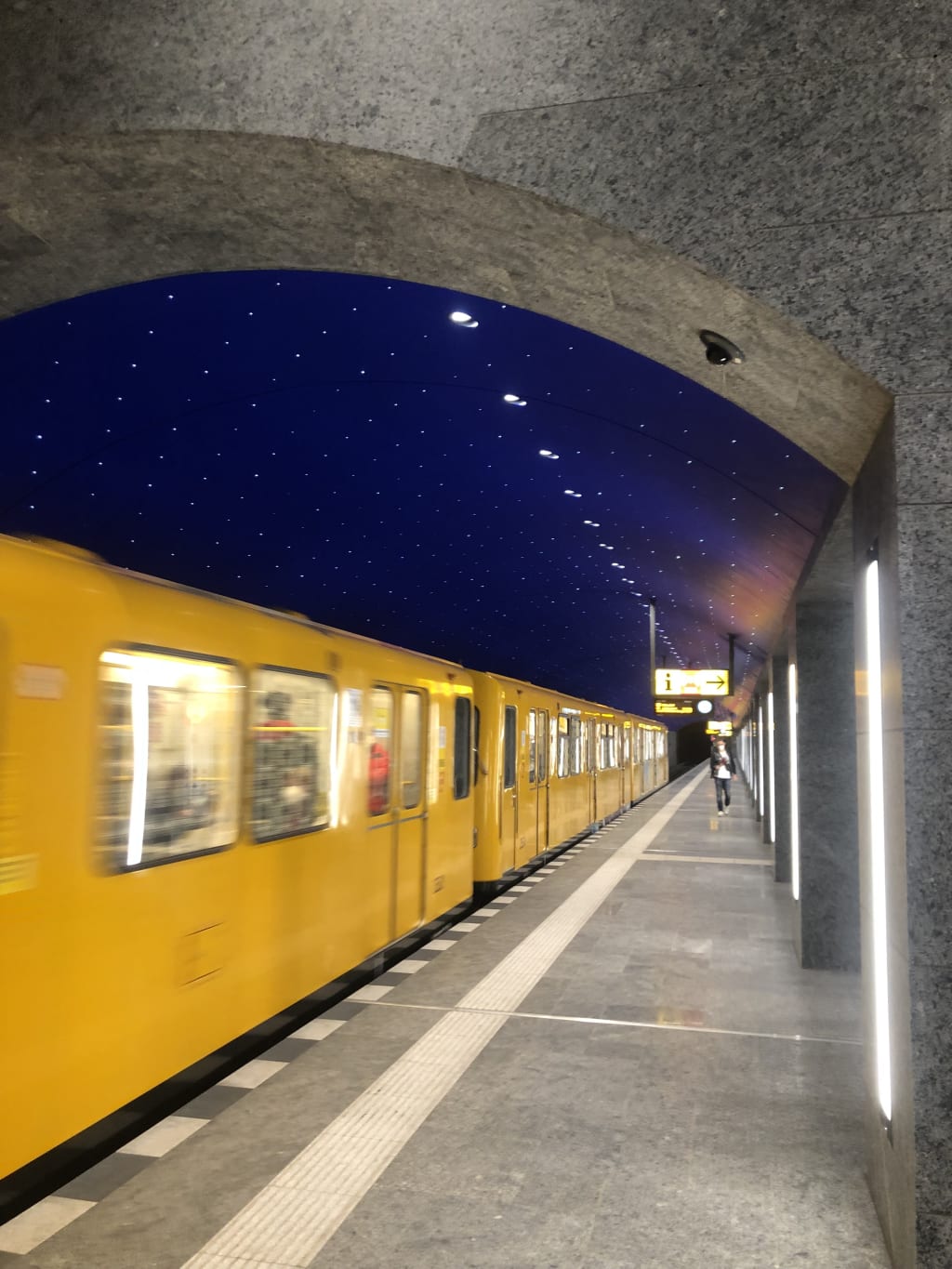
As soon as the subway doors slide open, the game is afoot. Civility is the only thing preventing commuters from stampeding inside the metro like wild beasts. Instead, they wait patiently, feigning a tolerance they do not feel, as the passengers inside vacate the train at what feels like an impossibly slow speed. From the corner of their eye, they size the competition and ask themselves critical questions, such as: "How close are the nearest available seats to me?" and "Will I have enough time to squeeze past the woman with the stroller and the guy with the bike before that group of teenagers takes over the entire compartment?" After all, securing a seat during a long commute can make the difference between a blissful ride and a stress inducing one.
Living in a spread-out city like as Berlin means spending long periods of time in the U-Bahn or S-Bahn, as the subways here are called. I, myself, am a strict no-contact, no-talking passenger. As soon as I get on that train the earphones come on, and for the duration of the journey I only interact with my playlist. While Berlin does offer a fair share of amusing, and sometimes, surreal experiences in the public transportation, the subway is also a place where harsh realities are often the order of the day. The first few times I sequestered myself with loud music, I did it to stave off an incoming headache. It had been a difficult day, and the crowd that night was especially rough. Then it became habit, and I before I knew it, I had become a true metropolitan, riding around the city in an insulated cocoon of indifference.
Germany´s capital is famous for its soul-crushing winter season: that time of the year when the sun is perpetually hidden behind the clouds and the bleakness of the atmosphere drives people into self-isolation and carbs.
It was early January, and I was standing with my friend on yet another platform, clutching my coat and burying my nose in my scarf, when we heard a voice on the loudspeakers announcing that the train would be delayed indefinitely due to “an emergency medical response on the tracks.”
“Oh my god, not this again! There have been so many of those lately!” I whined, aggravated by the extra time we would have to spend in the cold.
“Yeah, it´s most likely another jumper.” My friend replied, casually.
“What do you mean a jumper?”
“Suicides skyrocket this time of year. People get very lonely, and since guns are not so easy to come by in Germany, many choose to, you know…” She let her words float in the air like ghosts while gesturing towards the empty railway tracks. I felt queasy.
“You mean that many of the delays could have been caused by people jumping on the tracks?”
“Yep,” was her succinct retort.
The train did eventually come, but the image of what she had just described hunted me for days. What kind of despair could drive someone to the tracks? My master’s thesis in clinical psychology had dealt with the subjects of loneliness and depression. I had read numerous articles and cited many reputable sources to back up the claim that this sort of problem merited more attention from the healthcare services, which is why I felt at a loss to explain my initial astonishment. How was this tragedy happening all around me and I was utterly clueless?
During the weeks that followed that incident, I read about the prevalence of depression and suicide in Berlin and I stumbled upon the mental health crisis that plagues the city. I discovered that people struggling with psychological ailments had to wait months before receiving professional treatment; that is, if they were lucky enough to get an appointment. The official figures provided me with a rough sketch of the problem. But it was in the casual Facebook groups and online forums that I found the most meaningful information. In those places, people shared their struggles with loneliness and isolation more openly. As I examined the various discussion threads, I began to notice a pattern. No matter how the stories differed in context, many people seemed to report a substantial improvement in their mental health after a warm encounter with another person. A woman recounted how she had been suffering from acute hopelessness and lack of motivation for many weeks, when she unexpectedly met a young woman while sitting on a park bench and struck up a conversation with her about a common interest. After that short meeting, she returned home “with a warm feeling in my chest because that was the first time in months that I felt seen.”
It shouldn’t come as a surprise that social connection, or lack thereof, can lift up or break down a person. After all, we are social creatures. However, with so much else going on, it is easy to forget these essential truths and retreat within ourselves until we feel there is no way back.
I was moved by the stories I read in the online forums but wasn´t sure how to be an active part of the solution. I tend to take on impossible tasks, only to be crushed later on by the weight of their infeasibility. This time, I wanted to do something sustainable, something I could easily weave into the daily thread of my routine.
An idea came to me while riding the subway. I was feeling particularly exposed that day because my cell phone´s battery had died, which meant I was without my musical buffer. I was readjusting my face mask, feeling uneasy, when I saw the woman sitting across from me; she must have been in her fifties, short, stocky with gorgeous blue eyes that were accentuated by a striking blend of grey hue and silver eyeshadow.
“That eyeshadow really brings out your beautiful eyes!” I blabbed into the space of the subway compartment. The words left my mouth without any thought or intention. But in spite of the weird looks I got from some my fellow passengers (my voice tends to be louder than the average), I was amazed by the woman´s transformation. She smiled and thanked me, then left the train looking radiant.
I would like to repeat this experience. I would like to carve out spaces of time in a stranger´s day where they feel seen and appreciated. To achieve this goal, I will endeavour to say a kind word to a stranger every day. Some days, it may just be a small compliment or remark, others it may turn into a more consequential interaction. The objective is to recognize the significance of reaching out, if only for a few minutes, to acknowledge the value of another person´s existence. As the poet David Whyte says, "I was here, and you were here, and together we made a world."
About the Creator
Maria Heredia
Start writing...
Keep reading
More stories from writers in Motivation and other communities.
One Hard Thing
Stop me if you’ve heard this one before: You have the number, you know your schedule- you’ve even picked out the perfect day and time to make this appointment. Shoot, you’ve even picked out alternative days and times just in case their schedules can’t accommodate you!
By Taylor Rigsby5 days ago in Motivation



Comments
There are no comments for this story
Be the first to respond and start the conversation.