
Timely, seasonal agenda of the world now and the future.
Generational truth

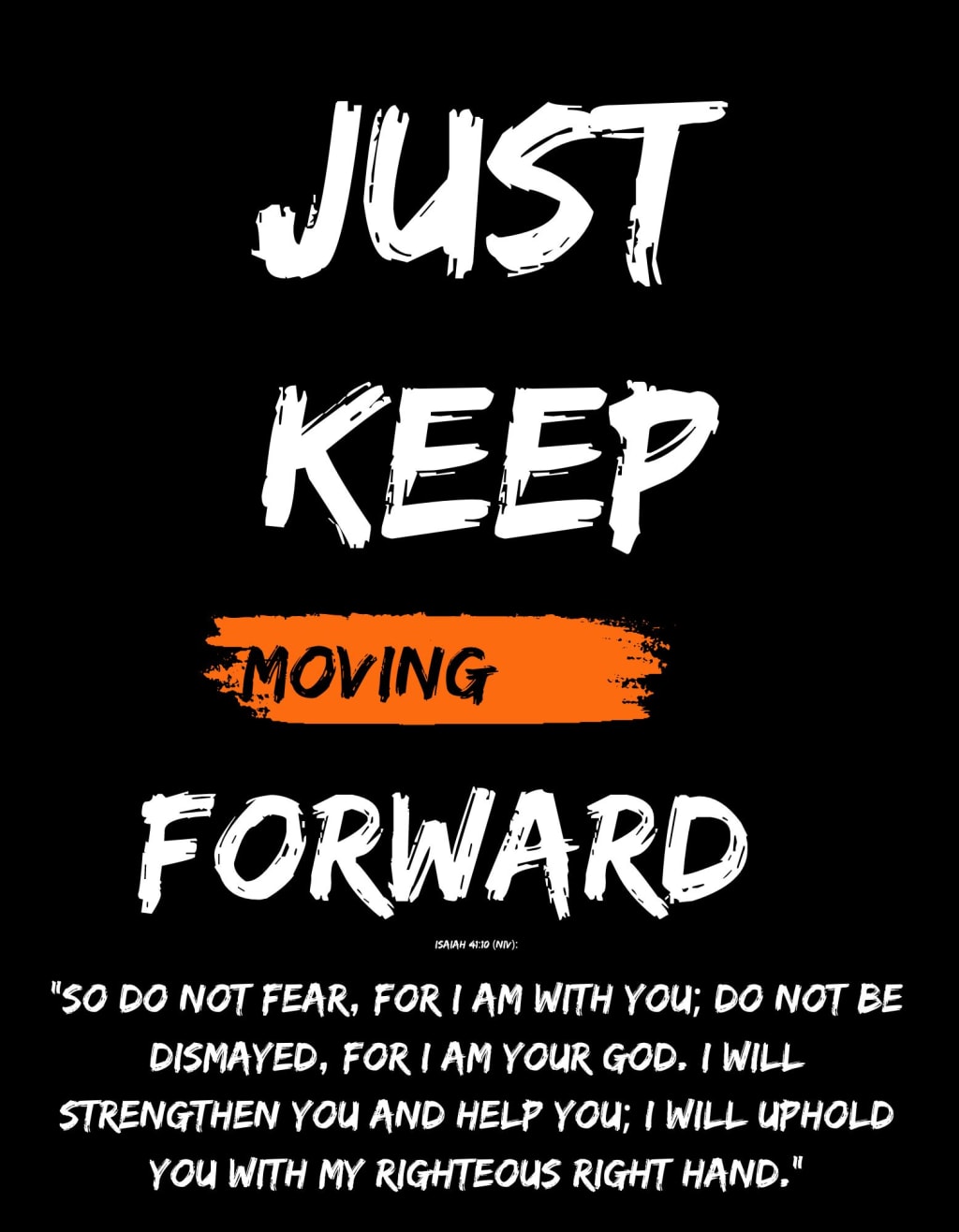
"Times and Seasons" is a phrase that often refers to the natural cycles and rhythms of the year, including the changes in weather, daylight, and temperature that occur as the Earth orbits the sun. Here's a brief overview of the seasons and their characteristics:
Spring
Months: March, April, May (in the Northern Hemisphere)
Characteristics:
Warming temperatures
Longer days
Blooming flowers and trees
Increased rainfall in many regions
Summer
Months: June, July, August (in the Northern Hemisphere)
Characteristics:
Warm to hot temperatures
Longest days of the year
Abundant sunshine
Outdoor activities and vacations
Autumn (Fall)
Months: September, October, November (in the Northern Hemisphere)
Characteristics:
Cooling temperatures
Shorter days
Leaves changing color and falling
Harvest season for many crops
Winter
Months: December, January, February (in the Northern Hemisphere)
Characteristics:
Cold temperatures
Shortest days of the year
Snow and ice in many regions
Indoor activities and holidays
Times of Day
In addition to the seasons, "times and seasons" can refer to the daily cycles, including:
Morning: Sunrise to noon
Afternoon: Noon to sunset
Evening: Sunset to night
Night: After sunset to sunrise
Cultural and Religious Significance
Many cultures and religions mark specific times and seasons with festivals, holidays, and rituals. For example:
Spring: Easter, Passover
Summer: Midsummer festivals, Independence Day in the U.S.
Autumn: Thanksgiving, Halloween, Diwali
Winter: Christmas, Hanukkah, New Year’s celebrations
Times and Seasons as stated in Ecclesiastes
In the Bible, the book of Ecclesiastes addresses the concept of "times and seasons" in a well-known passage found in Ecclesiastes 3:1-8. This passage poetically reflects on the various times and seasons of life, illustrating the idea that there is a proper time for everything. Here is the passage:
Ecclesiastes 3:1-8 (NIV)
A Time for Everything
There is a time for everything,
and a season for every activity under the heavens:
a time to be born and a time to die,
a time to plant and a time to uproot,
a time to kill and a time to heal,
a time to tear down and a time to build,
a time to weep and a time to laugh,
a time to mourn and a time to dance,
a time to scatter stones and a time to gather them,
a time to embrace and a time to refrain from embracing,
a time to search and a time to give up,
a time to keep and a time to throw away,
a time to tear and a time to mend,
a time to be silent and a time to speak,
a time to love and a time to hate,
a time for war and a time for peace.
Interpretation
This passage is often interpreted to mean that life is full of various experiences and activities, each appropriate in its own time. The contrasts presented (birth and death, planting and uprooting, weeping and laughing, etc.) suggest that life is a balance of opposites, and each has its place and purpose.
The overall message is one of accepting the ebb and flow of life, understanding that every event and activity has its rightful time and season. This passage is frequently cited for its wisdom in helping people navigate the complexities and changes of life.
Reflection in Everyday Life
People often turn to this passage during times of transition, reflection, and decision-making. It offers comfort and perspective, reminding individuals that their experiences are part of a larger, divinely ordained order. Whether facing joy or sorrow, action or rest, the wisdom of Ecclesiastes encourages embracing each moment and recognizing its place in the grand tapestry of life.
The Prophecies of Daniel
The prophecies of Daniel, found in the Old Testament book of Daniel, are some of the most detailed and complex prophetic writings in the Bible. These prophecies cover a wide range of historical and eschatological (end-times) events. The book of Daniel is traditionally divided into two main parts: the historical narratives (chapters 1-6) and the apocalyptic visions (chapters 7-12).
Key Prophecies in the Book of Daniel
Nebuchadnezzar’s Dream (Daniel 2)
Description: King Nebuchadnezzar dreams of a great statue made of various materials: gold, silver, bronze, iron, and clay.
Interpretation: Daniel interprets the dream as representing a sequence of empires:
Gold head: Babylonian Empire
Silver chest and arms: Medo-Persian Empire
Bronze belly and thighs: Greek Empire
Iron legs: Roman Empire
Iron and clay feet: A divided kingdom
Outcome: A stone, representing the kingdom of God, smashes the statue and establishes an everlasting kingdom.
The Four Beasts (Daniel 7)
Description: Daniel dreams of four great beasts emerging from the sea, each representing a different kingdom.
Lion with eagle's wings: Babylonian Empire
Bear with three ribs in its mouth: Medo-Persian Empire
Leopard with four wings and four heads: Greek Empire
Terrifying beast with iron teeth and ten horns: Roman Empire
Outcome: The "Ancient of Days" (God) judges the beasts, and the "Son of Man" (interpreted as the Messiah) is given dominion over an everlasting kingdom.
The Ram and the Goat (Daniel 8)
Description: Daniel has a vision of a ram with two horns and a goat with a prominent horn.
Ram: Represents the Medo-Persian Empire
Goat: Represents the Greek Empire, with the prominent horn symbolizing Alexander the Great.
The prominent horn is broken, and four smaller horns replace it, representing the division of Alexander’s empire among his generals.
Outcome: A small horn from one of the four grows exceedingly powerful, representing old & future conflict and desecration of the temple.
The Seventy Weeks (Daniel 9)
Description: Daniel prays for his people, and the angel Gabriel delivers a prophecy about seventy "weeks" (or sevens).
Interpretation: The seventy weeks are generally understood to represent seventy sets of seven years (490 years).
The prophecy is often divided into three periods:
Seven weeks (49 years): From the decree to rebuild Jerusalem to the completion of the work.
Sixty-two weeks (434 years): From the completion of the work to the coming of the "Anointed One" (Messiah).
One week (7 years): A period of intense activity, often interpreted as the final tribulation period.
Outcome: The prophecy includes the coming of the Messiah, the destruction of Jerusalem, and a final period of desolation and judgment.
The Kings of the North and South (Daniel 10-12)
Description: Daniel receives a detailed vision of conflicts between the "king of the north" and the "king of the south," representing various historical and future powers.
Interpretation: These chapters are often seen as a detailed account of the struggles between the Seleucid and Ptolemaic kingdoms, leading up to the rise of Antiochus IV Epiphanes.
Outcome: The prophecy culminates in a description of the end times, including a great tribulation, the resurrection of the dead, and the ultimate deliverance of God’s people.
Themes and Significance
God’s Sovereignty: The prophecies emphasize God’s control over history and empires.
Messianic Expectation: Many prophecies point to the coming of the Messiah and the establishment of God's eternal kingdom.
End Times: The book contains significant eschatological themes, describing the final judgment and the ultimate triumph of good over evil.
Scriptures: Meaning from generation to generation, everyone present in the world knowingly and unknowingly has a role to play according to the script written for each one from time to time.
About the Creator
Olufemi Afolabi
By RCI
Keep reading
More stories from Olufemi Afolabi and writers in Motivation and other communities.
Deliverance
This appears to be a dramatic story about a man named Martins grappling with trauma and unresolved issues from his past, particularly surrounding the mysterious death of his mother. The narrative unfolds through conversations and confrontations, revealing a complex web of relationships and emotions.
By Olufemi Afolabi2 years ago in Motivation
How I earn $100 in a day
There was a time when earning $100 in a single day felt like a fantasy to me. Not a goal — a fantasy. I remember staring at my phone late at night, doing small mental calculations: If I earn $5 today and $10 tomorrow, maybe by the end of the month… Even those numbers weren’t guaranteed. Some days, nothing came in at all. And that silence — the absence of notifications, emails, or messages — was louder than failure. People online love to talk about success like it’s loud and shiny. For me, it was quiet. Heavy. Full of doubt. The day I earned $100 didn’t begin with excitement. It began like every other day: tired eyes, a slow morning, and a question I kept asking myself — Is this even worth it? What kept me going wasn’t motivation. It was necessity. I didn’t suddenly become smarter or more talented. I didn’t discover a secret website or a hidden trick. I simply stopped waiting for the “perfect” moment and started using what I already had. I offered small digital work. Simple things. Work that wouldn’t impress anyone on social media — but work that people genuinely needed. And I did it sincerely. That day, the first payment came in early. It wasn’t big. Just enough to remind me that someone trusted me with their money. That feeling mattered more than the amount. Later, while I was offline, something unexpected happened. A digital product I had created earlier — something I almost didn’t upload because I thought it wasn’t good enough — sold. Then it sold again. I stared at the screen for a few seconds, unsure whether to smile or stay calm. By evening, another small task came my way. Then one more. None of these moments felt dramatic. No fireworks. No victory music. Just quiet confirmations that effort, even imperfect effort, still counts. When I finally added everything together late at night, my heart paused. It crossed $100. I didn’t jump. I didn’t celebrate. I just sat there — still — because for the first time, the number felt real. What hit me hardest wasn’t the money. It was the realization that I had been underestimating myself for a long time. I believed earning like this was reserved for “others” — more confident people, more skilled people, luckier people. That belief was wrong. Earning $100 in a day didn’t change my life instantly. But it changed something inside me. It replaced doubt with proof. And proof is powerful. Now I understand something important: money doesn’t always come from doing big things. Sometimes it comes from doing small things consistently and with sincerity. Some days I still don’t reach $100. Some days are quiet again. But the fear is gone. Because once you know something is possible, it stops being a dream and starts being a process. I no longer wait for motivation. I work, even when I feel unsure. I trust that effort never disappears — it just takes time to show itself. If you’re reading this while feeling stuck, tired, or invisible, I want you to know something honestly: You’re not behind. You’re just early in your story. And one ordinary day — without warning — things can start to add up.
By Shah Fayaz 7 days ago in Motivation




Comments (3)
well done
I can come to church here, you know your bible. Very informative.
Timely and beautiful...