
The Weight of a White Coat
How loss, struggle, and silent resilience shaped my purpose as a doctor — and the human behind the healer.

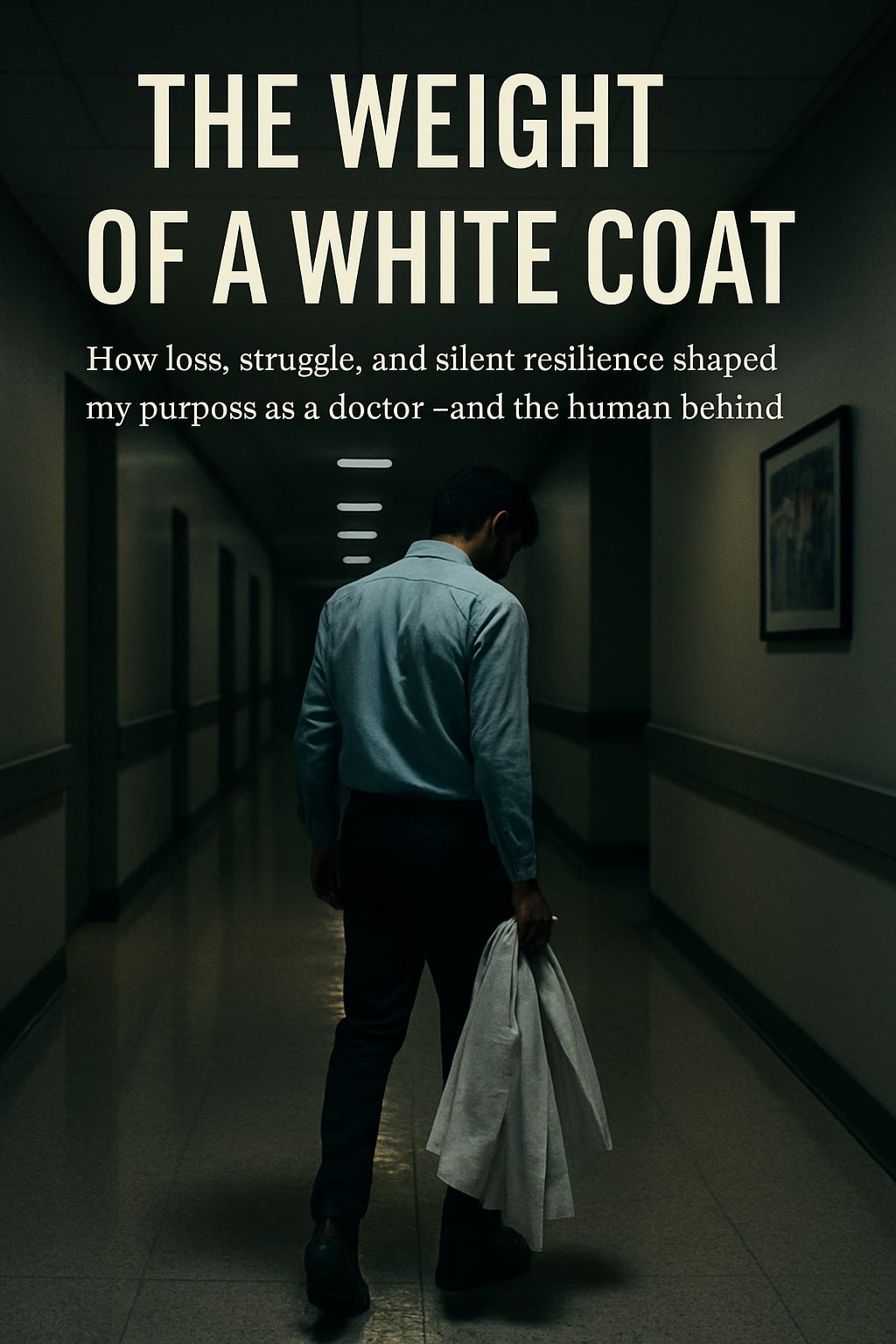
It’s strange how sometimes we don’t realize we’re living the most defining moments of our life until they’ve already passed. My journey into medicine wasn’t a decision I made one day with confidence or clarity. It was a whisper, a quiet calling, a series of small, painful, and often invisible choices that slowly led me here.
I wasn’t born into privilege. My path to becoming a doctor was not carved by legacy or ease. It was built by perseverance, by borrowed books, and by walking long distances when I couldn’t afford a bus fare. Many of my classmates had families in medicine. They had tutors, connections, a clear direction. I had dreams, a hunger to prove myself, and the unwavering belief that I was meant to serve others in a way that would make meaning out of my own hardships.
There were days in medical school when I doubted everything. I remember staring at the human anatomy textbooks late into the night, my eyes blurry with exhaustion, my stomach empty. I had nights when I slept on cold benches in the library, not because I was dedicated — but because I didn’t want to go back to a room where I couldn’t switch on the light without worrying about the electricity bill. But through it all, I never let go of my purpose.
I saw students dropping out. I saw bright minds crushed under the weight of financial pressure, mental health struggles, and family expectations. I saw friends choosing other careers — safer, more lucrative, less exhausting. And I stayed. Not because I wasn’t tempted to walk away, but because something inside me wouldn’t let me. I felt chosen by this path, not in a divine way, but in a deeply personal one.
The turning point in my journey wasn’t a graduation ceremony or the first time I held a scalpel. It was the moment I sat beside a patient who had no one — a man who had been admitted after a serious stroke, his speech gone, his limbs unresponsive, and no family at his side. I was still a junior doctor then, rotating through departments, overwhelmed by protocols and shift hours. But I visited him every day. Not as part of my duty, but because I couldn’t bear the thought that he might leave this world without hearing a kind word or feeling a human touch.
I used to sit and talk to him — about life, about the weather, about nothing and everything. I didn’t know if he could hear me. I didn’t know if it made any difference. But I kept going. Weeks passed. And one day, he blinked. Then he moved a finger. And eventually, he smiled.
That smile did something to me. It reminded me why I had suffered, why I had kept walking when everything around me told me to stop. It wasn’t about the white coat, the degree, or the prestige. It was about connection. About impact. About giving dignity to those who had been forgotten by the world.
There were many more stories after that. A boy with a rare infection who only survived because I caught a small clue no one else had seen. A mother who prayed for me every day because I held her hand when the medicine didn’t work. A cancer patient who gave me a letter on the day she was discharged — a letter that simply said, “Thank you for seeing me as a person, not a case.”
These were not grand victories. There were no headlines. No awards. But they were the foundation of the doctor I was becoming.
And then, something happened that truly tested my spirit.
It was a personal loss — a close family member. The same month I had started working full-time at a new hospital, excited and nervous to step into this new chapter. I got the call late at night. Unexpected. A sudden cardiac arrest. Gone within minutes.
I was shattered.
I stood in the very same emergency room I had once worked in — not as a doctor, but as someone begging for a miracle. And I understood, in that moment, what every patient’s family feels. The helplessness. The desperation. The anger.
It changed me.
After that, I no longer looked at patients as responsibilities. I saw each one as someone’s entire world. I understood the value of listening. The importance of compassion. The difference a single moment of humanity can make in the midst of unbearable pain.
I began to approach medicine differently. Not just as a science, but as a sacred service.
Years have passed since then. I’ve treated hundreds, maybe thousands. Some lived. Some didn’t. And each one left a mark on me.
The journey still continues. I still face days when exhaustion hits me so hard I can barely drive home. I still face bureaucracies, broken systems, and the weight of expectations. But whenever I start to feel lost, I remember that young boy who walked to class in worn-out shoes, holding secondhand books, telling himself, "One day, I will be a doctor."
He made it.
Not perfectly. Not easily. But with heart, with honesty, and with a deep, enduring love for every soul he could help along the way.
This journey wasn’t about becoming someone important. It was about becoming someone useful.
And in that, I found my purpose.
Written by doctor Marwan
About the Creator
Doctor marwan Dorani
"I’m Dr. Marwan, a storyteller and physician passionate about human resilience, untold journeys, and emotional truths."
Keep reading
More stories from Doctor marwan Dorani and writers in Motivation and other communities.
"The Doctor I Became"
There’s something no one tells you when you first wear that white coat — that healing others will sometimes break you. That behind every diagnosis is a story. Behind every patient is a mirror. And somewhere in the long corridors of hospitals and endless charts, you will find parts of yourself you never knew were missing.
By Doctor marwan Dorani 10 months ago in Motivation
Change Your Day, Not Your Life
We often wake up with the heavy feeling that something in our life needs to change. We think we need a new job, a new city, new people, or a completely new life. But what if the real transformation doesn’t require such dramatic shifts? What if the secret to a better life is simply changing one ordinary day?
By Zakir Ullah6 days ago in Motivation
Early March 2026: 4 Goals Accomplished
It's early March and I've now accomplished my 4th writing goal for the year of 2026. Before diving into the behind-the-scenes of it... why not tell you up front what that accomplishment was? I was published in a 2nd publication for this year. Published in Helix Literary Magazine out of Central Connecticut State University. You can read it for free right now!
By Stephen Kramer Avitabile6 days ago in Writers




Comments
There are no comments for this story
Be the first to respond and start the conversation.