
The Unseen Teacher: How Failure Became My Greatest Lesson
Life doesn’t always teach through comfort — sometimes, it speaks loudest through the quiet ache of failure.
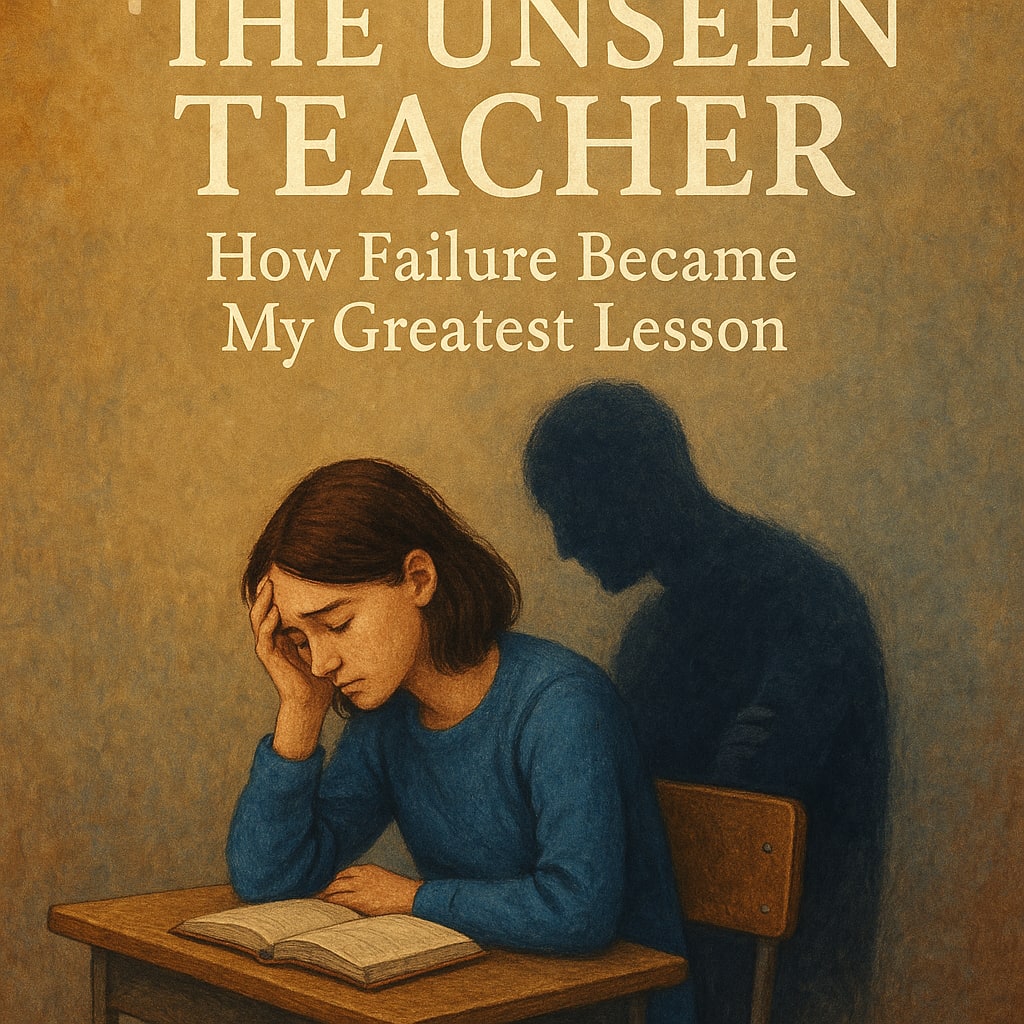
The Unseen Teacher: How Failure Became My Greatest Lesson
When people talk about life lessons, they often mention advice from elders, personal victories, or moments of inspiration. Rarely do we hear failure celebrated as a great teacher. And yet, when I reflect on the moments that shaped who I am — not just what I’ve done, but how I think, act, and value the world — they all have one thing in common: failure. Not the cinematic, heroic kind, but the quiet, humiliating, deeply personal kind that leaves a mark long after the moment passes. It was in one of those dark corners of life that I found a lesson more powerful than any success could have taught me.
The story begins during my final year of high school, a time when everything felt urgent, measured, and high-stakes. I was expected to succeed — academically, socially, and emotionally — as if life were a checklist I had to complete to move on to adulthood. I had always been a good student, and there was an unspoken expectation that I’d maintain that. My identity was wrapped around achievement like a security blanket. To win was to exist. To lose was to disappear.
So, when I failed my first major exam — not just scored low, but genuinely failed — it was like a part of my identity cracked. I still remember the feeling of disbelief as I stared at the grade. My mind raced with excuses: Maybe the teacher made a mistake. Maybe the system was unfair. Maybe someone else was to blame. But deep down, I knew — I had overestimated myself and underestimated the material. I hadn’t prepared. I had gotten lazy, relying on my past to carry my present.
The days that followed were harder than I’d like to admit. I avoided friends, ignored my phone, and let anxiety fill every quiet moment. I was ashamed. Not just of the grade, but of how much value I had placed on it. It made me question everything: If I wasn’t “the smart one,” then who was I? What was left?
That was when failure began to teach.
Unlike traditional education, life doesn’t offer structured lessons. It whispers truths in moments of silence and discomfort. It doesn’t hand you a syllabus; it gives you consequences. As I slowly worked through the mess in my mind, I started realizing that I had built my self-worth on a fragile foundation — achievement. I had never really learned how to handle setbacks because I had spent so much time avoiding them. The real failure wasn’t the bad grade — it was my inability to see my value beyond my success.
So, I started over.
Not dramatically — there was no sudden transformation. But I began to shift how I thought. I didn’t study harder just to score better; I studied to understand. I stopped comparing myself to others and started asking myself better questions: What excites me about this subject? What am I curious about? Where do I struggle, and why?
More importantly, I began to talk about failure — first with close friends, then openly. And what surprised me most was that everyone had a story like mine. Not one person had made it through life without stumbling, doubting themselves, or questioning their path. But few talked about it because we’re taught to celebrate wins, not wounds.
That year changed me. Not because I became “better” in the eyes of others, but because I became more whole. I learned that failure strips away ego, but in doing so, it reveals truth. It forces you to confront who you are without your trophies. And if you’re willing to listen, it will teach you humility, resilience, and self-awareness — qualities that last longer than any grade or title.
Today, I still fail. I still make mistakes, miss opportunities, and get things wrong. But I’ve learned not to fear those moments. Instead, I meet them with a new mindset: What is this trying to teach me? I no longer see failure as the opposite of success, but as part of it — a necessary, messy ingredient in growth.
If I could go back and talk to my younger self, staring at that failed test with tears in their eyes, I wouldn’t offer comfort or quick solutions. I’d simply say: “This will hurt. But it will also help. More than you know.” Because the truth is, some of the most important lessons in life don’t come from the applause, but from the silence that follows a fall.
In a world obsessed with perfection, we forget that wisdom often comes wrapped in disappointment. And perhaps the greatest success isn’t never falling — it’s learning how to rise with more grace each time we do.
About the Creator
Keep reading
More stories from Anwar Jamil and writers in Motivation and other communities.
Empowered and Unstoppable: Reaching Your Full Potential
Each of us holds within the seeds of greatness—talents, ideas, values, and strengths that, when nurtured, can shape not only our own lives but also the world around us. The journey to becoming “empowered and unstoppable” is not about becoming perfect or superior. It is about recognizing your own power, rising above limitations, and choosing to pursue your full potential with purpose and determination.
By Anwar Jamil7 months ago in Motivation
Center Stage with Paul Stewart
*** I'm keen to republish the interviews I did for my series with Vocal creators. It's been a few years and I thought it might be nice to revisit these wonderful conversations. I'll be releasing them one at a time for a few weeks/months.
By Heather Hublera day ago in Interview



Comments
There are no comments for this story
Be the first to respond and start the conversation.