

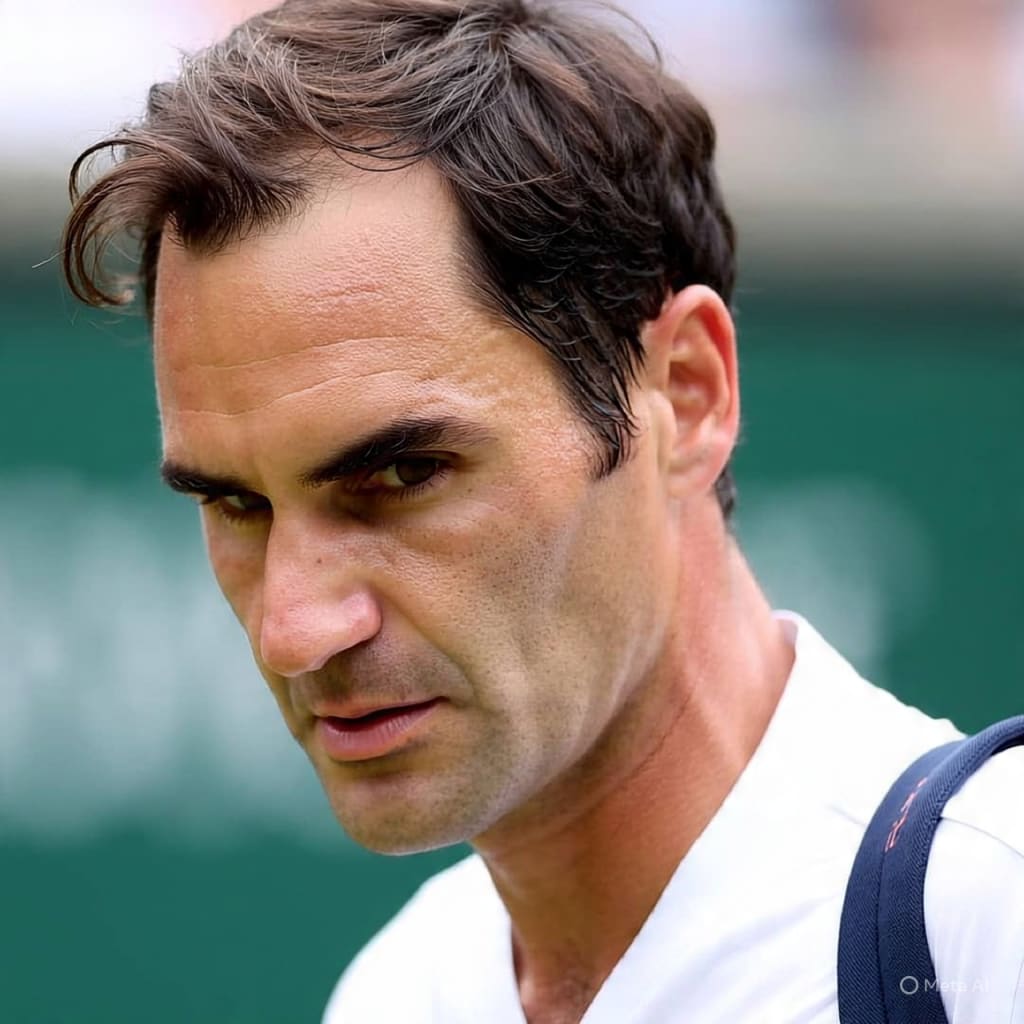
The Elegant Maestro: The Timeless Journey of Roger Federer
In the theater of tennis, where every stroke is a duel between precision and power, a few rare players rise above the competition and transform the sport into something closer to poetry. Roger Federer is one of those few. To millions around the world, he was more than an athlete; he was the artist who painted on a green canvas, the maestro who turned rallies into symphonies. His journey from a playful Swiss boy with a racket that was almost too big for him to hold, to the man who left the game with 20 Grand Slam titles and countless hearts won, is a story of talent, resilience, humility, and grace.
Born on August 8, 1981, in Basel, Switzerland, Federer’s beginnings were far from the bright lights of Wimbledon’s Centre Court. Yet from those quiet streets and company tennis courts where his parents played casually, emerged a boy who would one day redefine not only what it meant to be a champion but also what it meant to be admired.
Humble Beginnings: A Boy and His Racket
Roger grew up in a middle-class home, the son of Robert Federer, a pharmaceutical representative, and Lynette, a South African who shared her husband’s profession. They were a loving family but not one that shouted ambition. Tennis entered his life almost by accident. At three years old, Roger picked up a racket while watching his parents play, and something about the sport captured him instantly. By six, he was already outshining his peers, his energy bubbling over with every shot.
Lynette noticed her son’s passion and enrolled him in lessons at the Old Boys Tennis Club. There, Roger was introduced to Czech coach Adolf Kacovsky, who quickly saw something special. While other kids needed weeks to master a skill, Roger seemed to glide through new lessons in days. But the true turning point came when Peter Carter, a thoughtful Australian coach, stepped into Roger’s life. Carter not only taught him how to hit a forehand and slice a backhand but also instilled in him the values of sportsmanship and composure. To young Roger, Carter became a mentor and almost a second father.
Still, Roger was not just a tennis kid. He skied, played badminton, basketball, and soccer. Badminton, in particular, sharpened his reflexes and sense of timing, gifts that would later make his footwork look like ballet. By the time he was 12, though, Roger made the brave choice to focus on tennis. “I liked that it was all on me,” he would later say. “In tennis, you win or lose on your own terms.”
By 14, Roger was the junior champion of Switzerland and moved to Écublens to train at the National Tennis Center. Those were tough years—lonely, filled with homesickness, and marked by the struggle to learn French in a new environment. Yet these hardships quietly forged resilience. By 16, he was not just a talented player; he was a determined one.
The Spark of Genius: Junior Success and Early Lessons
The mid-1990s saw Federer rise through the junior ranks. In 1998, he stormed Wimbledon, winning both the boys’ singles and doubles titles. The sight of the teenage Federer lifting the trophy at the very place that would become his spiritual home was more than symbolic—it was destiny’s quiet whisper. That same year, he reached the US Open junior final and won the prestigious Orange Bowl. He ended the year as the world’s top junior, with the kind of résumé that made everyone take notice.
But genius rarely follows a straight path. Federer turned professional in 1998, debuting in Gstaad and losing his first match. The road ahead was rocky. He picked up wins here and there, but inconsistency plagued him. By the end of 1999, he was ranked 64, the youngest player in the top 100. For many, that would have been enough. For Roger, it was only the beginning.
In 2001, he announced himself with a victory that shook the tennis world: beating seven-time Wimbledon champion Pete Sampras in a five-set thriller. It was as if a new era had begun right before the eyes of the world. That same year, he won his first ATP title in Milan. Yet, tragedy struck in 2002 when Peter Carter died in a car accident. The loss devastated Roger. He vowed to honor Carter by living up to the lessons he had been taught—by becoming not only a champion but the right kind of champion.
The Ascent: A Star Among Stars
Wimbledon 2003 became Federer’s coronation. With flowing hair, dazzling footwork, and a composure beyond his years, he defeated Andy Roddick in the semis and Mark Philippoussis in the final to capture his first Grand Slam. It was the first of many, but even then, what fans noticed most was not just the win, but the way he won—with elegance, with shots that made the crowd gasp, and with a smile that made victories feel like celebrations rather than conquests.
In 2004, Federer truly became untouchable. He claimed three of the four Slams and rose to world No. 1, a spot he would hold for a record 237 consecutive weeks. Opponents spoke of the despair of playing him—every ball came back with interest, every angle seemed impossible, every rally felt like being pulled into his rhythm. Tennis was no longer just a competition when Federer played; it was an exhibition of art.
Rivalries and the Golden Years
Federer’s greatness might have stood alone, but the universe conspired to make his era unforgettable. Enter Rafael Nadal, the left-handed Spaniard with a warrior’s spirit and the heart of a bull. Nadal owned the clay courts, where Federer struggled, and their duels became the stuff of legend. In 2008, Nadal dethroned Federer at Wimbledon in what many call the greatest match ever played, a five-set epic that ended in twilight. Federer cried that day, but his tears were not only of loss; they were of appreciation for a rivalry that pushed him to greater heights.
Then came Novak Djokovic, the relentless Serbian whose hunger seemed unquenchable. With Nadal and Djokovic, Federer formed the “Big Three,” a trio that redefined tennis itself. Against them, Federer collected triumphs and heartbreaks, his grace on court contrasting their ferocity.
By 2009, Federer had achieved the elusive Career Grand Slam, winning Roland Garros and tying, then surpassing, Pete Sampras’s record of 14 majors. He had become not just a champion but a legend.
The Family Man and the Gentleman
Off the court, Federer’s life was equally inspiring. He married Mirka Vavrinec, the woman he had met at the Sydney Olympics, in 2009. Together they built a family that became the foundation of his stability. Twin daughters came first, then twin sons, and Federer embraced fatherhood with the same dedication he gave to tennis. Fans often saw his children in the stands, sometimes cheering, sometimes fidgeting, reminding the world that behind the superstar was simply a dad.
Federer’s kindness was legendary. He never smashed rackets, rarely shouted, and always praised opponents. In a sport filled with egos, he stood out for his humility. His foundation, launched in 2003, poured millions into education projects in Southern Africa and Switzerland, touching over a million children’s lives. His greatness extended beyond courts and trophies—it was measured in impact.
Resurgence and the Miracle Years
After injuries and struggles from 2013 to 2016, many thought Federer’s era was over. Then came 2017. At 35, after knee surgery, he returned to win the Australian Open against his old rival Nadal in five breathtaking sets. It was a fairytale comeback, one that even he admitted seemed unreal. Later that year, he won his eighth Wimbledon, the most by any man, without dropping a set.
In 2018, he defended his Australian Open crown, becoming the first man to reach 20 Grand Slam titles. At 36, he also became the oldest world No. 1 in history. His victories were no longer about dominance—they were about defying time, proving that elegance and belief could outlast youth.
The Curtain Call: Farewell to a Maestro
The final years were marred by knee injuries, surgeries, and the inevitable slowing down of a body that had given everything. Federer’s last great stage was Wimbledon 2019, where he held two match points against Djokovic in a historic final but fell short. Yet even in defeat, his grace left a mark.
In 2022, Federer announced his retirement. His farewell came at the Laver Cup, where he partnered Nadal in doubles. When the match ended, Federer cried, Nadal cried, and millions watching cried with them. It was more than the end of a career; it was the closing of a chapter in tennis history.
Legacy of a Gentleman
Federer’s records are staggering: 20 Grand Slams, 103 ATP titles, over 1,250 wins, 310 weeks as world No. 1. But numbers alone cannot define him. His legacy lies in how he made people feel. He turned sport into art, competition into joy, and victory into humility. Nadal himself said, “He is one of the most important players in my career.” Djokovic called him “the greatest rival and inspiration.” Fans across the world, from Basel to Beijing, saw in Federer not just an athlete but a role model.
In the endless debate of the greatest of all time, Federer may not lead in sheer numbers anymore. Nadal and Djokovic surpassed his Slam count. Yet Federer occupies a place they cannot—he is the symbol of elegance, the embodiment of beauty in sport. He proved that greatness is not only about winning but about how you win, how you carry yourself, and how you inspire.
Today, Federer enjoys his retirement with Mirka and their four children. He skis, hikes, plays casual exhibitions, and continues his philanthropic work. His story reminds us of something bigger than trophies: that true champions are remembered not just for victories but for the humanity they bring to their craft.
As the sun sets on his career, the image of Federer remains timeless—his one-handed backhand cutting through the air, his effortless glide across the grass, and his smile that seemed to say: Tennis is beautiful, and life is too.
About the Creator
Frank Massey
Tech, AI, and social media writer with a passion for storytelling. I turn complex trends into engaging, relatable content. Exploring the future, one story at a time
Keep reading
More stories from Frank Massey and writers in Motivation and other communities.
The Night I Finally Heard My Own Voice
There are moments in life that don’t announce themselves. They don’t arrive with fireworks or dramatic music or some cinematic revelation. They slip in quietly, almost unnoticed, like a soft knock on a door you didn’t realize was closed.
By Nyra Orrin7 days ago in Motivation

Comments
There are no comments for this story
Be the first to respond and start the conversation.