
The Secret Role of Dreams in Indigenous Climate Predictions
How Ancient Wisdom and Nighttime Visions Guide Environmental Foresight in Indigenous Communitie

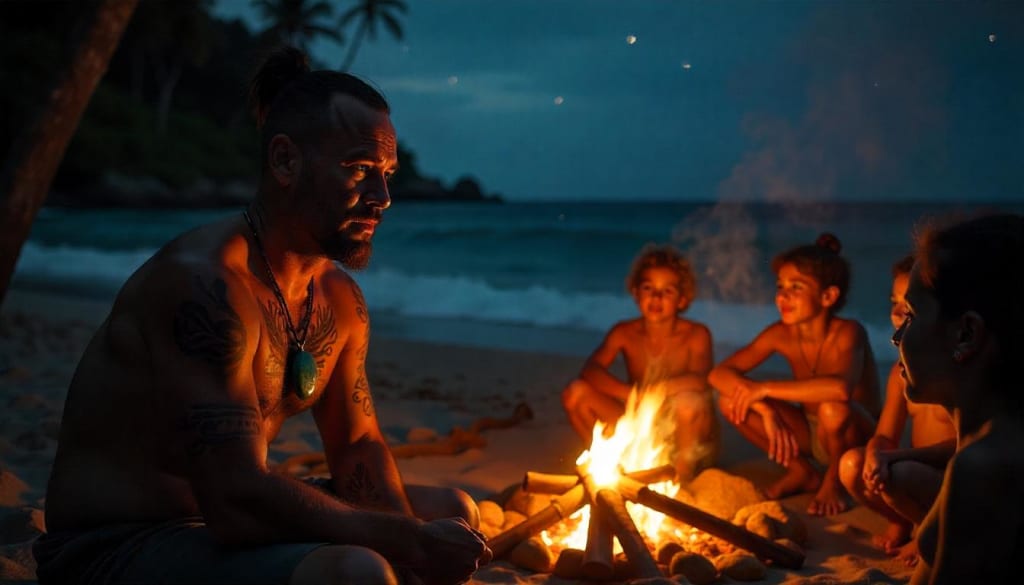
In many Western cultures, dreams are viewed as personal experiences—vivid fragments of the subconscious, often dismissed as meaningless. But in Indigenous traditions across the globe, dreams are not just symbolic; they are a sophisticated form of environmental intelligence. For countless generations, Indigenous peoples have turned to dreams to predict weather changes, ecological disruptions, and climate shifts. Long before satellite imagery and meteorological models, they had another tool: the unconscious mind tuned deeply to nature’s rhythms.
This story explores how Indigenous communities from the Arctic to the Amazon interpret dreams as vital signs from the Earth, warning them of impending droughts, floods, animal migrations, and even global climate changes. These visions are not fantasy—they’re a part of a holistic system that blends spirituality, ancestral knowledge, and close observation of the natural world.
The Science of the Intuitive: A Different Kind of Data
Modern climate science is rooted in data—measurable patterns of temperature, precipitation, ocean currents, and carbon dioxide levels. But Indigenous climate predictions often arise from a place Western science still struggles to quantify: intuition and lived experience.
Dreams in Indigenous cultures aren’t random. They emerge from people who live intimately with the land—fishermen, hunters, farmers—whose daily survival depends on recognizing subtle environmental cues. In many communities, elders and shamans act as dream interpreters, passing along insights gleaned from the dreamworld.
For instance, among the Iñupiat of Alaska, dreams about melting ice or wandering caribou are treated seriously and often signal real environmental changes. In Australia, Aboriginal elders dream of burning deserts or rising rivers and share these visions as warnings. In the Amazon, dreams about tree spirits weeping or animals vanishing are considered urgent messages from the forest.
Dreams become a form of pattern recognition, rooted in centuries of ecological knowledge. They bridge memory, intuition, and environmental awareness.
Case Study: The Iñupiat and Melting Ice
In northern Alaska, the Iñupiat have long relied on sea ice for hunting and travel. Over the last few decades, they’ve witnessed the rapid retreat of ice, long before mainstream climate models caught up. But they didn’t just see the change—they dreamed it.
Iñupiat elders recount dreams from as far back as the 1980s about unstable ice, strange weather, and migratory animals disappearing from familiar routes. One elder spoke of dreaming about falling through the ice while hunting, which later happened in real life due to unexpected thawing. These dreams weren’t brushed aside—they became part of community warnings, influencing when and where hunting parties would travel.
Their dreams were not predictions in the conventional sense—they were messages synthesized from lived experiences, passed through subconscious filters, and delivered in a language of symbols and emotion.
Amazonian Wisdom: When the Forest Speaks
In the Amazon Basin, Indigenous communities like the Asháninka, Kichwa, and Shipibo have long considered dreams a communication channel with the forest. Shamans and healers enter dream states to connect with the spirits of rivers, trees, and animals.
In recent years, many have reported dreams of “silent jungles”—where no birds sing and trees appear sick. Some describe fires in the dreamscape months before real-world wildfires engulf large forest sections. These dreams are treated with utmost seriousness, leading to ceremonies and community preparations.
For these cultures, climate change is not just a physical event—it’s a spiritual imbalance. When the Earth is in distress, she speaks through dreams. The dreamers act as interpreters, warning their communities and sometimes initiating healing rituals to restore harmony.
The Dreaming in Aboriginal Australia
Among Aboriginal Australians, “The Dreaming” (or “Dreamtime”) is a foundational concept—a sacred dimension where ancestral beings shaped the land. But the Dreaming is not locked in the past; it’s a dynamic, ongoing reality.
Aboriginal people often report climate-related dreams that merge ancestral wisdom with current observations. For instance, a Yolngu elder might dream of a serpent rising from a dry riverbed—interpreted as a warning of flood. Or a Warlpiri elder might dream of kangaroos moving in unnatural patterns, signaling disrupted ecosystems.
These dreams often coincide with environmental anomalies—unseasonal rains, failed crops, animal die-offs. By sharing their dreams, elders guide seasonal activities like hunting, fishing, and water gathering.
Are Dreams Just Symbolic? Western Science Is Listening
Skeptics may argue that dreams are too subjective to be useful data. But a growing number of scientists are reconsidering the value of Indigenous dreaming in climate resilience.
Anthropologists, ethnobotanists, and climate researchers have begun collaborating with Indigenous communities to record and analyze dream narratives alongside physical data. While the symbolic nature of dreams makes them hard to quantify, patterns do emerge. Often, dreams precede observable changes in climate-sensitive environments.
Researchers in Canada, for example, found that Inuit hunters' dreams about unusual animal behavior correlated with shifts in migration patterns caused by melting permafrost and changing sea currents. Likewise, in Brazil, shamans' dreams about sick trees matched data on deforestation-linked biodiversity loss.
Dreams may not replace scientific models, but they can supplement them—especially in areas with limited monitoring infrastructure. They also offer a more holistic understanding of climate as a living, responsive system.
The Ecological Mind: Tuning into the World
Why are Indigenous peoples so attuned to nature through dreams? The answer lies in a deep ecological mindset.
Unlike industrial societies, Indigenous cultures often see no separation between humans and the environment. The land is not just a backdrop—it’s a relative, a being with agency and spirit. This worldview fosters an acute sensitivity to changes in the natural world, both waking and dreaming.
This sensitivity is frequently fostered from an early age. Young members are instructed to pay attention to the quality of the light at dawn, the wind, the stars, and animal sounds. Dreams eventually become another aspect of environmental perception as a result of this attentiveness.
On the other hand, this intuitive knowledge is frequently suppressed in industrial cultures. We rarely pay attention to our dreams, much less believe them to be ecological indications, because we are overloaded with information, cut off from the earth, and surrounded by artificial settings.
Taking Back the Dream: Insights for a Changing Society
Maybe it is time to listen differently as climate change picks up speed and traditional mechanisms fail. Indigenous dreaming is a dynamic, adaptive technique, not a relic of nostalgia. It serves as a reminder that in the past, people used insight derived from intuition, storytelling, and spirit in addition to tools to overcome environmental challenges.
This does not imply a switch from science to mysticism. In order to incorporate Indigenous epistemologies that see dreaming as legitimate knowledge, we must broaden our understanding of intelligence. It entails creating space in our global climate discourse for the intangible—intuition, emotion, and spirit.
Imagine fusing the depth of dream-based insight with the accuracy of data modeling. Imagine communities that are guided by the felt sense of what the Earth is trying to tell us, in addition to numbers. An example of this integration can be seen in indigenous climate dreaming.
In conclusion, will we pay attention when the world speaks?
We live at a period when forests speak through fire, oceans talk through rising tides, and glaciers speak through melting. However, the Earth can also communicate in more subdued ways, such as through dreams, symbols, and images that between generations.
Dreams have always been more than just stories told at night for Indigenous peoples. They are notifications, guidelines, and occasionally cautions. Perhaps the true question, as we confront the global issue of climate change, is not whether dreams can foretell the future, but rather whether we are prepared to dream alongside the planet once more.
About the Creator
MD.ATIKUR RAHAMAN
"Discover insightful strategies to boost self-confidence, productivity, and mental resilience through real-life stories and expert advice."
#SelfImprovement #PersonalGrowth #Motivation #Mindset #LifeHacks #SuccessTips #DailyInspiration
Keep reading
More stories from MD.ATIKUR RAHAMAN and writers in Motivation and other communities.
Why Forgotten Languages Hold the Keys to Future Technologies
In the rush toward hyper-advanced technology, artificial intelligence, quantum computing, and interstellar exploration, it’s easy to assume that everything of value must lie ahead. Yet, paradoxically, some of the most revolutionary breakthroughs may be found not in the future—but in the past, encoded in the lost tongues of ancient civilizations. Forgotten languages, dismissed for centuries as obsolete relics of dead cultures, are revealing themselves as troves of hidden knowledge, cognitive insights, and even structural innovations that could redefine the limits of modern technology.
By MD.ATIKUR RAHAMAN9 months ago in Motivation
How I earn $100 in a day
There was a time when earning $100 in a single day felt like a fantasy to me. Not a goal — a fantasy. I remember staring at my phone late at night, doing small mental calculations: If I earn $5 today and $10 tomorrow, maybe by the end of the month… Even those numbers weren’t guaranteed. Some days, nothing came in at all. And that silence — the absence of notifications, emails, or messages — was louder than failure. People online love to talk about success like it’s loud and shiny. For me, it was quiet. Heavy. Full of doubt. The day I earned $100 didn’t begin with excitement. It began like every other day: tired eyes, a slow morning, and a question I kept asking myself — Is this even worth it? What kept me going wasn’t motivation. It was necessity. I didn’t suddenly become smarter or more talented. I didn’t discover a secret website or a hidden trick. I simply stopped waiting for the “perfect” moment and started using what I already had. I offered small digital work. Simple things. Work that wouldn’t impress anyone on social media — but work that people genuinely needed. And I did it sincerely. That day, the first payment came in early. It wasn’t big. Just enough to remind me that someone trusted me with their money. That feeling mattered more than the amount. Later, while I was offline, something unexpected happened. A digital product I had created earlier — something I almost didn’t upload because I thought it wasn’t good enough — sold. Then it sold again. I stared at the screen for a few seconds, unsure whether to smile or stay calm. By evening, another small task came my way. Then one more. None of these moments felt dramatic. No fireworks. No victory music. Just quiet confirmations that effort, even imperfect effort, still counts. When I finally added everything together late at night, my heart paused. It crossed $100. I didn’t jump. I didn’t celebrate. I just sat there — still — because for the first time, the number felt real. What hit me hardest wasn’t the money. It was the realization that I had been underestimating myself for a long time. I believed earning like this was reserved for “others” — more confident people, more skilled people, luckier people. That belief was wrong. Earning $100 in a day didn’t change my life instantly. But it changed something inside me. It replaced doubt with proof. And proof is powerful. Now I understand something important: money doesn’t always come from doing big things. Sometimes it comes from doing small things consistently and with sincerity. Some days I still don’t reach $100. Some days are quiet again. But the fear is gone. Because once you know something is possible, it stops being a dream and starts being a process. I no longer wait for motivation. I work, even when I feel unsure. I trust that effort never disappears — it just takes time to show itself. If you’re reading this while feeling stuck, tired, or invisible, I want you to know something honestly: You’re not behind. You’re just early in your story. And one ordinary day — without warning — things can start to add up.
By Shah Fayaz 7 days ago in Motivation



Comments
There are no comments for this story
Be the first to respond and start the conversation.