
The Science of Habit Stacking and How to Make It Work for You
Turn Your Brain into a Productivity Machine, One Toothbrush Moment at a Time

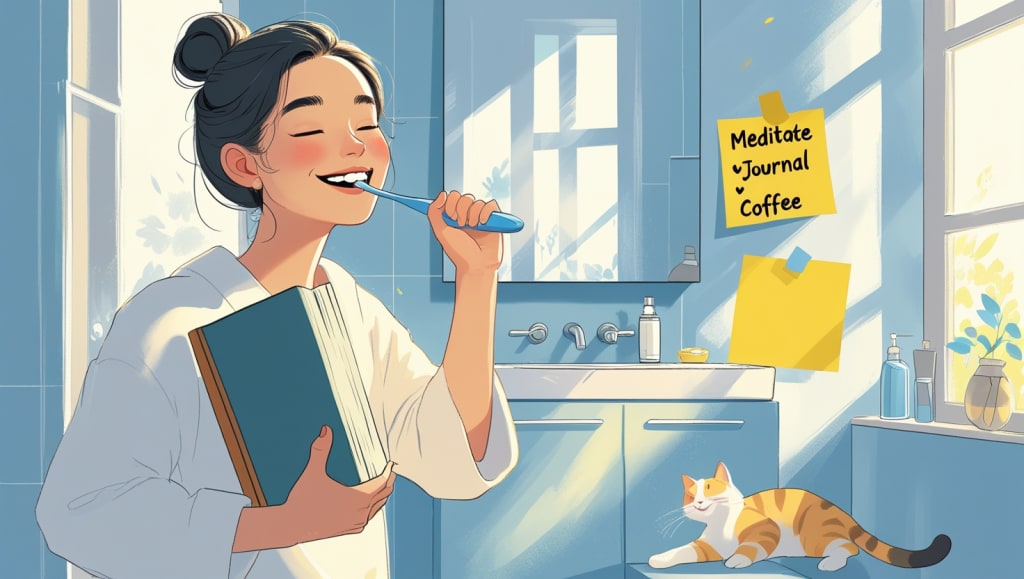
Have you ever told yourself, “I’m going to change my life starting tomorrow,” only to wake up the next morning and scroll TikTok for 45 minutes straight?
Yeah. Same.
The truth is, most of us don’t need more motivation; we need better systems. And that’s where habit stacking comes in. It’s not just a fancy buzzword. It’s a psychological trick that lets you piggyback a new habit onto something you're already doing. Think of it like adding fries to your burger order. It just makes sense.
Let’s dive into the science, the method, and because life is hard some funny examples to make it easier to remember.
What Is Habit Stacking?
Habit stacking is a term popularized by James Clear in his wildly successful book Atomic Habits. It’s based on the idea of cue-based routines. Basically, instead of trying to force a new habit into your chaotic day, you sneak it in right after something you're already doing without thinking.
Here’s the secret formula:
- “After [current habit], I will [new habit].”
- That’s it. The magic lies in the pairing.
For example:
- After I brush my teeth, I will do 10 squats.
- After I pour my morning coffee, I will write down one thing I’m grateful for.
- After I close my laptop for the day, I will stretch for five minutes (instead of collapsing like a potato on the couch).
It works because your brain already recognizes the first habit, so it acts as a trigger for the new one. You’re essentially hitching a ride on your existing neural pathways.
Why It Works (Backed by Science)
Our brains love patterns. Habits form in the basal ganglia, the part of the brain responsible for routine behaviors and muscle memory. Once something becomes a habit, your brain goes on autopilot. This is why you can drive home and not remember how you got there.
Habit stacking leverages this autopilot by attaching new behaviors to ones already hardwired.
A 2010 study published in the British Journal of Health Psychology found that people who planned their habits using implementation intentions (like “after brushing my teeth, I’ll floss”) were significantly more likely to follow through.
It’s not about motivation. It’s about triggers + consistency = results.
How to Build a Habit Stack That Doesn’t Fall Over
Here’s how to habit-stack like a pro (and not like someone trying to do yoga while holding a pizza):
1. Start with a Solid Anchor Habit
Pick something you already do daily, no reminders, no negotiations.
Examples:
- Brushing your teeth
- Making coffee
- Checking your email
- Walking the dog
- Scrolling Instagram (yes, even the questionable ones count)
2. Make the New Habit Tiny and Specific
The goal isn’t to suddenly become a productivity wizard. It’s to start ridiculously small. You can scale later.
✅ Do: “After I brush my teeth, I’ll read one sentence from my book.”
❌ Don’t: “After brushing my teeth, I’ll write a novel while running a marathon.”
3. Keep the Stack Logical
If your new habit feels completely out of place, your brain will throw a tantrum. Make it make sense.
Weird: “After brushing my teeth, I will fold laundry.”
Better: “After brushing my teeth, I’ll floss.” (Your dentist will cry tears of joy)
4. Reward Yourself
Positive reinforcement works on dogs, toddlers, and, yes, grown adults too. Even just saying “nailed it!” out loud works. Give yourself a high five. Celebrate the tiny win.
5. Don’t Stack on Chaos
If your "existing habit" is inconsistent (like journaling once every full moon), don’t use it as your anchor. Only stack onto something stable. Like brushing your teeth. Or opening the fridge 12 times a day for no reason.
Funny Examples (That Still Totally Work)
Here’s where it gets fun and mildly ridiculous (but still effective):
- After I scroll TikTok for 10 minutes, I will do 10 jumping jacks to shake off the guilt.
- After I complain about my job, I will write one sentence in my resume draft.
- After I feed the cat, I’ll drink a glass of water. (Because hydration > chaos.)
You get the idea. Keep it light. Keep it personal.
Habit Stacking in Real Life: A Simple Morning Stack
Let’s say you want to start your mornings with more intention. Your stack might look like:
- After I wake up, I will make my bed.
- After I make my bed, I will drink a glass of water.
- After I drink water, I will meditate for 2 minutes.
- After I meditate, I will write down one goal for the day.
- After writing down my goal, I’ll dance awkwardly to a Beyoncé song (optional but recommended).
Suddenly, you're five steps into an empowering morning routine, and your brain barely has time to argue.
Final Thoughts
You don’t need more hours in the day, you need cleverer ways to use them. Habit stacking is one of the easiest, most brain-friendly ways to build real momentum in your life.
Remember: small hinges swing big doors. So instead of overhauling your life overnight (again), pick one simple stack and start today. Before you know it, you’ll be the person who meditates, journals, hydrates, and stretches before 8 AM and still has time for coffee.
Now, if you'll excuse me, after I finish writing this article, I'm going to reward myself with a dance break.
About the Creator
Keep reading
More stories from Chinedum John and writers in Motivation and other communities.
Top 5 Books That Will Shift Your Mindset Forever
Let’s be real: most of us have at least one self-help book collecting dust on the shelf. Maybe you bought it during a New Year’s resolution spree. Perhaps it was a gift from that friend who’s always “manifesting.” Either way, not all mindset books are created equal. Some are fluffier than a motivational cat poster. Others? They struck you with truth bombs, you start questioning your entire life while sipping coffee.
By Chinedum John8 months ago in Motivation
Corrosion Resistance That Endures: The Strength of Hot-Dip Galvanized Steel
Steel remains essential to infrastructure, manufacturing, and development across the nation. However, corrosion constantly threatens its durability and performance. When steel comes into contact with moisture and oxygen, rust begins to form and slowly spreads. Over time, this process weakens structures and increases safety risks. Therefore, engineers and asset owners seek protection methods that deliver long-term reliability. Hot-dip galvanizing provides a proven answer to this ongoing challenge.
By Frontier Galvanizingabout 7 hours ago in Motivation


Comments
There are no comments for this story
Be the first to respond and start the conversation.