
The Productivity Lie: Why Doing Nothing Might Be the Smartest Thing You Do All Week
The Surprising Power of Doing Nothing
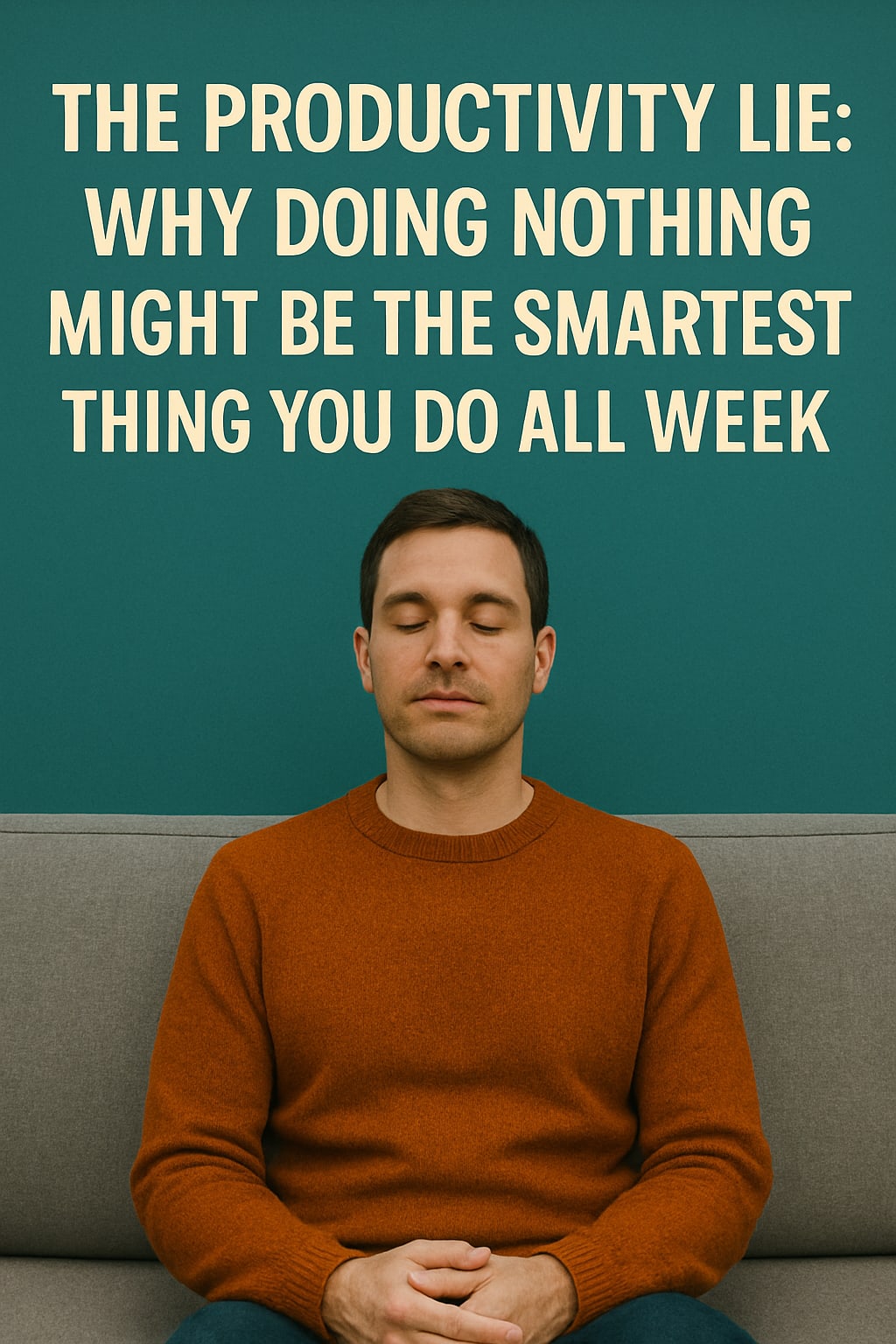
We live in an age where “busy” is worn like a badge of honor. Our calendars are bursting, our inboxes overflow, and any gap in our day is immediately filled with podcasts, emails, or mindless scrolling. We multitask at lunch, brag about 5 a.m. wakeups, and treat rest like a guilty indulgence.
But what if I told you that your relentless drive to be productive might be hurting you?
Worse—what if the key to doing more… is doing less?
I’m here to make a bold claim: doing nothing—yes, absolutely nothing—is not lazy, selfish, or a waste of time. It’s one of the most strategic and intelligent things you can do for your brain, your body, and your long-term success.
And I’ve got science, history, and a touch of personal chaos to prove it.
---
The Surprising Power of Doing Nothing
Let’s clarify what “doing nothing” actually means.
It’s not watching Netflix while answering work emails. It’s not scrolling TikTok under your duvet. “Doing nothing” in this context means intentional mental rest. Staring out a window. Sitting quietly in a park. Lying on the floor and letting your thoughts wander.
Sound unproductive? That’s the point.
Cognitive neuroscientists call this “default mode.” It’s what your brain does when it’s not focused on a task—when it’s just being. During these moments, the brain engages in something remarkable: memory consolidation, creative ideation, emotional processing, and strategic problem solving.
In other words, when you stop working, your brain starts doing its most important work.
---
The Billionaire’s Secret Schedule
Want to know how some of the most successful minds in the world use their time? They guard their “nothing” time like gold.
Warren Buffett spends most of his day reading and thinking. He once said, “I insist on a lot of time being spent, almost every day, to just sit and think.”
Bill Gates takes solo “Think Weeks” twice a year—retreats with no meetings, no distractions, just books and reflection.
Albert Einstein reportedly came up with the theory of relativity while daydreaming.
They’re not lazy. They’re strategic.
Doing nothing creates space—space for the subconscious to connect dots that focused thought can’t. It’s in that space that creativity explodes and clarity emerges.
---
My Breakdown (and Breakthrough)
I didn’t always believe this.
Two years ago, I was the poster child for hustle culture. I worked freelance jobs by day, wrote a blog by night, and filled my “breaks” with personal development videos or networking calls. Rest made me feel guilty. Stillness made me anxious.
Then I burned out. Hard.
I stopped sleeping. I got sick constantly. I forgot birthdays, missed deadlines, and still felt like I was never doing enough. My creativity died. My relationships frayed. My confidence evaporated.
I was a machine running without oil—and I broke down.
My recovery began not with a new planner, but with a therapist who asked one question that changed everything:
“When do you let your brain breathe?”
I didn’t know how to answer.
So, I started walking. No phone, no music, just walking. I sat in the park and watched clouds. I wrote thoughts in a notebook with no agenda. I gave myself 20 minutes of “nothing” every morning.
And in that “nothing,” something wild happened: my creativity came back. My anxiety calmed. My energy returned. And ideas I’d been trying to force for months suddenly appeared with clarity.
Doing nothing wasn’t idle. It was vital.
---
The Science Backs It Up
Psychologists have long known that overloading the brain leads to diminishing returns. A 2011 study at the University of California found that people who take breaks to let their minds wander perform significantly better on creative problem-solving tasks.
Another study from the University of British Columbia showed that people who daydream regularly are better at complex problem-solving and goal-setting.
Even the ancient Greeks were onto something. The word “school” comes from the Greek scholē, which originally meant leisure. The idea was that free time wasn’t empty—it was the foundation for thinking, learning, and discovery.
Somewhere along the way, we lost that wisdom.
---
How to Practice the Art of Doing Nothing
Doing nothing doesn’t require a yoga retreat in Bali. It’s free. It’s accessible. And it starts with intention.
Here are a few simple ways to begin:
1. Start Small: Set a timer for 10 minutes a day to do absolutely nothing. Just sit. Breathe. Stare out the window.
2. Take Boredom Walks: Leave your phone at home and walk aimlessly. Let your mind wander. Don’t try to think—just observe.
3. Schedule White Space: Block out unscheduled time in your calendar each week. No agenda. No multitasking.
4. Protect Your Mornings: Before diving into emails, take 15 minutes of “mental whitespace.” Journal, meditate, or simply sip your coffee in silence.
5. Daydream Guilt-Free: When your mind drifts, don’t snap it back. Let it roam. That’s where the gold is.
---
Final Thoughts
We’ve been sold a lie that constant motion equals success. But life isn’t a sprint—it’s a symphony. And in music, the pauses are as powerful as the notes.
So give yourself permission to pause. To rest. To do nothing.
You’re not falling behind—you’re charging up.
The next big idea, the healing you need, the clarity you crave? It’s not hiding in another productivity hack.
It’s waiting in the stillness.
So sit down. Close your laptop. Take a breath.
And do the smartest thing you’ll do all day: nothing at all.
---
About the Creator
Keep reading
More stories from Umair Khan and writers in Motivation and other communities.
What I wish I knew in my 20s as a Muslim
Assulamu Alaykum, I wish I had reminded myself that I’m not meant to be perfect all the time. I just have to try. Same with my daily prayers. They don't have to be perfect right now; I just have to try and work towards what Allah expects of me, little by little.
By Jakayla Toney2 days ago in Motivation



Comments
There are no comments for this story
Be the first to respond and start the conversation.