
The Productivity Apps That Failed to Make You Productive
How Overcomplicated Tools Can Ruin Your Focus Instead of Boosting It

The Productivity Apps That Failed to Make You Productive
How Overcomplicated Tools Can Ruin Your Focus Instead of Boosting It
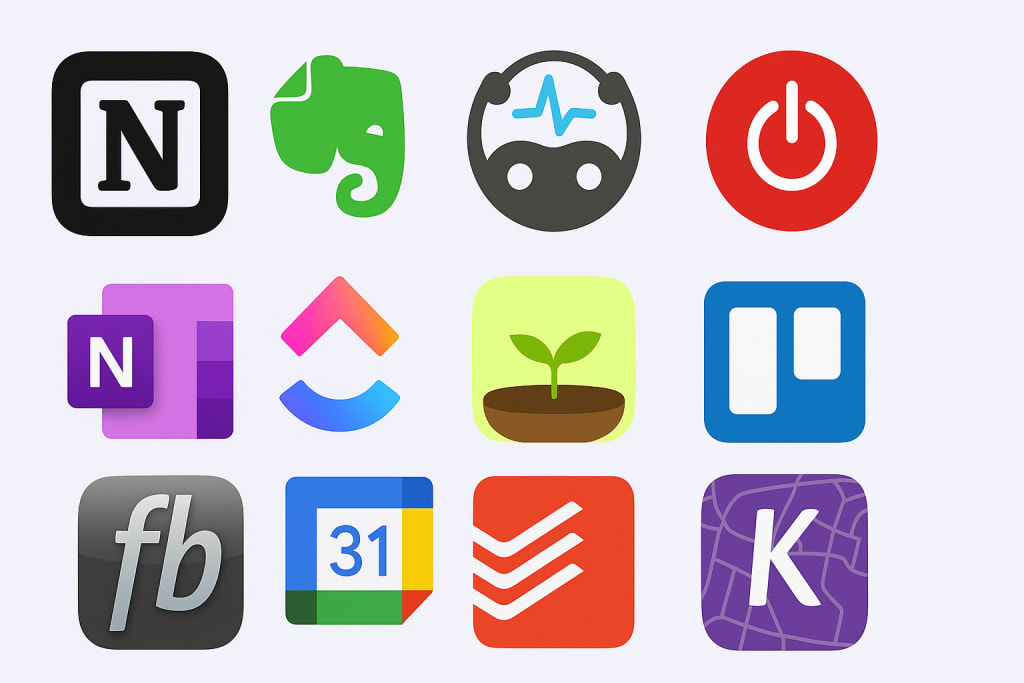
I used to believe that the more advanced my productivity system, the more productive I would become. I fell for the promises: sleek interfaces, powerful automation, beautiful dashboards. I told myself that once everything was perfectly organized, my work would flow effortlessly. That belief led me into an ever-expanding collection of tools: Notion, ClickUp, Todoist, Sunsama, Motion, and more.
At first, they felt like game-changers. I spent hours crafting project templates in Notion, scheduling tasks in ClickUp, and optimizing morning routines in Sunsama. But after weeks and then months of fiddling and fine-tuning, I noticed something strange.
I wasn’t getting more done.
I was simply working on productivity, instead of being productive.
When Productivity Becomes the Project
Let’s be honest: apps like Notion are addictive. They give you unlimited freedom to create your perfect productivity universe. But there’s a dark side to that freedom. It’s all too easy to fall into the trap of over-customization.
I designed dashboards, habit trackers, weekly planners, content calendars, and even motivational quote databases. But all that time spent building the system came at the cost of actually using it. I was more invested in maintaining my productivity system than achieving the goals I had originally created it for.
ClickUp, on the other hand, felt like the opposite. It had features I didn’t need, integrations I never used, and a learning curve that slowed me down. It wasn’t built for thought, it was built for teams and enterprise workflows. I just needed a place to think and plan quietly.
The result? I was switching between tools constantly, tweaking layouts, syncing notes across platforms, and feeling very busy… while actually accomplishing very little.
The Hidden Cost of Too Many Tools
There’s a term for this: productivity theater, the illusion of progress without the substance. It’s the rush of organizing your to-dos, color-coding your calendar, or automating your notes… without doing the real work that moves things forward.
The more tools I added to my system, the more distracted I became. Switching contexts, adjusting formatting, exporting databases, all of it took energy. Mental energy that could’ve gone into writing, creating, building. I realized I had built a digital environment where I was constantly managing potential productivity… and rarely reaching actual output.
Worse, I used my system as an excuse to procrastinate. “I can’t start yet, I need to refine my task pipeline.” Sound familiar?
The Simplicity Shift: Why I Switched to Obsidian or Google Keep
The turning point came when I installed Obsidian. It felt underwhelming at first. No kanban. No built-in task manager. Just markdown files on my own device. But that simplicity was liberating.
Instead of spending hours designing a workspace, I simply started writing. My daily notes were fast, focused, and frictionless. I could connect ideas with backlinks, tag thoughts freely, and actually think without interruption.
Obsidian forced me to focus on content, not container. It reminded me that clarity doesn’t come from complexity. It comes from attention and intention.
Lessons I’ve Learned
After walking away from the “productivity app trap,” here’s what I’ve come to believe:
• Tools should serve your thinking, not replace it.
• More features often mean more distraction.
• Simple tools scale better than complex ones when life gets chaotic.
• You don’t need a second brain, you need less noise.
I still use tools, but with ruthless simplicity. I write in Obsidian. I keep a local task list. That’s it. The less I manage, the more I create.
Final Thoughts
This isn’t a takedown of Notion, ClickUp, or Sunsama. These are powerful tools, and for the right people, they’re incredible. But if you find yourself endlessly reorganizing, rescheduling, and reformatting… the tool might be the problem.
True productivity isn’t about control. It’s about flow. And sometimes, the fastest way to move forward is to let go of the system that’s holding you back.
Maybe it’s time to stop managing productivity and start doing the work.
About the Creator
Keep reading
More stories from Dedi R and writers in Motivation and other communities.
Why I Quit Notion (And You Might Want To)
For the past two years, I was obsessed with productivity. I built dashboards, habit trackers, daily planners, all in Notion. It felt like I was in control. But one day, I realized something terrifying: I spent more time tweaking my system than actually doing the work. That’s when I knew, I had to quit Notion.
By Dedi R8 months ago in Motivation


Comments
There are no comments for this story
Be the first to respond and start the conversation.