
The Power of One Small Habit
How Tiny Changes Can Lead to Massive Transformation

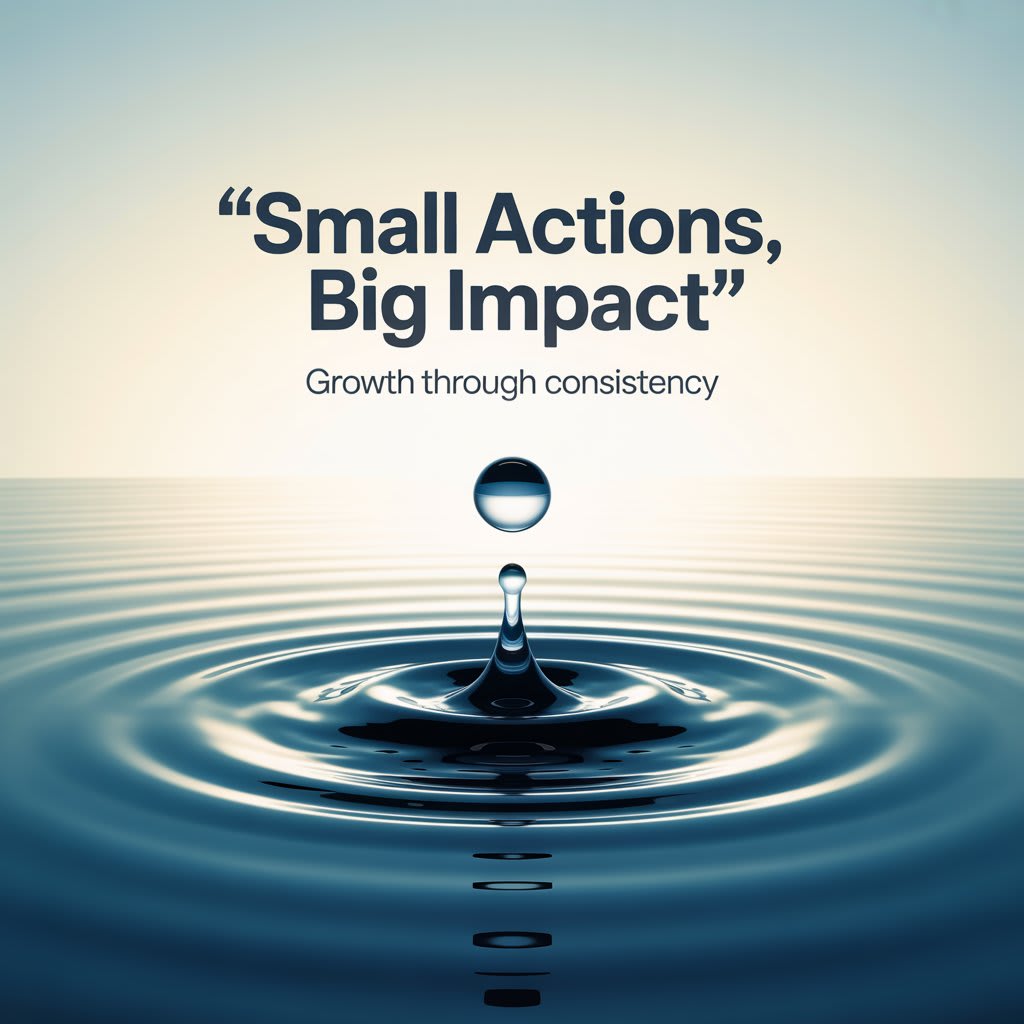
At first glance, the idea that one small habit can change your life might seem overly simplistic, even idealistic. We live in a world that often glorifies grand gestures and dramatic transformations—overnight successes, extreme makeovers, and viral breakthroughs. But beneath the surface of every remarkable story lies a consistent truth: massive change rarely happens overnight. It’s the result of small, seemingly insignificant decisions made consistently over time. This is the quiet power of one small habit.
Habits are the invisible architecture of our daily lives. Whether we are conscious of them or not, they shape everything—from how we spend our mornings to how we respond to stress, how we approach our goals, and ultimately, how we define ourselves. Consider how brushing your teeth, checking your phone, reaching for a cup of coffee, or hitting the snooze button has become automatic. These are not decisions we deliberate each day—they are behaviors we’ve practiced into autopilot.
Now, imagine intentionally creating a new habit, no matter how small, and committing to it. Drinking a glass of water first thing in the morning. Journaling for two minutes. Reading one page of a book. Stretching for thirty seconds. These acts seem too trivial to matter. Yet that’s exactly why they work—they bypass resistance. Small habits don’t trigger the brain’s fear response or feel overwhelming. They sneak past the mental gatekeeper that guards against change, and they build momentum.
The real transformation begins not with the size of the action, but with the shift in identity that comes with it. When you do something repeatedly, you begin to believe something new about yourself. If you read one page every day, you start to think of yourself as a reader. If you run for five minutes a day, you begin to identify as someone who exercises. Identity-based change is far more powerful than goal-based change. You’re no longer just chasing outcomes; you’re becoming the kind of person who naturally achieves those outcomes.
James Clear, in his bestselling book Atomic Habits, emphasizes this idea by saying, “Every action you take is a vote for the type of person you want to become.” One small habit is one vote. One tiny action—performed consistently—is enough to tilt the scale over time. It’s not the intensity, but the consistency that builds character, discipline, and results.
Take the example of Kaizen, the Japanese philosophy of continuous improvement. Rooted in the idea of making small, incremental changes regularly, Kaizen has been credited with transforming entire corporations and economies. Toyota’s production system, one of the most efficient in the world, was built on this principle. But Kaizen isn’t just for businesses—it applies equally to personal growth. It reminds us that change doesn't have to be revolutionary to be meaningful.
Another powerful example comes from the field of neuroscience. Studies have shown that habits actually reshape the brain. Every time we repeat a behavior, we strengthen a neural pathway, making the habit easier and more automatic. This is called neuroplasticity, and it means our brains are far more adaptable than we often believe. With each repetition of a small habit, we aren’t just changing our schedule—we are literally rewiring our brains.
There’s also a psychological phenomenon called the compound effect, popularized by Darren Hardy. It suggests that small, smart choices, when consistently made over time, yield radical results. Think of it like investing. If you invest $1 a day, it doesn’t feel like much. But compounded over years, with consistency and patience, that dollar turns into something significant. Habits work the same way. A tiny shift in behavior now, repeated hundreds of times, can produce a drastically different outcome than doing nothing at all.
Of course, building habits isn’t always easy. The beginning is often the hardest part. We’re motivated, excited, and optimistic—until life gets in the way. This is why starting small is so crucial. A habit that takes only 30 seconds to complete is far more likely to be maintained than one that requires major effort. Once the behavior becomes established, it’s easier to build on it. A two-minute meditation can turn into a ten-minute practice. A daily walk around the block can grow into a five-kilometer run. But it all starts with the first step.
It’s also important to remember that habits don’t exist in isolation. One positive change often triggers a cascade of other improvements. This is known as the domino effect. When you start waking up 15 minutes earlier, you might also start journaling, eating a better breakfast, or feeling more in control of your day. A small win boosts confidence, and confidence fuels further action.
Furthermore, one of the most overlooked benefits of small habits is the emotional and mental shift they bring. When we succeed at something—even a small task—we experience a release of dopamine, the feel-good neurotransmitter. This rewards the brain and encourages us to repeat the behavior. Over time, this feedback loop reinforces the habit and strengthens our belief in our ability to change.
In a culture obsessed with hacks and shortcuts, the idea of slow, incremental change might seem unglamorous. But lasting transformation is not about doing more. It’s about doing what matters, consistently. It’s about understanding that success doesn’t come from one breakthrough, but from a thousand small steps in the same direction.
So if you're feeling stuck, overwhelmed, or unsure of how to begin—don’t wait for the perfect plan, the new year, or the right motivation. Start with one small habit. Pick something so simple you can’t say no. Commit to it every day, not because it will instantly change your life, but because it begins the process of change. Because it tells your brain: “I can do this.” Because every big journey begins with one small step.
That one small habit might be the spark. The proof. The foundation. Over time, it will grow roots. It will shape how you think, how you feel, and what you believe is possible. Eventually, it won’t be small anymore.
It will be powerful.
And it might just change everything.
Keep reading
More stories from Esther Sun and writers in Motivation and other communities.
Driftwood Dreams: The Voyage That Changed Everything
The sea was calm that morning, almost suspiciously calm, as if it knew something no one else did. Jacob Wren stood barefoot on the dock, his weather-beaten hand resting on the wooden tiller of his small boat, The Driftwood. It had been his companion for nearly a decade—patched, worn, and a little lopsided, but seaworthy enough to carry him on his long-awaited solo journey across the Gulf of Mexico.
By Esther Sun10 months ago in Motivation
How to Stay Motivated When Everything Seems to Go Wrong
Motivation often feels strongest at the beginning of a new goal. Starting a project, learning a new skill, launching a business, or changing lifestyle habits can create a surge of excitement and energy. In those early moments everything feels possible and the path ahead appears clear. Yet sooner or later reality introduces obstacles. Progress slows down, mistakes happen, and doubts begin to appear. This is the point where many people lose their motivation and abandon their plans.
By Lukáš Hrdličkaabout 7 hours ago in Motivation
Alfa Ambir Bagwan: Leading Teams with Technical Expertise and Strategic Vision
In today’s fast-paced professional world, leadership requires a combination of technical understanding, strategic thinking, and the ability to inspire teams to achieve collective goals. Alfa Ambir Bagwan exemplifies this balance, building a career that blends technical expertise with marketing knowledge and strong team leadership.
By Thetribunemedia4 days ago in Motivation



Comments
There are no comments for this story
Be the first to respond and start the conversation.