
The path of Ibn Qasim
The autobiography of an unknown martyr.

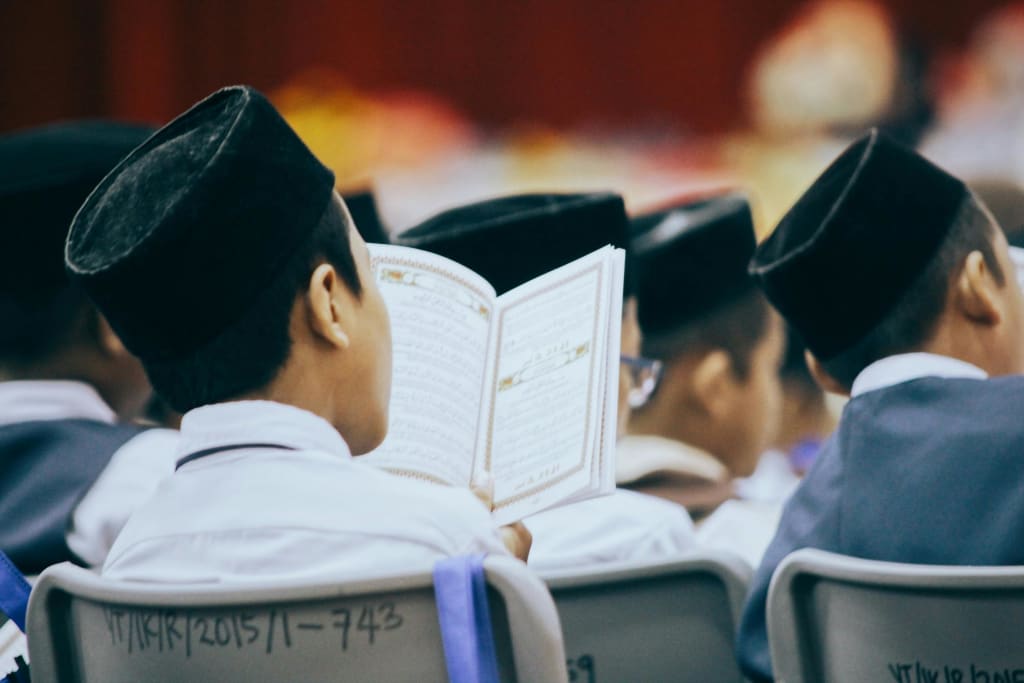
His name was Ibn Qasim. But no one knew him by that name. On the battlefield he was ‘Al-Mutawakkil’, in the prison camp ‘Abu Hamza’, and on the path of migration he was known as ‘Al-Gharib’. Because his true identity was one—he was a destitute dreamer of Allah, who came to change this world with the fire of sacrifice and faith.
Ibn Qasim was born in a deep valley in Khorasan at the end of the 8th century. His father was a poor Quranic Hafiz, who farmed at night and taught Arabic to children during the day. His mother was a simple village woman, whose only dream was that her child would receive the good news of Paradise. The first Surah of the Quran that Qasim memorized as a child was Al-Buruj, where it is said in the words of the martyrs—“And they took revenge for the crime of saying only: Our Lord is Allah.” (Surah Al-Buruj: 8)
This verse ignited a fire within him that grew with time. As a teenager, while others were playing, Qasim would sit next to an elder, listening to history, learning jurisprudence, and most of all, he was interested in ‘jihad’. But his ‘jihad’ was not limited to the sword. He believed that self-purification, the pursuit of knowledge, and the struggle for the establishment of truth were also part of jihad.
His first struggle began when the Tatars again attacked the Muslim settlements of Turkestan. Against these invaders, he raised a small army of only 11 men—some of them blacksmiths’ sons, some blind beggars, and some a young Mongol who had just converted to Islam. They first began with night raids, against food smugglers and brokers. They did not take the name of any political party, did not raise any flag, but simply said—“We are the people of truth.”
Their biggest campaign was in a remote area called Yasir Qila. There was a occupying general who was enslaving the local Muslims. Ibn Qasim and his team planned for three months, organized the locals, and attacked in the name of Allah before dawn. The battle lasted only 14 minutes, but in history that battle was called “Nisbah at-Tawbah”—because that night the general’s heart changed. He himself stopped fighting and took refuge in the shadow of Islam.
But Qasim’s story did not end there. He knew that a greater battle than a real war was a war against confusion and self-forgetfulness. He then migrated to Damascus, where he established the Majlis of Knowledge, where the subtleties of Islam, modern challenges, and the path to purity of heart were taught day and night. Students would come one by one and be enchanted by his words, the way he would open the horizons of thought with verses from the Quran and the seerah of the Prophet (peace be upon him).
His life was full of hardships—several times he was attacked by spies, once he was poisoned. But he did not stop. In his last years, he wrote a manuscript—“Al-Hayat fil Jihad” (Life in Jihad), in which he wrote his philosophy of life:
> “Jihad does not begin with the sword, but with the heart. He whose heart burns with fire for Allah, is never defeated.”
He died at the age of 43, not during an attack, but on the pulpit of a mosque, where he was delivering a sermon—“O believers, do you fear death when it is the door to your eternal security?” Before he could finish speaking, a poisoned arrow pierced his chest. He fell on the pulpit, but his face was calm, and his jaw was firm.
Today, no one knows where his grave is, no one reads his name in textbooks. But for those who seek the truth, who want to stand firm in faith even in difficult times, there is one name that rings deep in their hearts—Ibn Qasim. Because he was a lone martyr, in whose blood is written the beginning of a nation's renaissance.
About the Creator
Keep reading
More stories from Abdul Barik and writers in Motivation and other communities.
Al-Nur City
The year is 2147. The world is no longer the same. The impact of climate change has swallowed up the coasts, many cities have been wiped off the map. Western hegemony has collapsed into internal civil war and economic bankruptcy. The old era of the United Nations, the World Bank, or the American dollar is only in the pages of history. But at that time, a new civilization has emerged in the heart of the desert—the city of Al-Nur.
By Abdul Barik8 months ago in Motivation
Looking back: 2025 was a beast
It's difficult to know how to start this. I've suggested that it's been a tough one from my title and in many ways, it has; however, there is an argument that it's not been that extraordinary at all, merely this wonderful thing we call "life" with all its climaxes and pitfalls.
By Rachel Deeming27 days ago in Motivation
everything happens for a reason
People often say everything happens for a reason. Let's understand why. One day in a forest, a young man came to meet a wise saint. He was very sad and crying. The saint asked what happened. The young man said, "Everything I had is gone." Robbers stole everything. I have nothing left. Not even a way to go home. How can this be good? It's the worst thing ever. How can you say it's for the better? The saint replied, "Let me explain through a story," the saint began. Once a terrible flood hit a small village, washing away everything. A poor farmer's family lost even their little store of grain. The farmer's son said calmly, "It's okay, father. Let it go. Whatever happened happened for good." The farmer got angry and said, "Why are you saying such foolish things? Everything we had is gone. We don't even have food or shelter. He shouted at his son, "Go away. Leave me alone." The boy left in tears. But as evening came and the boy hadn't returned, the farmer felt regret. Suddenly, a rescue boat came and saved them. A villager said, "You scolded that boy for no reason. He was right. We got saved after all." But the farmer said, "How is this good? We still have no home, no food. What will we do now?" His wife said, "We may not have money, but don't lose hope. We'll manage somehow. I'll start working in nearby houses to earn a little. That will help us survive." The next day, the farmer went to the city to find work. He looked everywhere, but didn't get any work. He was worried. How would he take care of his family? They had no real house, just a small heart made from straw. One day, the farmer looked at his poor crops and felt even more hopeless. He said, "My son left home, too. I have lost everything." And people still say, "Whatever happens is for the best. How can this be good?" His wife consoled him. Don't worry so much. Try again. Things will get better. The Palmer agreed and went to search for work again. But again he found nothing. On the way back he met a saint. The saint asked him what was wrong. The farmer explained how the flood took everything. His house food and how life had become very hard. The saint said exactly that's why I'm saying what happened was good. The farmer got angry. How can you say that? I'm suffering. I have nothing. Even my son left me. The saint calmly said, "The answer to all your questions will come with time. Don't worry." That night, after the saint had spoken, the farmer sat quietly, thinking deeply about the words. He wondered if it could really be true that everything happens for a good reason. Later, the farmer got a job at a rich merchant's house. The merchant was kind and paid well. He even offered the farmer a house nearby to live in. One night, someone knocked at the farmer's door. When he opened it, he was shocked. It was his son. The son said, "You moved and didn't even tell me. I searched and found you here. I left that day and went to the city to find work. I got a small job first and then I saved enough to start a little tea stall. Slowly, I built a better life." The farmer was overjoyed. As his son spoke, he realized that even when everything seems wrong, life has a bigger plan, one that only time can reveal. The young man who was listening to this story said, "Okay, but in my case, everything was stolen. What good is in that?" The saint smiled and said, "Actually, I found something in the forest. Here, take this. It was a glowing stone." The young man realized it was a philosopher's stone, a magical stone that turns iron into gold. He said, "If my stuff hadn't been stolen, I wouldn't have come to the forest. I wouldn't have met you, and I wouldn't have found this treasure." So, friends, what did we learn from today's story? No matter how bad things get, time changes everything. Painful moments pass. Never make decisions in bad times that you'll regret later. Even the worst situations often lead to something better.
By nawab sagar6 days ago in Motivation
Wild Card Weekend Recap: What Happens Now?
I think I figured out why I love Wild Card Weekend so much. It's because it's the first playoff anything of the calendar year. The NFL season starts in the fall, and once upon a time, the champion was crowned either on or slightly before New Year's. The evolution of the NFL schedule has resulted in the playoffs starting just into the New Year, and currently, the final week of the season falls on the first weekend of the New Year, with Wild Card Weekend coming a week after that. So yes, chronologically, the NFL's Wild Card Weekend serves as the first playoff anything of the calendar year.
By Clyde E. Dawkins6 days ago in Unbalanced



Comments
There are no comments for this story
Be the first to respond and start the conversation.