
The Odyssey of Old Dying Joe
A Quest for Fulfillment. An Expedition to Make a Difference.

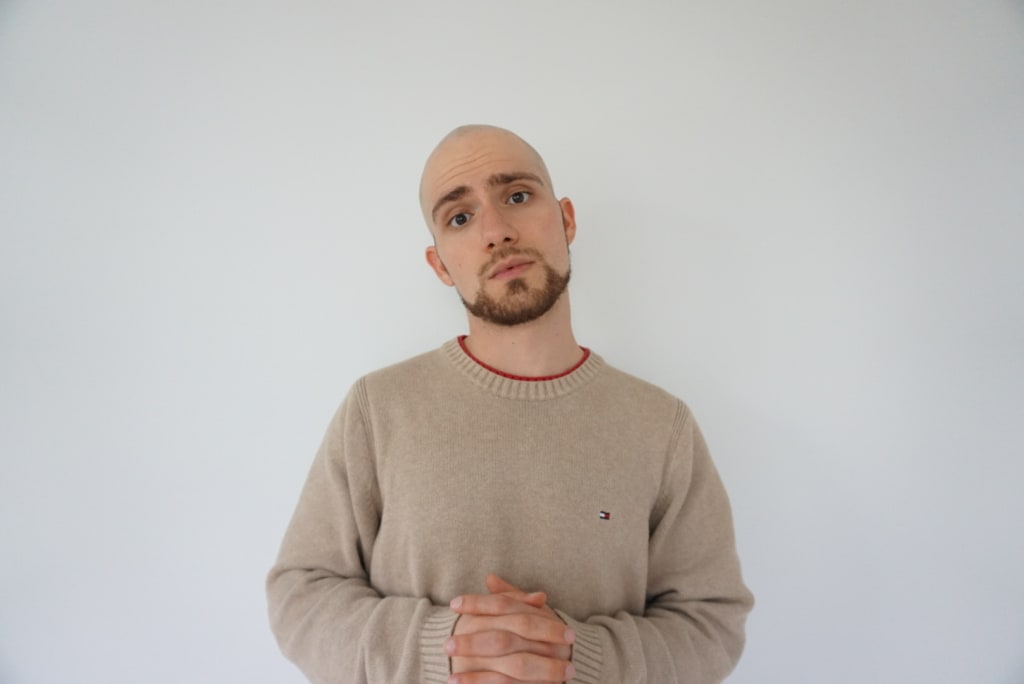
For the better part of the twenty-three eventful, and at times, tumultuous years I’ve spent living, I was a rover—adrift with misgivings preventing me from plumbing deeper to reach my purpose. When I was young, the unity within my family unit had faltered: The fond foundation I had been founded, reared, and raised upon abruptly fell apart beneath my feet. The sanctity of my parent’s marriage was compromised; Dad had departed; the once-happy household I’d known turned cold: Fractures and fissures ruptured up and down the steps of that old raised ranch—the remainder of us were left divided. Conversational clashes became commonplace. Bitterness billowed through the blue abode. What was shared was ambivalence. No one was equipped to handle the hardships; we all formed our own counterintuitive compensation mechanisms, which shifted the atmosphere and remolded the terrain. As an adolescent unaccompanied by a father figure, I determined I was the captain of my own ship despite my naivety in navigating troubled waters: I internalized it all—I bottled my emotions. There wasn’t much room for self-conviction with the collection of constrictions blinding and binding me from peering forward and beyond the adversity. For years, fulfillment seemed more like a fanciful figment—merely a mirage and nothing more. I felt lost at sea.
Somehow, I narrowly sailed over the choppy waves, and in ways, prevailed through the period of time when I was in high school. Socially I was an outcast. Crew members were few in number, but tight-knit as a taut boarding net: My friends were my family—my safety. Mentally I stowed my baggage far from the surface; with intent, I’d wade away from the intensity of the swirling whirlpool within. Academically I was disinterested (and in particular cases, uninterested) in a majority of the topics curated and taught in the curriculum; I lacked any indwelling drive to dive and assiduously immerse myself in most lessons, but I made sure to perform well enough to stay afloat and pass. I sadly associated subjectively negative or mundane classroom experiences with learning itself and eschewed intimate involvement with my own scholarly education at the time. There were, however, a handful of standout projects assigned during my senior year that did inspirit, inspire, offer insights as to what passions I’d eventually pursue full out, and provide perspective as to who I was as an individual. I had chanced upon my penchants for penning my thoughts onto paper and for meticulously playing with words early in my schooling process, but I hadn’t capitalized on these passions on an extracurricular basis until years later. One writing prompt that specifically piqued my interest in the terminal year of high school involved analyzing the lyrics of a song of my choosing. Naturally, as an avid hip-hop head, I chose “The Message” by Grandmaster Flash and the Furious Five: it had depth; it was powerful; the imagery it evoked impressed me. When I felt marooned and morose growing up, I swam toward music for solace: Certain soundscapes served as aural oases amid the darkest seas, which broke and crashed cacophonously. I looked up to prominent hip-hop artists like Grandmaster Flash, Biggie Smalls, Big Pun, Nas, members of Wu-Tang and A Tribe Called Quest, and more: To me they were relatable teachers who understood tribulation too (I still see them as such). I dynamically assimilated a significant quantity of principles, styles, and ideas from the music I rocked to into my own character (and into my own art as an adult [I still do these things]).
In spite of any experienced anguish, my liking for language never languished. I belong to a predominantly Italian ethnic background, and so chose to enroll in Italian class from freshman year through senior year: I adored the course and my favorite teacher instructed it. As Italian IV was nearing its port, an end-of-the-year project was the prerequisite to dock successfully. The task entailed the production of a mock-advertisement video (composing a script, shooting footage, and spoofing a popular Italian product). A portion of the cost of coasting lackadaisically throughout most of school was guilt, but I knew that beneath my complacency laid potential. I thought I owed my Signora, and myself, for that matter, a high-quality body of work. This was an opportunity to both reciprocate the level of effort my favored teacher poured into lessons and to redeem myself as a student: I set out to excel. Groups were chosen. Serendipitously, some of my best friends were selected to collaborate with me—those who too possessed proclivities to write. Our product to market was Barilla pasta. I was absolutely galvanized. This project, unlike any other, instilled a near-ineffable impetus within myself. For the first time, I felt full-fledged fulfillment in my life—all because I delineated my mission and pledged to follow through (and as I did, I only wound up more impassioned). Promptly, I was as busy as Venice, Italy’s one hundred fifty canals: juices steadily flowed, ideas were fluidly transported to the page, and purpose intently traveled to meet them. The manuscript that manifested included idiosyncratic characters (more than the assigned group could accommodate), jovial jokes, austere moments, and blatant product placements. Barilla pasta was a necessary and salient component of the piece, but the script dictated a mob-movie—The Godfather-esque—spoofing treatment: the costume direction called for Homburg hats, pinstripe suits, and just enough fake mustachios to tickle folks’ fancies (any more could have been fairly hairy to contend with and surely would have caused the audience to curl their lips). To fill the extra suits, I recruited my closest consiglieri (confidants)—individuals who hadn’t the slightest clue as to what the conjugations were for even the most basic of Italian verbs: Everything was a go. Shooting started and wrapped within the bounds of one day. The final cut (edited by a good friend who had zero affiliation with my Italian class—outside of myself and the other wise guys in the video, that is) was bellissima [*at least three chef’s kisses*]. Presentation day was a huge success. Signora loved what we created, notwithstanding the unsanctioned cast member additions and other off-the-rubric quirks. She shared the clip with her other classes, and as far as I’m aware, continued to do so after we graduated. It was a hit. It felt good to try; it felt good to succeed. [I would drop the clip, but I’m positive it contains profanity. It’s posted on my Instagram @joesflowpodcast for those who’re interested in checking it out.]
The higher tide had snugly blanketed the granulated beachfront, but only briefly before the foreboding storm’s ugliest cumulonimbus clouds shrieked and shouted calamity. It was June—my eighteenth birthday and graduation were looming: I knew the dates would come to pass soon. The pressure within the glass cask that encased my boat started rising rapidly—and I had known well why: My parents’ separation had hitherto been unofficial; the two had agreed to legally annul their marriage on the date of my eighteenth birthday as to avoid any custodial issues. There was no relationship between my father and I whatsoever—the divorce itself wasn’t exactly the concern that held primacy in my mind (for my folks, it was for the best anyhow). My parents jointly owned the home I had sentimentally anchored myself to over the course of my entire life: The judicial separation spelled the necessity to sell the property. These messages had been apprehensively stashed in my bottle months before the occasion—I never mentioned my family to my friends or anyone else. The rain bucketed: I was unsure how to abandon my crew. I turned eighteen. I made sure not to tell them the truth. Two days later was graduation; extended family members on my mother’s side visited to celebrate (things weren’t always grim with my kin—all of us had just gone through a lot); I had no connection to my father’s family. The blue house was put up on the market. The waterway through which I’d have to steer to make clear what was happening in my personal life was contracting (or so it seemed); I did make sure to spend quality time with my friends before summer’s end, though. It was now August. Most of my comrades were preparing to ship off to college: We were all bound to inevitably disband—regardless. Alas, the rudder never hinged to orient the vessel toward the channel. The reality of my disposition remained sealed in my psyche...that is, until the bottle burst.
I dreamed I was dying. My friends, my father, and family long-forgotten were taken by the tempest; in the midst of the upheaval, the hull of my craft splintered—grief gushed through the punctures; loneliness was drowning me: I was suffocating; it was muscle tension that kept me tamped to the deck. All of a sudden I awoke—frantically panting—worrying that my heart would pop below my rib cage. Hypervigilant was far from hyperbole—it was an understatement. My gravest nightmares trespassed into actuality. Alone in my quarters, my qualms had me cornered. It was a shipwreck: I finally broke down. But no rest assured, this was just the onset. I wound up like the rope of an old harpoon; I wielded my weapon to accomplish acts of self-defeat; my anxieties were self-imposed. The house sold in November. My system was saturated with adrenaline; I was waterlogged with cortisol. Mimicking my mental health, my physical wellness would waver—as hypochondria would tell it (my physical ailments were due to chronic stress—in some ways I’m still healing from the trauma I put my body through. Admittedly, during this phase, I did fear an array of other possibilities which thankfully weren’t the case). Panic attacks landed me in the ER in more than one episode. Nobody was giving me the answers I desired—everyone told me I was fine, but fine felt far too distant. My mother was a trooper (always was and still is): She helped guide me through these trials. In mid-December we moved forty-five minutes north to my grandmother’s place. There was no internet; I only had my permit—no license and no car; the wooded, rural landscape effectively isolated each property. I was disconnected. I sank low—I hit rock bottom young. Luckily. Not yet had I realized that these events would amount to the origin story of the eclectic poet Old Dying Joe. Nevertheless, I reckoned that all I could do was introspect. I looked up toward the sunlit zone and set about swimming.
It took laborious strokes to breach the waterline, but the seaboard was still miles out. I needed fresh air to bravely and objectively stare directly at my reflection amid the visceral ripples. I readily settled on treading at an intuitive pace—I had already undergone enough turbulence for my tastes: I required stability—solid grounds to stand on. I stopped frenetically splashing my arms about—instead, I motioned rhythmically. Too, I noted what was to be forsaken in the stagnant pools I was determinedly paddling away from in order to achieve the turnaround I so desperately desired: lethargic tendencies, suppression strategies, scapegoats, escape tactics, and distractions. I believed I could attain balance through discipline and sustained effort. I recognized that affairs fluctuated internally and externally—in many cases, irrespective of any wants for sameness: At last I learned to embrace change. Repairing my interior fostered a form of fulfillment and furnished a focus. Next, I sought to effectuate exterior alterations.
I was on the lookout for job opportunities. I applied to two retail locations: Big Y and Target. Merely three days after I submitted my application, the head of HR at Target phoned me: She requested an interview. My inceptive steps into her office were intrepid—I nailed the first impression. I answered her inquiries with confidence and courage: The rest of the conference continued swimmingly to its conclusion. I received another call from the store within a week of the meeting. I was brought on board. Work gave me a chance to reinvent my wheel; I deliberately steered in a direction that differed from the trajectory I chose in high school. Working among team members entrusted to serve the populace opened me up: My old anti-social inclinations were cast away for healthier, more authentic practices. I allowed myself to be outgoing—at heart, I felt I was always meant to be an extrovert. Afflictions of my past infused resiliency in me: This attribute was often called upon on the job, and as a result, I gradually built more grit. One day during off-hours—two summers after graduation—my old pals and I reunited to reminisce. At long last I mustered the gusto to utter what once befuddled my thoughts and swamped my soul. With each truth told, the tightness of my muscles toned down (not completely though—to this day I’m still feeling it). They listened attentively. Responsively, my companions consoled me and kindly displayed kindred compassion. Suspicions were confirmed: My trepidations had been irrational. Our ties would never fray.
My post at Target was undeniably a positive in my life, but I still yearned—I wanted a greater sense of freedom. With financial assistance from my mother, I registered in the local driving school program. The class met once a week—every Tuesday—over the interval of three months to prepare students for a written test and a road test. With great resolve, I passed both with relative ease. The news soon reached my father. He wanted to buy me a car. Silent, spinning storms that had raged vehemently in the back of my mind subsided when we reconvened. Gratitude washed over me—and another sensation—one I’d familiarize myself with more over time and later classify as familial love. He exulted at the sight of his own grown son. Together, we minutely examined car after car in the lot at the Honda dealership—until we saw it. It was a steel-gray Honda Accord that shared an uncanny resemblance to a different steel-grey Accord that once occupied a short asphalt driveway situated in front of a beloved blue house (I’ve always referred to my first car as “The Batmobile”: When I was little I would don a pair of Batman shades with a miniscule Bat-Signal decal superimposed over the corner of each lens. I always stored them for safekeeping in my father’s sunglasses compartment in his old Honda). We healed that day, but we still had years of mending ahead of us. Communication was intermittent in post, but this weighted experience catalyzed the developments that would eventually refashion our relationship into a connection only akin to that of Batman and Robin’s (I’m the Batman, by the way. Easily. The Godfather too, while I’m at it. Both, really. Simultaneously. Eclectic artist Old Dying Joe, yes. Also! Master Yoda, Thanos, Super Mario, and the Master Chief—but we won’t go there right now).
Now packing the self-assurance of a true naval captain and seasoned strategist, I picked advantageous positions across the grid that aligned with the contexts of the times to make a modest living. I held five different jobs in the retail and fast food industries between ages nineteen and twenty-two; the maximum number of positions I maintained concurrently was three. My second station as a retail stocker was at Dollar Tree. The obligations of the occupation weren’t sharply at variance with those of my old Target gig, but there were subtle differences and unique duties peculiar to this particular establishment’s directives: I caught on quickly. The Dollar Tree’s venue was virtually a third of the size of Target’s; the close-quarters conditions brought the staff members into intimate proximity with one another: We behaved like a family. On weekends I was one of the employees responsible for unloading truck shipments. The arrival of payloads was inconsistent, the amount of staff delegated to offload cargo was limited to two (if we were lucky three, or sometimes four), and an organizational stowing system for goods in the backroom was nonexistent (we simply piled boxes). I loved truck days. The other designated coworker (and eventual manager) who unloaded truck shipments with me—we’ll call him Dj4gvn—was a pioneer producer of the Bridgeport, Conn. hip-hop scene: He was even in magazines in the nineties. As we extracted and stacked boxes, we would bump classic hip-hop and funk records and jest. I looked up to him as a father-figure of sorts (I still do). We reared wicked work ethics in tandem and had our fun, but all the while, a certain undercurrent began flowing faster and faster: I wanted more fulfillment than I was receiving pushing freight—I wanted to create music of my own and to find success as an artist. One of my dearest friends who I initially met in elementary school, named Aidan Peluso, was in a similar place at a similar time. When I was off the clock, we would gather and contemplate the future. It was unanimous: We both had lofty dreams and desired more from life. We were dead-set on making it all happen. So we got to work.
I needed to know more. I felt I had to educate myself to realize the chest of treasured visions that I had precisely appraised as priceless—so I started reading. I submerged myself in some selections and swiftly skimmed through others. I bought an innumerable amount of notebooks at the Dollar Tree to record my thoughts and others’ quotes that I believed to be relevant to the cause and avidly reviewed them. I wanted to master the subject matters. One day, centered in the vortex of my research, nonplussed, I stopped suddenly—quizzically—and asked myself: “What exactly has happened to me?” In school I was listless toward learning, and now here I was allocating the vastest percentage of my free-time to studying—and I loved it. Bar the Barilla project and listening to hip-hop, nothing else qualitatively neared the sheer force of the intrinsic rewards conferred by reading. I deduced that this immanent source of motivation had been masked by autonomy threats: My capacity to love literature was immense, but back then, I refused to absorb stimulus fed to me by a curriculum that consistently failed to net my attention—so I ruled reading out. This educational turnabout noticeably changed my life for the best (and as it turns out, there are many topics that honestly do interest me!) A specific subject that enlightened me beyond belief (and into feelings) was emotional intelligence (EQ). The mental maladies that once bedeviled me were realistically the product of emotional instability, an absence of acceptance, and abstinence from genuine expression. I was blown away by the frequency of breakthroughs I experienced while investigating sources on emotional literacy. I was ameliorating old issues that I previously conceived would torment me indefinitely and was healing at a considerable/commendable rate. Applying what I was synthesizing and teaching others what I picked up on reliably flooded me with fulfillment. I wanted to smoothly integrate these principles (and more) into music: I wanted to create art that caused folks to heal and feel. My friend Aidan and I discussed EQ nonstop—it was intuitive talk. Along the line, a mutual friend had introduced the two of us to a consummate sound engineer who went by the epithet Bagcheck (we actually went to high school together, but we never directly spoke then). The envisioned was closer to fruition than ever before. I was ready to record hits. I wanted to make an impact—and boy did I do just that.
Out of all the food industry positions I worked, I preferred Panera Bread by a long shot. My life momentum was already rising sharply by the time I was hired, so the fast-paced nature of the job adequately clicked with me; I was twenty when I secured the post. A couple months prior, I actually began leasing an affordable apartment located three stories above the town’s local YMCA: there was no additional fee for utilities, I was granted free access to the gym/facilities, and certain classes were also inclusive. It was a good deal, and I greatly appreciated the extra freedom and privacy. I typically commuted to Panera in the latter half of the day to work night shifts as a dish washer and closer. I loved it there—I was always busy. The high-speed demands of dish duty didn’t offer any openings to fuss—plus, the fun-loving, hard-working, gregarious, and sagacious staff members engendered an atmosphere that adhered to buoyantly completing tasks: The dishes and my personality shined. On the side, I was still purposely pursuing passions: my digital media platforms were growing; I owed many spare moments to research—repaying for the countless optimizations with only more of my time; and music was in the making. Aidan and I had our first session with Bagcheck—it went off without a hitch (although, no song was finished). I arrived at Panera the following day feeling jubilant. I was exerting—fulfilling my obligations—eager to get back to the apartment in an attempt to fit in some note review. Beyond the backdoor of the restaurant were two trash compactors—one for garbage and the other for cardboard; it was my job to dispose of the trash before the night’s end. Outside of the shop was unlit (aside from the light emanating from lamps that adjacently stood erect next to the other establishments in the lot yards away). By now I was rushing: I wanted out before eleven o’clock. The cardboard compactor’s door was ajar. It was dark. I spotted a stray box on the ground. I bent down to grab it, and upon standing back upright—cracked my skull on the bottom of the heavy-metal bailer door. It was a concussive blow. I almost knocked myself out cold; I had taken a knee. (Let’s recall: “I wanted to make an impact—and boy did I do just that”.) The repercussions of the concussion weren’t immediately felt: I actually finished the shift, took a shower (while bathing myself, I started singing soul—something you’d hear bellowing from the diaphragm of James Brown. Music was all that made sense in that singularity), went to bed, got up the next day, and proceeded to work half of the subsequent shift before the head injury caught up to me. I was out of work—down for the count for two months straight.
I was surviving on Workman’s Compensation checks. This was the first serious injury I had ever sustained. The CT scan results came in: There was no bleeding in the brain—thankfully. I slept through most days with foam ear plugs I purchased from the Dollar Tree tightly packed in my ears and a Carhartt beanie pulled down over my eyes. Stunningly, the body of water was completely still—no violent undulations or heaving breakers in the wake of the TBI: Just serenity. Hypochondria was lost at sea. Quietly—tacitly—I overcame old adversities—then I cut to counting blessings. To me, the immaculate and paradoxical beauty of the fragility and power of the human brain was now crystal-clear. My potential was transparent: I never wanted to jeopardize it again. Family, friends, experiences—the residue of episodic memories both distant and recent—spilled into the forefront. It was all coming back to me. Reorienting, I recognized that I was living and dying simultaneously. I confessed that my stay was temporary—that I was a sojourner on this earth. Time’s value appreciated. I was primed for a rebound. When the symptoms receded, I strived to build wellness, spread love, and live full. I taught myself how to speed-read: Cognitive fitness was prioritized. I finally got around to taking on the six-week training program at the YMCA’s gym. I got in contact with my father; we met up at a hibachi spot and formally squashed discrepancies. I was on a roll. My housing director at the YMCA, William Donahue, called me and asked to interview me in an upcoming video targeted at sponsors, affiliates, staff, and potential new members: I happily agreed. It was both an honor and an opportunity as someone looking to excel in the digital sphere and local community. I transferred to a Panera Bread in my town (had to reapply, as one locale was franchise and the other corporate). I returned to work—but not for long. The pandemic pervaded.
The lay-off was three months after acquiring the corporate Panera position. Before the furlough, I had effectively mastered dish washing: Shifts were shortened to four hours, but I was finished with my workload in about two. I hungered for challenge; I had a thirst for fulfillment. Soon after, I filed for unemployment. The return on time invested in entry-level jobs that I ideally dreamed for was granted by chance. I looked to make the most of the circumstances influenced by COVID-19; I sought to see the benevolent within the malevolent. I linked up with a photographer buddy of mine to develop my media profiles: Another passion was discovered. Before long, I was out in the field with my tripod conducting my own shoots. A podcast series was launched too. I was having a blast. Living a lifestyle that lined up with my intrinsic drives colored me emotionally wealthy. I surrendered to the strongest of my propensities: Poetry, music, and writing. A capella videos were produced: These clips were multi-purpose skill building devices (in creating them), supplements (when ingesting the novel stimulus), and skillset advertising assets. Proficiency came with practice, observation, and effort. The artist moniker Old Dying Joe came to me along the way and it stuck—to me it made too much sense intuitively (I feel I could be the anti-anxiety superhero). The imperative: Live full today as if tomorrow won’t pass. Available time was freed to explore autonomously. My father and I interacted often in the summer of 2020. Extended family members that I believed I’d never see again were resurfacing. Unemployment checks ceased: Unfortunately I had to terminate my lease at the YMCA. My father’s family—my family—offered to take me in. They were generous and accepting. I embarked on a course for N.Y. In a funny way, I came full-circle in my life. A prominent position was taken in the family. Parts of me that had been dying were enlivened. I was tranquil within the epicenter of my old traumas: Relations with my kin made the difference. I’d inhabit my grandmother’s attic—I declared it my artist’s garret. Hours of each day were spent speed-reading notes on EQ, habit management, logic, art, grammar, music, and more. I practiced dancing and I trained my ear and voice singing; I rapped my head off often also. Notebooks were lined with my poems. I drafted an EP: The Kingdom Come EP, which revolved around overcoming mental disorders and adversities to make dreams come true. It’s my baby—my masterpiece (yet to be released). Media posts’ quality heightened exponentially by the day: I was vlogging, posting my photography, funny clips, a cappella videos, dance showcases, stories, etc. (I’ve been on a hiatus from media writing this piece and moving back to Conn.). The progress I made in N.Y. is incalculable; I accelerated out there for eight months. Undoubtedly, this chapter was formative and life-changing—never had I experienced such fulfillment. Two weeks ago, I made my way back to Conn.: I’ve been lodging at my mom’s condo writing this piece ever since.
So now I’ve caught you up to the minute. I felt the need to provide the background (my whole life story essentially)—why? Because everything that happened back there has led me to you to make my appeal, which would seem far less audacious if you knew how I got here. I think it’s time to directly address why I believe folks should support me and my endeavors. In all honesty, I’ve been through a lot, have come ridiculously far considering so, have too much to bring to the table to let go to waste, and I have no intention of stopping. A while back I entered my piece “True Confidence” in Vocal Media’s challenge “True Colors”. It didn’t place, but, exponentially, I’m growing more skilled and more confident: My colors will continue to bleed true. I don’t have it in me to give up—if I did I wouldn’t be writing this. I’m thoroughly convinced that I have more to offer this world than clean dishes and stocked shelves. It’s true: I loved my old jobs—they played a critical role in my personal development and I made a lot of memories and met a lot of great people. But the reality is that they’re dead-ends—all of them. They don’t offer the fulfillment I require—period—I outgrew them. I sacrificed so much to come this far: a steady income, my apartment, my luxuries, freedoms, etc. It took everything I had to get here—and at the time I’m writing this—all I have to my name is a hundred dollars and a story. This is all I do—day-in and day-out—without relent—because I want to make a difference (and I know I can—I’ve seen it). This is the challenge of my dreams—the one I’ve been searching for. I have a lot of other lofty dreams too: I’d love to write for Star Wars to some capacity someday, work with Kendrick Lamar—but really what I want is to help people. I want to share the wealth of what I know so folks don’t have to learn the hard way like I did. As a white MC, I want to use my voice to fight for equality. I want to teach empathy to combat animosity. With the money, I could get my apartment back: I’d finally be able to record my music and put out tracks. I’d repay those who’ve supported. I could pull myself out of this financial rut. This is my plea. This is my story. Thanks for reading.
About the Creator
Joseph Severo
I’m Old Dying Joe.
Keep reading
More stories from Joseph Severo and writers in Motivation and other communities.
One Hard Thing
Stop me if you’ve heard this one before: You have the number, you know your schedule- you’ve even picked out the perfect day and time to make this appointment. Shoot, you’ve even picked out alternative days and times just in case their schedules can’t accommodate you!
By Taylor Rigsby2 days ago in Motivation
Treasures in jars of clay
As David drove along Wellington Street in the north of town, he saw many homeless people sleeping on the sidewalk. Some drank alcohol, others smoked weed, and some reached out for money. The area was dirty and smelled bad. Stains of urine marked the walls. Broken bottles and filthy cardboard boxes littered the ground. Most were men in their forties, faces deeply lined. David parked at a convenience store, walked back to Wellington Street, and approached a homeless man. The man shouted, “Are you a cop? Don’t come closer.” “I’m not a cop. I just want to talk,” David replied. “Talk about what?” the man barked, then grabbed a knife from under a muddy pillow.
By Michel Tetchi 2 days ago in Motivation


Comments
There are no comments for this story
Be the first to respond and start the conversation.