
The Most Radioactive Man on Earth: He Stayed Behind When the World Ran Away
Everyone fled the radiation. One man went back. He isn't a scientist or a soldier. He is an ordinary man who decided that some things are more important than living a long life

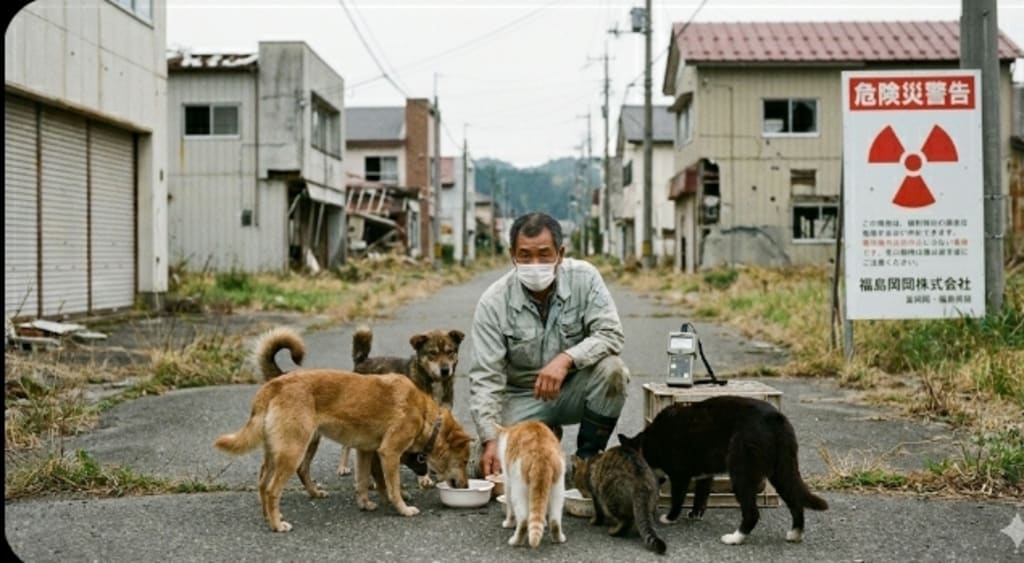
The haunting true story of Naoto Matsumura, the man who returned to the Fukushima exclusion zone to care for the abandoned animals, becoming the "guardian of the dead zone."
Introduction: The Siren and the Silence
March 11, 2011. 2:46 PM.
The earth buckled. The ocean rose. And then, the reactors at the Fukushima Daiichi Nuclear Power Plant began to scream.
We all remember the images. The tsunami swallowing towns whole. The hydrogen explosions blowing the roofs off the reactor buildings. The panic.
But the most terrifying part of a nuclear disaster isn't the explosion. It’s the evacuation.
The government drew a circle around the plant. 20 kilometers. The "Exclusion Zone."
Inside that circle, time stopped.
160,000 people fled. They left their homes, their photos, their unfinished meals on the table. In their panic, they left something else behind, too:
Their lives.
Not just their possessions, but the living, breathing heart of their town. The dogs chained to fences. The cats locked in houses. The cows in the barns. The pigs in the pens.
The government order was clear: Leave immediately. Do not return.
The radiation was invisible, odorless, and deadly. To stay was suicide. To return was madness.
But in the chaos of fleeing buses and screaming sirens, one man was driving in the wrong direction.
He wasn't a soldier. He wasn't a nuclear physicist. He was a 53-year-old construction worker named Naoto Matsumura.
He looked at the empty town of Tomioka. He looked at the animals waiting for food that would never come. And he made a decision that violated every instinct of human survival.
He turned off the engine.
He got out of the truck.
And he stayed.
Part I: The Logic of the Damned
Why?
That is the question everyone asked. Why would a sane man choose to live in a radioactive ghost town?
Naoto Matsumura is not a martyr. He is a pragmatist.
In the days after the disaster, while he was evacuating like everyone else, he couldn't get the image out of his head: The dogs.
He knew that the animals were tied up. He knew they had no water. He knew that the government's plan for the livestock was "euthanasia by starvation"—essentially, letting them die and rotting in the fields to avoid contamination.
Matsumura felt a heavy, crushing guilt. These animals had served humans their whole lives. They provided milk, meat, companionship. And at the first sign of danger, humans had locked the door and run away.
He returned to Tomioka initially just to check on his own family's dogs. He found them waiting. But he also found his neighbor's dogs. And the dogs down the street.
They were barking, starving, pulling at their chains.
He unchained them.
He fed them.
And then he realized: If I leave again, they die tomorrow.
It wasn't a heroic epiphany. It was a burden. He realized he was the only living soul with thumbs capable of opening a can of food within a 20-kilometer radius.
He looked at the radiation counters. He looked at the empty streets.
He did the math.
"I am 53," he reasoned. "Radiation takes 30 or 40 years to cause cancer. By the time I get sick, I will be dead of old age anyway. So, it doesn't matter."
This is the brutal, beautiful logic of the Japanese elderly generation. It is the same logic that drove the Skilled Veterans Corps—a group of retired engineers and janitors over 60 who petitioned the government to let them clean up the melted reactors instead of young men.
Their motto was simple: "Let the young live. We have already lived."
Matsumura became the embodiment of that spirit. He decided to become the sole citizen of the Exclusion Zone.
Part II: The Kingdom of the Abandoned
Life in the Zone is a post-apocalyptic movie, but without the zombies or the drama. There is just silence.
No electricity. No running water. No internet. No voices.
Just the wind, the Geiger counter clicking, and the animals.
Matsumura built a life out of scavenging.
He drove around the abandoned town in a white truck. He went to the empty houses (with permission, mostly) and rescued cats and dogs left inside.
He went to the farms.
He found cows that were skeletons, ribs poking through their hide, mooing weakly in barns filled with manure.
He found pigs that had turned feral.
He even found ostriches—strays from a nearby ostrich farm—wandering the empty streets like dinosaurs.
He took them all in.
His home became an ark. At his peak, he was caring for:
* Over 50 cows
* Two ostriches
* Dozens of cats
* A pack of dogs
* A wild boar
He didn't have funding. He didn't have support.
He had to smuggle himself out of the zone to buy dog food and cattle feed, then smuggle himself back in.
The police stopped him at the checkpoints. They told him he was breaking the law. They told him he was going to die.
He yelled back at them.
"We are all going to die!" he would shout. "But these animals are dying now."
Eventually, the police gave up. They looked the other way. They let the "crazy man of Tomioka" pass. They knew, deep down, he was doing the job their souls wished they could do.
Part III: The Invisible Killer
We like heroes who fight visible monsters.
Matsumura fights a monster he cannot see.
Radiation is insidious. You don't feel it burn. You don't feel it cut. You just breathe it in. Cesium-137. Strontium-90.
Matsumura lives in it. He sleeps in it. He eats food that has been exposed to it.
Researchers from the University of Tokyo came to test him. They put him in a whole-body counter.
The results were historic.
Naoto Matsumura was found to have the highest level of internal radiation exposure of any human being in Japan.
His body is a walking reactor.
When the doctors told him this, he didn't cry. He didn't panic.
He laughed.
"Well," he said, "I guess I am a champion then."
He lit a cigarette.
This isn't carelessness. It is acceptance. He has made peace with his poison. He knows that his cells are likely mutating. He knows that his time is borrowed.
But every day he wakes up is another day the cows get fed. And that is a fair trade.
Part IV: The Government vs. The Guardian
The hardest part of Matsumura's war wasn't the radiation; it was the bureaucracy.
The government wanted the Zone "clean." To the officials, the starving cattle were "contaminated waste." They were a problem to be disposed of.
Government trucks came to euthanize the livestock. They set up starving pens.
Matsumura stood in front of them. He built fences to hide his cows. He engaged in a cat-and-mouse game with the authorities.
He argued that these animals were living evidence. They were scientific samples. If we kill them, we learn nothing about the effects of long-term radiation on mammals.
But mostly, he argued for their dignity.
"They have souls," he said. "Human beings caused this disaster. Why should the animals pay the price?"
He named the cows. He talked to the ostriches. He treated the abandoned cats like royalty.
In a place where humanity had failed, he was keeping humanity alive.
Part V: The Quiet Daily Grind
There is no glamour in Matsumura’s day.
It is 6:00 AM. He wakes up in a house with no heat.
He puts on his work clothes.
He lights a cigarette.
He walks out to the barn.
He hauls bags of feed. Heavy bags. He is getting older. His back hurts.
The cows gather around him. They nudge him with their wet noses. They don't know they are radioactive. They don't know they are in a disaster zone. They just know this man brings the food.
He drives to the feeding stations he set up for the stray cats.
He checks the water troughs.
He spends his evenings alone. There are no neighbors to talk to. The town is dark. The streetlights don't work. The only light comes from the moon and his candles.
He drinks sake. He plays with the dogs.
He wonders if he will wake up tomorrow.
He has done this for over 10 years.
More than 4,000 days.
He has watched the seasons change. He has watched the weeds swallow the pavement. He has watched the houses of his neighbors slowly rot and collapse.
He is the curator of a museum of loss.
Part VI: The Meaning of "Janitor"
The prompt for this story called him a "Janitor."
In a way, that is exactly what he is.
A janitor is someone who cleans up the mess that others make.
A janitor stays late when everyone else has gone home.
A janitor deals with the filth so that others can live in cleanliness.
Naoto Matsumura is the janitor of the nuclear age.
We, the modern world, want electricity. We want bright lights and charged iPhones. But we don't want to deal with the waste. We don't want to look at the consequences when the reactor melts.
We run away.
Matsumura stayed to clean up our moral mess.
He represents a generation of Japanese men and women—the janitors, the retirees, the grandmothers—who stepped forward in 2011 to say: "This is our responsibility."
They didn't post about it on Instagram. They didn't start a GoFundMe.
They just put on their boots and walked into the danger zone.
Conclusion: The Last Man Standing
Naoto Matsumura is still there.
Some of the animals have died of old age. Some have succumbed to disease.
The Zone is slowly reopening in patches, but Tomioka is still largely a scar.
Matsumura is older now. His hair is grayer. His face is lined with the stress of solitude.
But he doesn't regret it.
He says that living in the Zone taught him what matters. Money doesn't matter here. Status doesn't matter.
All that matters is life.
He saved thousands of lives—not human lives, perhaps, but lives nonetheless. He saved them from the terror of starvation. He saved them from the loneliness of abandonment.
And in doing so, he saved something for the rest of us, too.
He saved our belief that even in the worst darkness, even when the air itself is poison, there is still someone who will leave the light on.
He is the most radioactive man in Japan.
But he has the cleanest conscience on Earth.
About the Creator
Frank Massey
Tech, AI, and social media writer with a passion for storytelling. I turn complex trends into engaging, relatable content. Exploring the future, one story at a time
Keep reading
More stories from Frank Massey and writers in Motivation and other communities.
Am I a Failure?
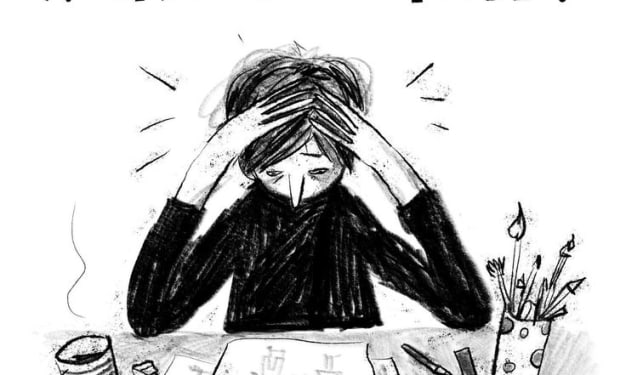
I think almost every teenager has had a moment where they look at their life and think, “What am I even doing?” Sometimes it feels like everyone else is moving forward while you’re just standing in the same place. You see people getting good grades, being talented at sports, having a clear plan for their future, or just seeming confident about everything. And then you look at yourself and start wondering if you’re falling behind.
By frenzied 4 days ago in Motivation


Comments
There are no comments for this story
Be the first to respond and start the conversation.