
The 40-Year Suicide Mission: How One Man Built a Jungle With His Bare Hands
The government said the land was dead. The experts said nothing would grow. Jadav Payeng picked up a shovel and spent four decades proving them all wrong, alone.

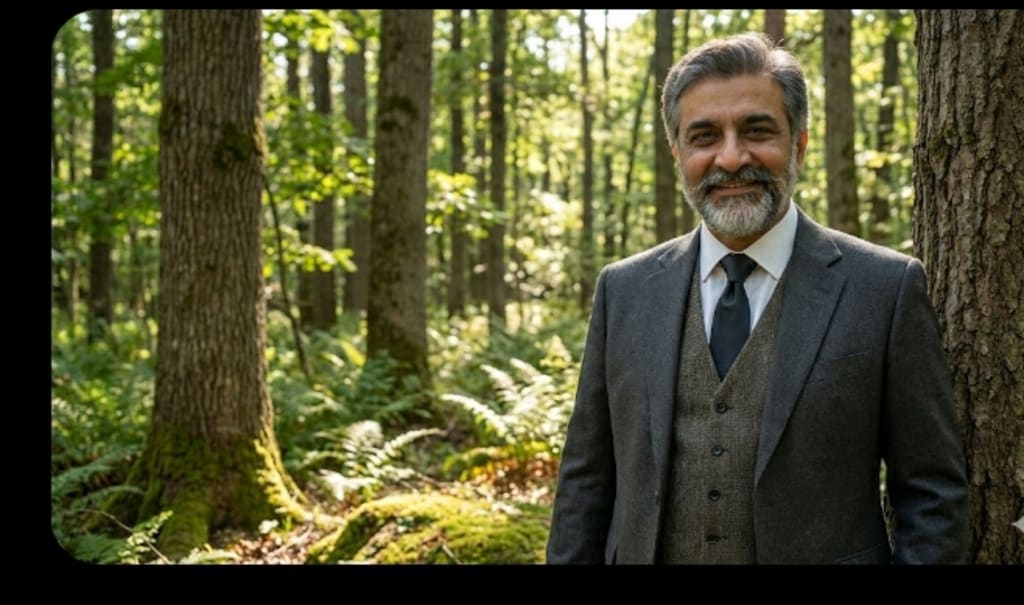
The incredible true story of Jadav Payeng, the "Forest Man of India," who spent 40 years single-handedly planting a 1,360-acre forest on a barren sandbar.
Introduction: The landscape of Death
There is a specific kind of silence that follows ecological collapse. It isn't a peaceful silence. It is a dead silence. No birds. No insects. Just the sound of wind hissing over dry sand and the relentless beat of the sun.
In 1979, this was the sound of Majuli Island in Assam, India.
Majuli is the world's largest river island, sitting in the middle of the mighty, volatile Brahmaputra River. Every year, the monsoons come. The river swells, floods, and tears chunks of the island away. It is a violent, unstable place.
But the floods of 1979 were different. They were apocalyptic.
When the waters finally receded, they left behind a wasteland. Hundreds of acres of fertile land had been turned into a desolate sandbar covered in gray silt. The vegetation was gone. The animals that hadn't drowned were stranded in a desert.
Jadav Payeng was 16 years old. He was walking across one of these new sandbars when he saw something that changed the wiring of his brain.
The sand was littered with snakes. Hundreds of them. They had been washed ashore by the floodwaters. As the sun rose and heated the sand, there was nowhere for them to hide. No shade. No grass.
They all died of heat exhaustion right there on the bank.
Jadav stared at the mass of twisted, cooked bodies. He realized, with a terrifying clarity: If the snakes are dying, we are next.
He ran to the nearby village elders. He told them what he saw. He asked them what they were going to do.
They shrugged. "Nothing will grow there," they told him. "It's just sand. Forget it."
He went to the forest department. They laughed at him. They told him to plant bamboo if he wanted, but not to waste their time. They had bigger problems than a dead sandbar.
Jadav Payeng realized then that nobody was coming to save the island.
So, the 16-year-old boy made a decision that would consume the rest of his life. He didn't join a protest group. He didn't write a letter to his congressman. He didn't start a hashtag.
He picked up a shovel.
Part I: The Madness of the First Step
This is not a story about "gardening." This is a story about terraforming.
Jadav moved out of his village and built a small hut on the desolate sandbar. He decided he would live there until something grew, or until he died.
He started with what the forest department had dismissively suggested: bamboo.
Bamboo is tough. It can survive in terrible soil. But planting it in silt requires backbreaking labor. You have to dig deep into the compacted sand to find any moisture.
Every day, Jadav woke up before dawn. He walked miles to collect bamboo saplings. He hauled them back to the sandbar. He dug holes under the blistering Indian sun, where temperatures regularly cracked 100 degrees Fahrenheit. He watered them by hand, carrying buckets from the river, one by one.
The villagers watched him from a distance. They called him pagla—crazy. They said he was possessed by spirits. His family begged him to come home, get a job, get married, live a normal life.
He ignored them. He was obsessed.
For the first few years, it looked pathetic. A few scraggly sticks of bamboo sticking out of a desert. Any rational person would have looked at his progress, calculated the scale of the destruction, and quit.
But Jadav wasn't operating on rationality. He was operating on duty.
He realized that the sand lacked the nutrients for bigger trees. It needed an ecosystem. It needed soil.
So, he began to farm insects.
He went to the mainland and collected red ants. He carried bags of angry, biting ants back to the sandbar and released them. He knew that ants would burrow into the silt, aerating the soil and breaking down organic matter. He was stung thousands of times.
He collected earthworms. He collected termites. He collected cow dung from villages and spread it by hand over acres of land to introduce bacteria and nitrogen.
He wasn't just planting trees; he was manually engineering the microscopic foundations of life.
Part II: The Forty-Year Grind
Most people can commit to something for a month. A year, maybe, if there's a promise of a reward.
Jadav Payeng committed for four decades, with zero promise of anything other than more work.
This is the unglamorous reality of his life. There were no cameras. There were no awards ceremonies. There was just a man, aging year by year, his skin turning to leather in the sun, his hands becoming permanently calloused.
He lived alone in his hut. He survived by selling milk from the few cows and buffalo he kept. Every rupee he earned went back into the forest.
As the bamboo began to take hold, providing a thin layer of shade and trapping moisture, he started planting proper trees. Teak. Gamhar. Arjun. Cotton trees.
He didn't have a nursery. He collected seeds from mature trees on the mainland. He cultivated saplings himself.
The work was dangerous. The Brahmaputra is not a tame river. He faced annual floods that threatened to wash away everything he had built. He had to constantly build barriers, replant lost areas, and adapt to the shifting geography of the river.
He developed his own methods. He learned which trees to plant upriver to break the current, and which to plant downriver to catch silt. He learned the language of the land better than any university professor.
Ten years passed. Then twenty. Then thirty.
The bamboo patch became a thicket. The thicket became a woods. The woods became something else entirely.
Part III: The Return of the Giants
You know you have built a real forest not by the trees, but by what decides to live inside it.
At first, it was the birds. Migratory birds that hadn't stopped on the island for decades began to roost in Jadav's trees. Vultures returned.
Then came the smaller animals. Rabbits. Deer. Wild boars.
But the true test of a jungle is the apex species.
Years into his project, Jadav was working near the riverbank when he felt the ground vibrate. He heard a sound that hadn't been heard on that part of the island since before he was born.
A trumpet.
A herd of wild elephants—about 115 of them—had crossed the shallow river channels and entered his forest. They stayed for months.
It was a moment of pure, vindicated ecstasy. Nature had accepted his offering.
But the arrival of the giants brought chaos. The elephants didn't stay within the boundaries of Jadav's forest. They wandered into nearby villages. They trampled crops. They destroyed huts. They killed a villager.
The villagers, enraged and terrified, marched to Jadav's hut. They blamed him. They said his forest was a menace. They threatened to chop down the trees to drive the animals away. Some threatened to kill the elephants.
Jadav stood between an angry mob and his life's work.
"Cut me up before you cut the trees," he told them.
He didn't back down. He explained to them that the elephants were only raiding the villages because they were hungry. The solution wasn't less forest; it was more forest.
He began planting more fruit trees—bananas and elephant apples—deep inside the woods to keep the herd fed and content within the boundaries.
He managed the conflict alone, acting as a one-man buffer zone between civilization and the wild world he had invited back.
And then, the ultimate apex predator arrived.
Bengali tigers.
Tigers are the seal of approval on an Indian ecosystem. They only live where there is dense cover, ample water, and a healthy population of prey like deer and boar.
When Jadav saw his first pugmark (tiger footprint) in the mud, he knew he had finished the job. He hadn't just planted trees. He had resurrected a complete, self-sustaining food chain on a patch of dead sand.
Part IV: The Discovery
For nearly 30 years, Jadav Payeng was anonymous. The forest department had no idea the forest existed. It wasn't on their maps. It was officially listed as wasteland.
In 2007, a photojournalist named Jitu Kalita hired a boat to take him down the Brahmaputra to photograph birds. Looking through his long lens at a barren sandbar, he saw something impossible: a dense, dark green wall of jungle.
He thought it was a mirage. He asked the boatman to take him closer.
He stepped onto the shore and walked into a fully realized ecosystem. He found Jadav inside, a wild-looking man living like a hermit among tigers and rhinos.
Kalita wrote an article for a local newspaper. The story sounded so improbable that the authorities initially dismissed it as a hoax.
The forest department finally sent an official to investigate. The official, Gunin Saikia, was stunned. He later said:
> "We were amazed to see such a dense forest on a sandbar. It would have taken the department 30 years and crores of rupees (millions of dollars) to build something like this. He did it alone, with nothing."
>
They measured it. The forest covered 1,360 acres.
To put that in perspective, Central Park in New York City is 843 acres.
One man, with a shovel and a sack of seeds, had built something nearly twice the size of Central Park.
Conclusion: The Anti-Excuse
Today, the forest is known as the "Molai Forest," named after Jadav's nickname.
Jadav Payeng is now famous. He has received India's highest civilian awards. He travels to conferences on climate change. He is studied by scientists.
But if you go to Majuli island today, you won't find him resting on his laurels. You will find a man in his late 60s, still waking up before dawn, still carrying a shovel, still planting.
He says he won't stop until his last breath. His new goal is to spread the forest to 5,000 acres.
Jadav Payeng’s life is a brutal counter-argument to modern cynicism.
We live in an era of loud opinions and very little action. We are paralyzed by the scale of global problems. We tell ourselves, "I am just one person. What can I do against climate change? Against deforestation? It’s hopeless."
Jadav Payeng proves that is a lie.
He didn't have funding. He didn't have a degree in ecology. He didn't have support. He faced an environment that was actively trying to kill everything he planted.
He just had a refusal to accept the death of his home.
His story is not a "feel-good" fairytale about nature. It is a testament to the terrifying power of human obsession. It shows that if you are willing to suffer, willing to be lonely, and willing to work in obscurity for decades, one person can indeed change the physical geography of the planet.
He didn't save the world. He just saved his piece of it. And he proved that the only difference between a desert and a forest is one man who refuses to put down his shovel.
About the Creator
Frank Massey
Tech, AI, and social media writer with a passion for storytelling. I turn complex trends into engaging, relatable content. Exploring the future, one story at a time
Keep reading
More stories from Frank Massey and writers in Motivation and other communities.
The Last Voice Message
It was a quiet Sunday evening when Daniel’s phone vibrated on the kitchen table. He had just returned home after a long day at work, the kind of day that left your mind empty and your body tired. Outside, the sky was fading into deep shades of blue, and the city lights were slowly flickering on. Daniel poured himself a cup of coffee and glanced at his phone. 1 New Voice Message. The notification made him pause. He frowned slightly when he saw the sender's name. Lucas. Daniel’s heart skipped. Lucas had been his best friend since childhood. They had grown up together, shared secrets, dreams, and countless late-night conversations. But Lucas had died three days ago. A car accident on a rainy highway. The kind of sudden tragedy that leaves people staring at the floor during funerals, unsure what words could possibly make sense. Daniel had stood there at the funeral home, staring at the closed casket, trying to convince himself it wasn’t real. And now… A voice message from Lucas. Daniel stared at the screen, his coffee forgotten. Maybe it was an old message delayed by the network. Maybe Lucas had sent it earlier and it only just arrived. That had to be it. Still, his hands felt strangely cold as he pressed play. For a moment, there was only static. Then a familiar voice spoke. “Hey, Daniel… if you're hearing this, something probably went wrong.” Daniel froze. Lucas’s voice sounded calm, but there was something unusual in it. A strange heaviness. “I’m recording this because… well, I have a feeling something bad might happen tonight.” Daniel felt his chest tighten. Lucas continued. “You know how I always trust my gut. And right now it’s screaming at me.” A quiet laugh followed. “But you’ll probably call me dramatic.” Daniel remembered saying exactly that many times. Lucas had always been the intuitive one. The message continued. “I’m driving back from the lake house right now. It’s raining pretty hard, and the roads are terrible.” Daniel’s grip on the phone tightened. The accident had happened on that same road. Lucas paused for a few seconds before speaking again. “I didn’t want to call because I’d probably just sound paranoid. But there are things I’ve been meaning to say for a long time.” The rain could be heard faintly in the background of the recording. “First… thank you.” Daniel blinked, confused. “For sticking by me all these years. You’re more than a friend, man. You’re family.” Daniel swallowed hard. Lucas’s voice softened. “I know I don’t say stuff like this often, but you deserve to hear it.” Daniel suddenly felt a deep ache in his chest. The kind of ache that only comes from words that arrive too late. Lucas continued. “And there’s something else…” The sound of a windshield wiper swept across the background. “If anything ever happens to me… don’t let Mom stay alone in that house. She pretends she’s strong, but she’s not as tough as she acts.” Daniel closed his eyes. Lucas always worried about his mother. “Visit her sometimes. Even if she says she’s fine.” The message went quiet for a moment. Then Lucas spoke again, slower this time. “And Daniel… there’s one more thing.” A faint rumble of thunder echoed through the recording. “You keep putting your life on pause.” Daniel frowned slightly. “You always say you’ll chase your dreams later. Later when you have more money. Later when things are safer.” Lucas sighed. “Stop waiting.” The rain in the recording grew louder. “You wanted to write stories. You wanted to travel. You wanted to start that podcast we talked about.” Daniel’s throat tightened. “Life doesn’t wait for the perfect moment.” Lucas chuckled softly. “And clearly… neither does fate.” Daniel felt a chill run down his spine. “I guess what I’m trying to say is… don’t waste time the way I did.” The car engine could be heard revving slightly. “If you’re hearing this, it probably means I never made it home.” Daniel’s eyes filled with tears. There was a long pause in the recording. Then Lucas spoke one last time. “But I’m not scared.” Daniel leaned closer to the phone. “I’ve had a good life.” The rain softened slightly in the background. “And I had a great friend.” Daniel wiped his eyes. “Take care of yourself, okay?” A faint smile crept into Lucas’s voice. “And hey… if there’s Wi-Fi in the afterlife, maybe I’ll send you another message someday.” Then the recording ended. Silence filled the kitchen. Daniel sat there, staring at the screen long after the message had finished. Outside, the wind rustled softly through the trees. For the first time since the funeral, Daniel let the tears fall freely. But mixed within the sadness was something unexpected. Clarity. Lucas had known something might happen, and instead of fear, he had chosen to leave behind words that mattered. Daniel slowly stood up and looked out the window at the city lights stretching into the distance. For years he had postponed his dreams. Waiting. Delaying. Convincing himself there would always be more time. But Lucas’s final message echoed in his mind. Life doesn’t wait for the perfect moment. Daniel picked up his phone again. Not to replay the message. But to open a blank document. At the top of the page, he typed the title of his first story. “The Last Voice Message.” And for the first time in a long while, Daniel began to write.
By Sahir E Shafqat7 days ago in Motivation


Comments
There are no comments for this story
Be the first to respond and start the conversation.