
The Modern Idol of Nationalism
When Love for the Nation Replaces Love for God

At the Collective Level: “Shirk in Love”
At the collective level, we should understand what “Tawhid in Love” is and what “Shirk in Love” is.
One of the dominant social concepts of our time is nationalism based on homeland. In earlier times, nationalism was often based on race, and conflicts were usually along racial lines. But in the 19th and 20th centuries, the greatest political idea Europe produced was territorial nationalism — the idea that everyone living within a particular homeland is one nation, and religion is each person’s private matter. Whether one is Hindu, Sikh, Parsi, or Christian, the state has no concern with it. The state is secular and has nothing to do with religion. All those who live within its borders are given nationality and citizenship.
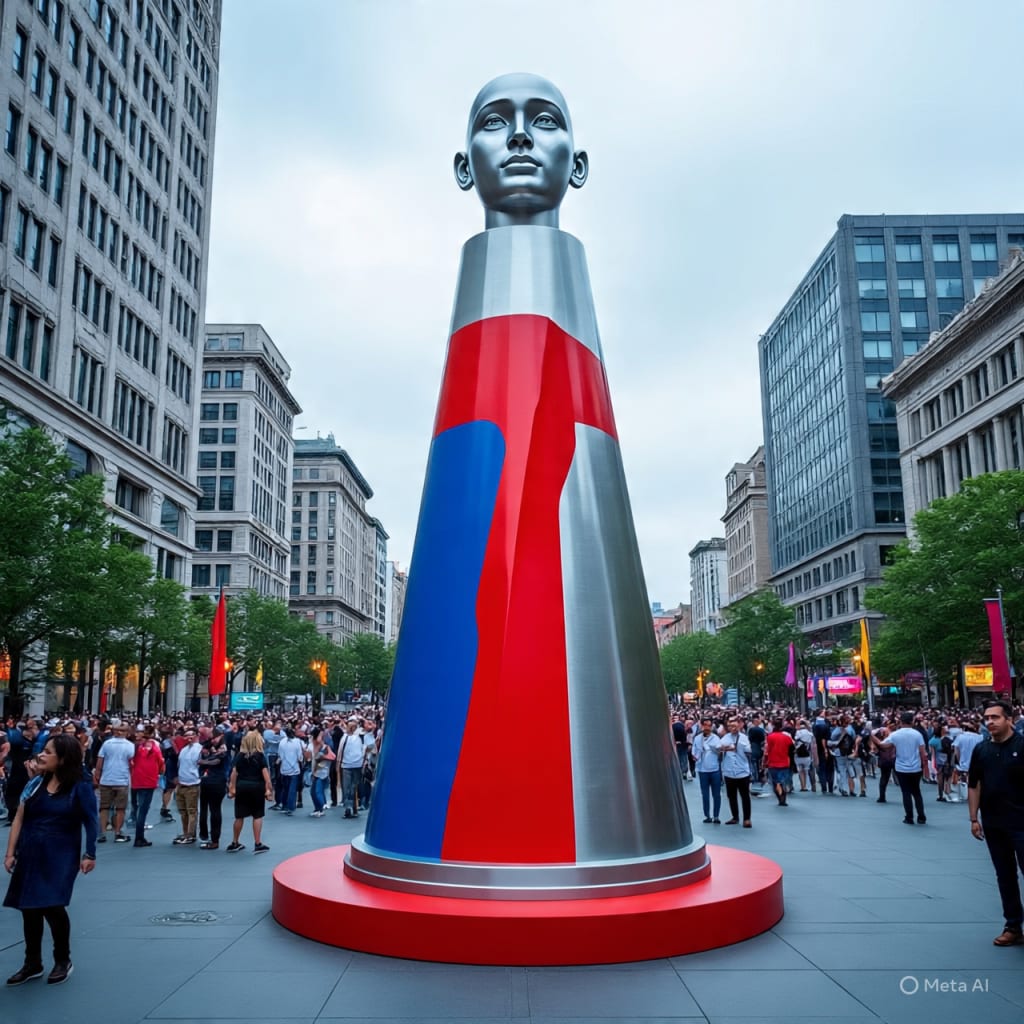
Naturally, every form of collective unity requires something to become its center of love. Without emotional attachment, there can be no strong connection, no solid foundation, no willingness to face dangers together. In this era, the chief “deity” that has been carved out is the homeland itself. Love and glorification of the homeland are preached, people are taught to die for its honor, slogans are raised in its name, citizens stand respectfully before its flag and salute it. There is even a hymn of praise for it, called the national anthem. This is the religion of nationalism, and these are its rituals of worship.
This is the new shirk of our era, yet our scholars have largely failed to recognize it. I admire Allama Iqbal’s depth of thought because he was the only one of his time who fully grasped this reality. Just as he clearly explained the concept of Divine Sovereignty, he also struck a heavy blow against the idol of nationalism.
Iqbal’s passion and insight were intense because his observation was profound. He understood how much had changed. The days of worshipping idols like Lat, Manat, Uzza, and Hubal were gone — today’s worship is directed elsewhere, and the greatest idol in that place is the homeland. This is now happening among us as well, because we have not reflected on the true nature of these things.
What does saluting the flag mean? It is in fact one of the rituals of worship for the homeland. When the national anthem is played, standing still and silent before the flag is like performing a prayer for the nation — though we have not realized it. In every religion, certain forms of expression are adopted to declare love for and acknowledge the greatness of the deity. Likewise, to express love and reverence for the homeland, people humbly salute its flag.
The religion of nationalism, invented by Europe, has brought with it all the religious rituals of devotion to a deity — except now the deity is the homeland. Iqbal put it in verse:
> This idol, shaped by modern civilization,
Is the destroyer of the house of the Prophet’s religion.
Your arm is strong with the power of Tawhid,
Islam is your homeland, you are of Muhammad’s way.
Show the world the ancient vision,
O follower of the Prophet, reduce this idol to dust!
To break the idol of the homeland into dust was Iqbal’s message. How has the homeland become a deity? Because it has become the center of your love. Now, whatever is good for the homeland is good in your eyes — whether it is lawful or unlawful in itself. Even if it means oppressing others for the sake of the homeland, you will do it. In the past, people raised slogans in honor of their gods; now the slogans are for the homeland. The land has, in truth, taken the form of a deity, and the foundation of this is the concept of nationality, one of the most important social ideas of the present age.
In short, “Tawhid in Love” means that the true center of love is Allah’s Being, and that all other loves are subordinate to His love. “Shirk in Love” means that the love for some person, institution, or thing becomes equal to or greater than the love for Allah.
About the Creator
Muhammad Tayyab
I am Muhammad Tayyab, a storyteller who believes that memories are treasures and words are bridges to hearts. Through my writing, I capture what time often leaves behind."
Keep reading
More stories from Muhammad Tayyab and writers in Motivation and other communities.
The Greedy Washerman
Once upon a time in a small village, there lived a poor washerman and his wife. They spent their days washing clothes by the riverbank, struggling to make ends meet. But the washerman had a strange fascination — he loved gazing at the sky, dreaming of wonders far beyond his reach.
By Muhammad Tayyab 6 months ago in Motivation
I Worked Hard My Whole Life but Never Felt Financially Safe
I was raised to believe that hard work was the ultimate guarantee. Work hard, stay honest, don’t complain, and everything would eventually fall into place. Financial safety, I was told, was the reward for effort. So I believed it. I built my entire life around it.
By kamran khan6 days ago in Motivation
Miss Persephone's Manual to a Seemingly Ordinary Life
Miss Persephone was found at the dining table, her blue eyes swollen, her tears arriving and retreating like the tides of the ocean. Earlier that day, her family had visited her in the retirement home where she had lived for eight years. It was her eightieth birthday.
By Imola Tótha day ago in Fiction



Comments
There are no comments for this story
Be the first to respond and start the conversation.