
The Machine's Muse: Redefining Authenticity in the Age of AI
Exploring the Impact of Artificial Intelligence on Art and Literature, and What It Means for Human Creators

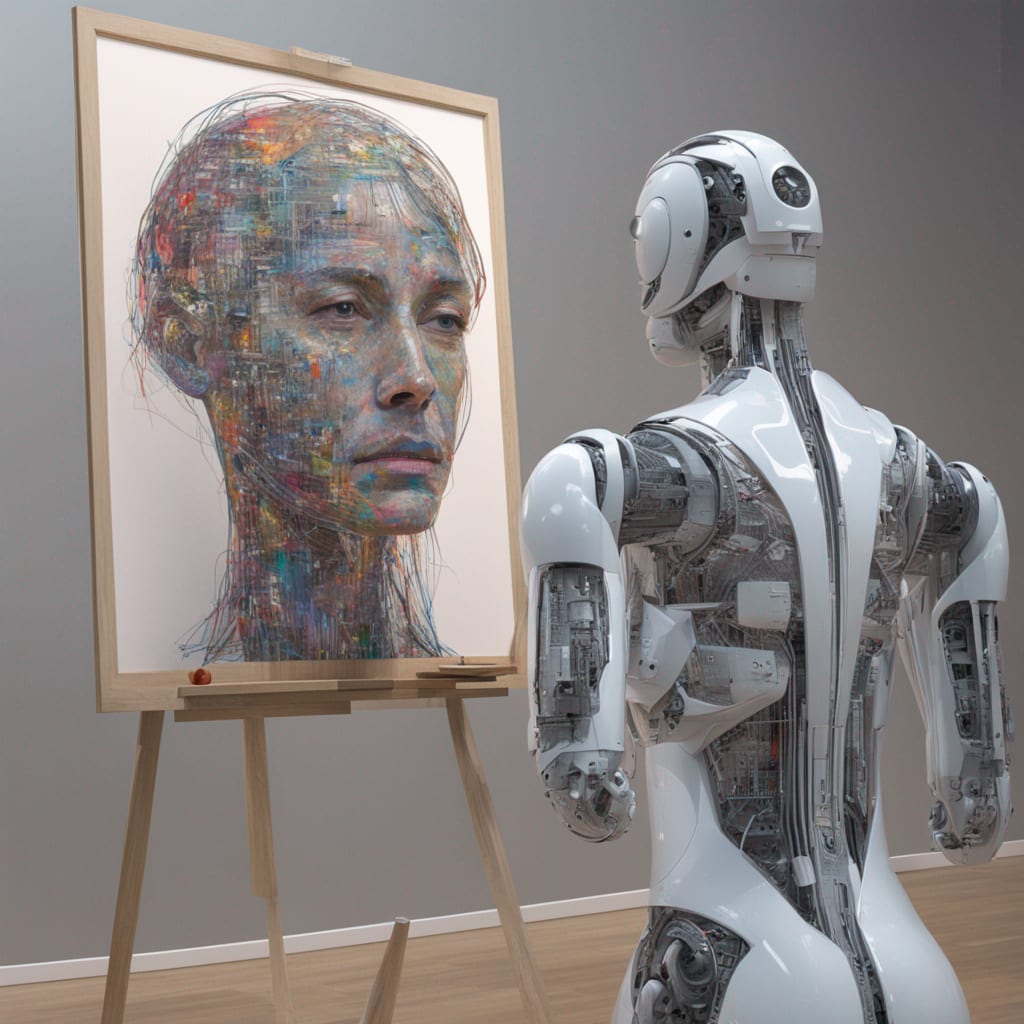
The rise of artificial intelligence (AI) in recent years has brought with it profound changes to various domains of human endeavor. Among these, the creation of art and literature has been particularly impacted. AI’s ability to generate paintings, compose music, and even write prose and poetry has sparked both excitement and apprehension. This new era of creative collaboration between humans and machines raises a crucial question: Does the use of such tools compromise the authenticity of the creators who employ them?
On one hand, AI has become a valuable tool that extends the reach of human creativity. Artists, writers, and musicians who once struggled with the blank canvas or the elusive sentence can now turn to AI for inspiration or assistance. For example, AI can help visual artists rapidly generate ideas, offer variations on a theme, or even provide unexpected combinations of colors and forms. Writers, too, find AI's predictive capabilities and linguistic flexibility useful for overcoming writer’s block or exploring different narrative structures. With AI doing some of the "heavy lifting," human creators can focus on refining their vision, enhancing their craft, or exploring new dimensions of their creativity.
Yet, as AI systems become more proficient at mimicking human style and sensibility, a deeper question emerges: Does the involvement of machines in the creative process strip away the authenticity of the work produced? Authenticity in art and literature has often been associated with the expression of human experience, emotion, and intentionality. The idea that a creator imbues their work with a personal, unique stamp—an idiosyncratic mark of individuality—has been central to how we understand what constitutes true artistry. If an AI can create a novel or a painting indistinguishable from those made by human hands, does this blur the line between the creator and the tool, making the work itself feel less "genuine"?
To some critics, AI-generated works feel hollow, the result of algorithms crunching data rather than an authentic manifestation of human consciousness. These critics argue that authenticity lies in the struggle, in the human limitations and choices that shape the creation of art. The very act of creating—dealing with failure, frustration, and triumph—forms an essential part of the work’s value. A machine lacks this emotional investment; it doesn't struggle, it doesn’t grow, and it doesn’t learn from personal experience. Therefore, AI-generated works may lack the deep emotional resonance that only human creators can imbue into their art.
But this view can be countered. After all, tools have always played a role in the evolution of art. The painter’s brush, the writer’s pen, the musician’s instrument—these are all tools that, like AI, extend the artist's capacity to create. The pen doesn't steal a writer's authenticity, nor does the brush diminish the painter’s originality. Tools have always been instrumental in shaping human creativity. The question, then, might not be about whether AI has a place in the creative process, but about how we choose to interact with it.
AI can be seen as a new kind of tool, one that complements the artist rather than replaces them. Instead of viewing it as a substitute for the creator’s personal touch, it can be embraced as a partner in the creative process. The authenticity of a piece of art or literature could then be viewed not merely through the lens of who or what created it, but through how it is used. If the artist or writer guides the AI’s output, making thoughtful decisions about what to keep and what to discard, then the result is still a product of human imagination, innovation, and intentionality.
Moreover, AI has the potential to democratize art and literature in ways that were previously unimaginable. People without formal training in artistic disciplines can use AI to create compelling works that resonate with their own experiences, thoughts, and feelings. By lowering the barrier to entry, AI expands the diversity of voices in the creative realm, enabling people from all walks of life to share their stories and ideas. In this sense, AI may actually enhance the authenticity of creators by empowering new forms of expression that were previously inaccessible.
Ultimately, the role of AI in art and literature does not diminish the importance of human creators. Rather, it challenges us to reconsider the nature of creativity itself. In an age where human and machine can collaborate to produce something new, the question of authenticity may shift from "Who made this?" to "What does this work say, and how does it speak to us?" If the work resonates with the audience, if it evokes thought and emotion, then perhaps the authenticity of the creator is not so easily reduced to the identity of the one who holds the brush or the keyboard. The authenticity of art, in this light, may lie not in the sole authorship of the human creator but in the emotional, intellectual, and cultural connections it fosters.
Thus, the emergence of AI as a creative tool does not so much threaten authenticity as it invites us to redefine it. The fusion of human imagination with machine intelligence offers a new frontier for artistic expression, one that could be as rich, complex, and meaningful as any that came before it. In this collaborative age, authenticity may not be about the tools we use, but about how we choose to shape and give meaning to the world around us.
About the Creator
K-jay
I weave stories from social media,and life, blending critique, fiction, and horror. Inspired by Hamlet, George R.R. Martin, and Stephen King, I craft poetic, layered tales of intrigue and resilience,
Keep reading
More stories from K-jay and writers in Motivation and other communities.
The Year of Boundless Creativity: My 2025 Resolution
Introduction: The Promise of a New Year As fireworks lit up the night sky on New Year’s Eve, I couldn’t stop reflecting on the stories I’ve yet to tell—the ones rooted in my experiences, fueled by imagination, and inspired by the resilience of others. For years, these stories have lived in fragments—unfinished drafts, fleeting ideas scribbled in journals, and narratives I’ve told myself but never shared.
By K-jayabout a year ago in Motivation


Comments
There are no comments for this story
Be the first to respond and start the conversation.