
The Incredible Survival Story Of Mauro Prosperi
Mauro Prosperi drank his urine and ate lizards to survive after he missed his way in the Sahara desert

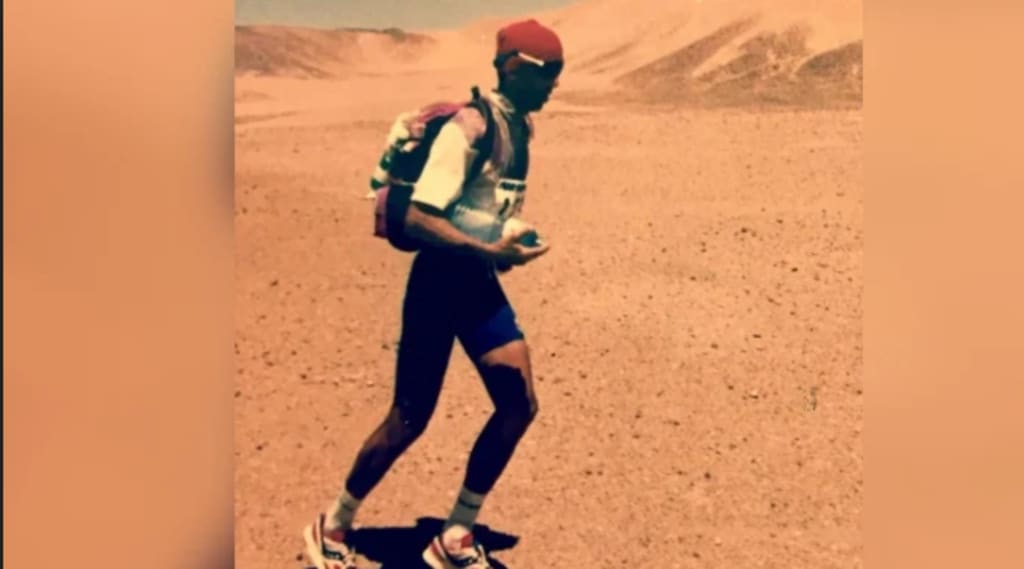
What do you think is the most difficult surviving environment on the planet? From the windswept Antarctic to the huge Amazon rainforest, there are plenty of prospective choices. Whatever order you place these regions in, the Sahara desert is bound to be near the top of your list.
This 3.6-million-square-mile desert is roughly the size of the entire United States (including Alaska) and is notorious for its extreme heat. The surface temperature of the dunes in the Sahara has been measured to be greater than 180°F.
Rainfall and vegetation growth are sparse, and the chances of meeting another human are quite low. It's about as close to a bleak wasteland as you can get without going to the polar ice caps or the Moon.
Humans, on the other hand, love a challenge, and we're no strangers to triumphing against nature. Adventurers have scaled the highest peaks and dived to the ocean's depths. The Sahara is just another challenge for these daring individuals.
The Marathon of the Sands
The Marathon des Sables, also known as the Marathon of the Sands or the Sahara Marathon, has been described as the most difficult footrace on the planet.
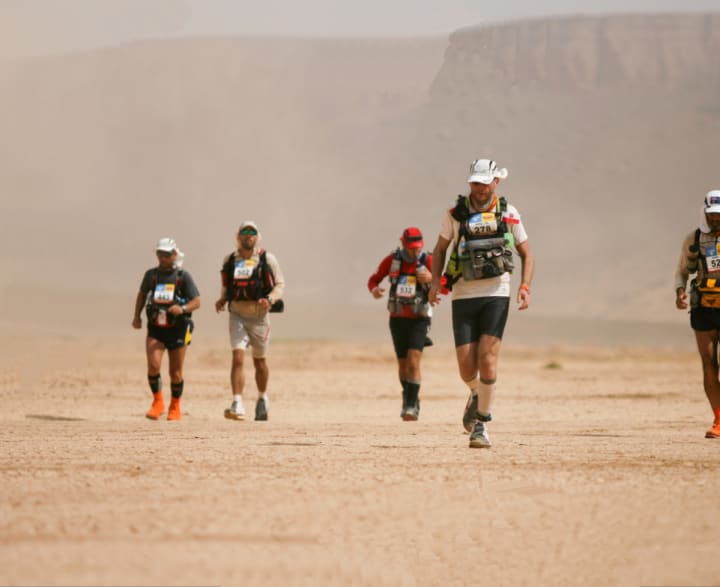
This six-day yearly ultramarathon covers 156 miles, which is nearly the distance of six marathons. It is set in the Sahara desert, more precisely in southern Morocco.
The following is how the marathon's website defines it:
“MdS is a truly grueling multi-stage adventure through a mythical landscape in one of the world’s most inhospitable environments – the Sahara desert. You have to be self-sufficient and carry all your own food and equipment for the week on your back.
Communal goat’s-hair Berber tents are pitched every night but, apart from that you have to take it with you. Water is rationed and if you exceed the ration, you get a time penalty.”
The maraton's promotional video;
MAURO PROSPERI and The Race
Mauro Prosperi, an Italian police officer and former Olympic pentathlete, was ready to exceed his physical boundaries in 1994. He was 39 years old, married, and had three small children at the time.
Prosperi remembered his initial reaction upon hearing about the notoriously challenging ultramarathon'
“I love a challenge so I started training immediately, running 40km (25 miles) a day, reducing the amount of water I was drinking to get used to dehydration. I was never home. My wife, Cinzia, thought I was insane – the race is so risky that you have to sign a form to say where you want your body to be sent in case you die.”
He flew to Morocco to begin the race after months of intense preparation. Despite the fact that it now attracts over 1,300 people each year, offering a greater sense of safety in numbers, the 1994 event reportedly had just 134 competitors. As a result, Prosperi claims he was alone for the majority of the six-day journey.
Things Got Wrong
The 57-mile journey through the desert between campgrounds on the fourth day of the Marathon des Sables makes it the event's longest single stage. On April 14, 1994, as Prosperi crossed the third checkpoint, 20 miles into the day's adventure, the scorching heat had already raised temperatures to 115°F. He grabbed his permitted 2 liters of water and kept running as required by the rules.
Prosperi described what occurred that day in a 1998 interview with Men's Journal:
“When the sandstorm started to blow, I lost sight of everybody else. I kept running, though, because I thought I could see the trail.
I was in seventh place and didn’t want to lose my standing. It was nearly dark before the winds relented. I started running again, but after a few minutes it occurred to me that I had lost the trail.”
Prosperi claims he backtracked for hours before it became too dark to continue looking for road markers.
He set up camp and started the hunt at daybreak, only to discover that his surroundings were completely unfamiliar. He was out of food and virtually out of water.
Prosperi waited atop the sand dune all day, following race instructions to remain still and await rescue. He claims that in the afternoon, a rescue chopper flew almost exactly above his location but failed to detect him.
He resolved to start walking again the next day. "I had a compass and a map, so I believed I could navigate very fine," he later told the BBC, "but without points of reference, it's a lot more complicated."
Locating Shelter
Prosperi noticed what looked to be a single building off in the distance. He recognized it as a marabout shrine when he got closer; it was an abandoned grave for a prominent Muslim figure. The temple offered resources like shade even though there was no chance of rescue nearby.
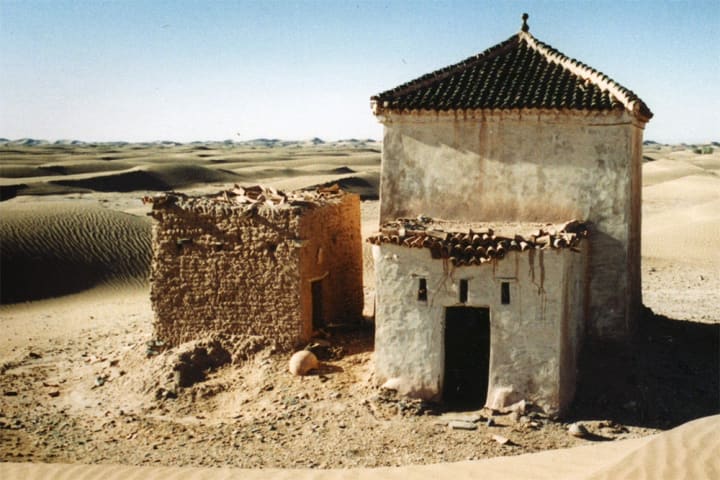
Prosperi sucked on wet wipes from his pack, licked morning dew off rocks, and drank his own pee while it was still somewhat clear in an effort to stay hydrated.
Prosperi claims that as his food supplies ran low, he started eating beetles and bird eggs. He also claims to have killed and eaten uncooked bats and lizards he found nearby the shrine. Despite this restrictive diet, the anti-diarrhea medication in his pack kept him from losing any more fluids.
Prosperi was depressed and contemplating suicide when he cut his wrist with his pocket knife. In a sad twist of destiny, his dehydrated blood coagulated and saved his life.
Prosperi set out from the shrine and began to walk towards the distant mountains, avoiding the heat of the day by going in the early morning and late evening. He squeezed moisture from plant roots as he traveled by dry riverbeds. Prosperi finally found a desert oasis after staying eight days.
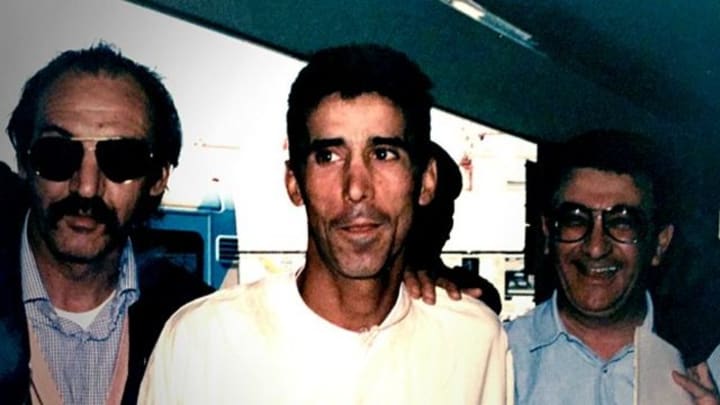
Prosperi filled his water bottle after finally finding relief from his thirst and continued moving forward. He eventually came across some dried goat droppings and kept looking for more. He discovered human footprints.
He recalls, “I crested a hill and beheld an incredible sight. There was a nomad girl, maybe 8 years old, tending a flock in the sparse greenery of a wash. I ran toward her and begged for help.”
Prosperi was promptly given goat milk by the girl, a member of a Tuareg caravan of nomads, and she then rode him on a camel to the closest village. Prosperi had walked 180 miles from his point of disappearance, having unintentionally wandered into Algeria, although starting in Morocco. Due to the hostilities between the two nations, local military police initially confronted him; but, after learning who he was, they transported him to a hospital.
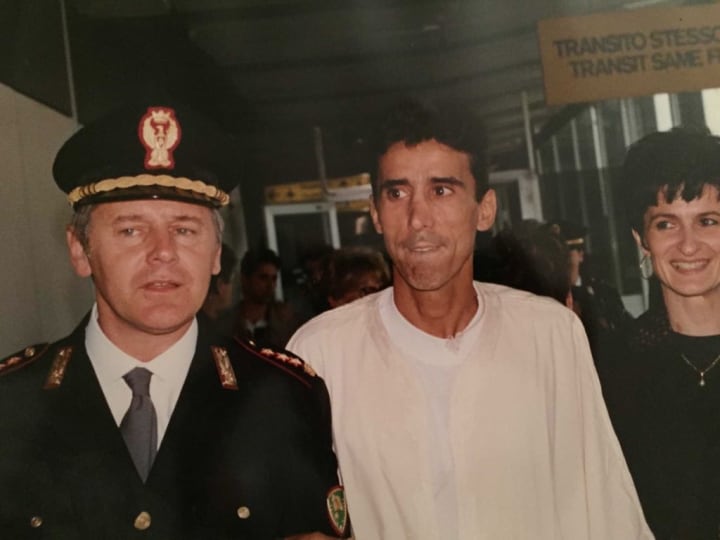
Prosperi reportedly lost 35 pounds, weighing in at just 99 pounds when he was rescued. Doctors said his liver had almost completely failed, and hospital staff gave him 16 liters of intravenous fluids.
He was reunited with his family and received a warm welcome back to Italy, although he was unable to eat solid food for several months after the ordeal, and he says that he didn't recover for almost two years.
About the Creator
Rare Stories
Our goal is to give you stories that will have you hooked.
This is an extension of the Quora space: Rare Stories
X(formerly Twitter): Scarce Stories
Writers:
....xoxo
Keep reading
More stories from Rare Stories and writers in Motivation and other communities.
How Franklin D. Roosevelt kept his paralysis from the American public — even while he was on the campaign trail.
Franklin Delano Roosevelt is known as the president who led the country through the Great Depression and World War II, two of the biggest problems of the 20th century.
By Rare Stories3 years ago in Motivation
An Honest Person, a Successful Life
I lost an opportunity once because I told the truth. It still stings when I think about it. I remember sitting in my car afterward, hands on the steering wheel, wondering if honesty was just a pretty word people used when they could afford it. I needed that opportunity. I had bills, dreams, and a deep desire to move forward.
By Fazal Hadi6 days ago in Motivation


Comments
There are no comments for this story
Be the first to respond and start the conversation.