


What is happiness? Happiness is a state of being. It is not an emotion. How do I become happy? Many people think that if they have money, power, pleasure, and fame, they will be happy. Not so at all. The lack of money will make you unhappy, especially if you need to choose between food or paying the utilities. But if you have a decent income and you don’t have to track every single cent, you can be happy. If you can cover your rent or mortgage, pay for food and clothes, have essential necessities (BTW, the latest Apple phone is not one of them), and have, say, an extra 20% to spend on what you want, you can be happy.
According to Arthur Brooks, affiliate to The Atlantic and a social scientist who teaches a course titled Pursuit of Happiness at Harvard, he divides Happiness in three great categories: enjoyment, satisfaction, and purpose. You must enjoy yourself, at home and at work, you must be satisfied with the projects, chores, things you accomplish, and you must have purpose. Purpose is hardest to define. It’s what drives you, it’s what you strive to achieve, it’s a goal that you continuously improve upon. Of course, such path is not without bitterness, regret, and pain. You may fail. You start over again. You won’t be happy when you’ll fail, that’s guaranteed! But when you succeed, then happiness will be yours… for a while. It doesn’t last forever. It’s fleeting moments. Some will last longer than others. That is normal.
Now happiness is made of three branches, some of which you have control over, some of which you don’t. You don’t have control over the first two. 50% is your genetics. These are the cards you are dealt with at birth: what you look like: the color of your hair, eyes, skin. Are you a healthy baby? That kind of stuff. The next one is circumstances at 25%: where were you born? Is your family poor, wealthy or in the middle? Are you in an industrialized country or not? Is it an urban or rural setting? Is your family very religious or have strict tenets they adhere to or not? The last branch, for 25%, is habits. This is the one you control 100% and where you can make a difference in your happiness level overall. You chose what you do. You can defy the odds if you put your mind to it. If you have grit, persistence, patience, you can become more than what you were born into. You can break the cycle of abuse; you can choose not to do what your parents did. It will not be easy, but it is achievable.
To do so, you must invest in four portfolios: faith, family, friendship, and work. Faith is either a traditional religion or a higher power that you believe in. Family is your kinship, usually an unbreakable bond. Friendship is where you should have your most intimate relationships. Work is where you earn your successes and where you will have service to others.
Now, let’s talk about some habits you can have that will promote wellness and happiness. The formula for happiness is unique to everyone. You must find out what works for you. A good place to start is gratitude. Every day, name 3 to 5 things for which you are grateful for in your life. Say them out loud, write them down in a journal or both. Make time for mindfulness; be totally present when you are doing something, especially when you are in conversation with others. Put down the phone and listen actively. Maintain good relationship with your family, friends, and community be work, church, neighborhood. Meditate. Have a fulfilling career or work. Make sure you have proper shelter, access to good nutritious food, proper rest. Exercise, go outside every day, or as much as you can. Have a positive outlook on life. Don’t find problems and complications, find solutions.
Happiness is not the lack of occasional struggles, it’s the way you rise to the challenge; your gusto for life; how fast you bounce back from negative experiences. For example: someone is upset with you. You can ruminate it all day and let it ruin your day or choose to realize that you do not control that person and that his or her anger is about him or her, not about you. Those ups and downs in life are what shows us what being happy is.
Take time to fill your soul cup; give back; smile; have meaningful communications with others; be grateful, embrace nature and unplug from screen time.
But what about circumstances? These bring new "things" or events in your life that create the illusion of happiness. It's a novelty. The novelty effect is when you get something new in your life. Be it a new car or a new relationship, get married. These things which are circumstantial, will bring you joy for a while, but in time, the feeling will fade away. If you get a new car, you will be “happy” for the first month or two. Six months down the road, it will be just a car. Same thing with getting married: you will be very “happy” for the first two years but five years down the line, you may not be so infatuated with your partner anymore. Try 50 years!
I recently read a book by Annie Daly, Destination Wellness. In that book, she travels to six countries around the world to find how wellness is defined in those cultures and see what makes those people happy, fulfilled. Here is my takeaway from the book.
For each country visited, she describes a word that represent a wellness philosophy that makes people happy. I will name the country, the word concept and explain briefly what it is, what it means.
In Jamaica, the word is Ital. It’s to connect with Mother Earth while using what she provides for you. It means growing your food, if you can, or locally source it. It’s making home meal dishes, in a safe and relaxed space.
In Norway, the word is frivluftsliv. It means to connect with the Earth through nature. It is taking hikes in nature, bringing a bunch of sandwiches and just go outside and hike. It’s to disconnect totally from the human world – responsibilities and all – to clear your mind. No music allowed on those hikes!
In Hawai’i, the word is aloha. It is much, much more than just hello and goodbye. It is to be face to face breathing in together, sharing in the breath of Life. It’s important to know where you come from, not just your lineage, but also the skills that are culturally uniquely yours. It’s to connect to Mauna. It is to know that Nature will reveal itself to you on what you should do next, where you should go. It is to be One with the tree, the ocean, the sand…
In Japan, the word is Ichigo ichie. It means once in a lifetime. It’s to be present, respect the moment you are in; the people, the things and the actions going on. They will never come back to you exactly in the same way. You are time. Live as if this moment could be your last. All we have is now.
In India, the word is Ayurveda. It is the natural medical science of India. Everyone is classified by their predominant dosha. Each dosha has different needs. In the Ayurvedic world, prevention of disease and staying well is at the forefront of the concept. It’s having a routine that lets you balance your body, mind, and spirit.
In Brazil, the word is community. Family, friends, neighbors, and co-workers are all part of your community. Everyone is very close to everyone. Everyone checks up upon each other, they support each other. They party and dance together like Carnival, where people where a mask, and for a while, socio-cultural barriers are taken down.
So, what is this elusive formula of happiness? It’s a combination of all the above, yet different for each individual. It is:
- a self-nurtured and confident self;
- basic income that meet all your needs and some of your wants;
- good events in your life;
- healthy and close relationship with your community;
- connection to Mother Nature (Earth) through simple acts:
- cook supper together;
- spend quality time with family and friends;
- embrace the minimalistic trend;
- travel around the world;
- walk barefoot outside, take a hike;
- and get out of your comfort zone because that’s where the magic happens!
REFERENCES
The Atlantic. In Pursuit of Happiness, 2021.
https://www.youtube.com/watch?v=QyqzOhpfc-4&t=34s
Daly, Annie. Destination Wellness. San Francisco, CA: Chronical Prism. 2021.
About the Creator
Sylvie Gagné
I’m a high school teacher in a French Catholic board in Ontario, Canada.
I love traveling, cooking and listening to music.
I’ve always had a very imaginative mind since I was a child.
Keep reading
More stories from Sylvie Gagné and writers in Motivation and other communities.
There is no 2.0 Earth!
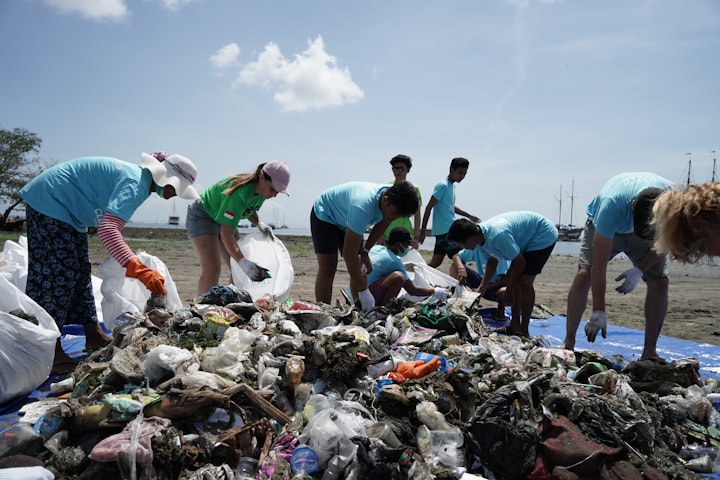
Reduce, Reuse and Save Money! Everyone knows about reducing their single use plastic items, just like they know to wash and reuse them if they are still in good condition. This is especially true for plastic bags from stores and plastic silverware. I usually reuse my grocery bags as thrash can bags if there is no hole in the bottom. The holes for the opening and the handles don’t count!
By Sylvie Gagné5 years ago in Earth
The Night the Stars Stayed Silent
The night I paid attention to the stars, nothing important was supposed to happen. ⭐⭐⭐ I hadn’t planned it. I was just outside because the house felt too loud, even though no one else was awake. The air was cooler than expected, carrying that faint smell of dust and something distant—trees, maybe, or a road far away. I stood still for a moment, letting my eyes adjust, and then I looked up.
By Talha khan7 days ago in Motivation
Day 4 of Quitting
If this is how sobriety feels, maybe it’s better to go through life a little buzzed… this, along with other hits like, I want to kill myself, I wish I was dead, and I’m going to throw myself off a bridge have been the only thoughts on rotation these past few days. I promise myself that if, in a month, I still feel like this (‘this’ meaning despondent, full of rage, and simultaneously numb) I can go back to smoking. Until mid-February though? Nicotine is off the table.
By sleepy drafts6 days ago in Longevity


Comments
There are no comments for this story
Be the first to respond and start the conversation.