
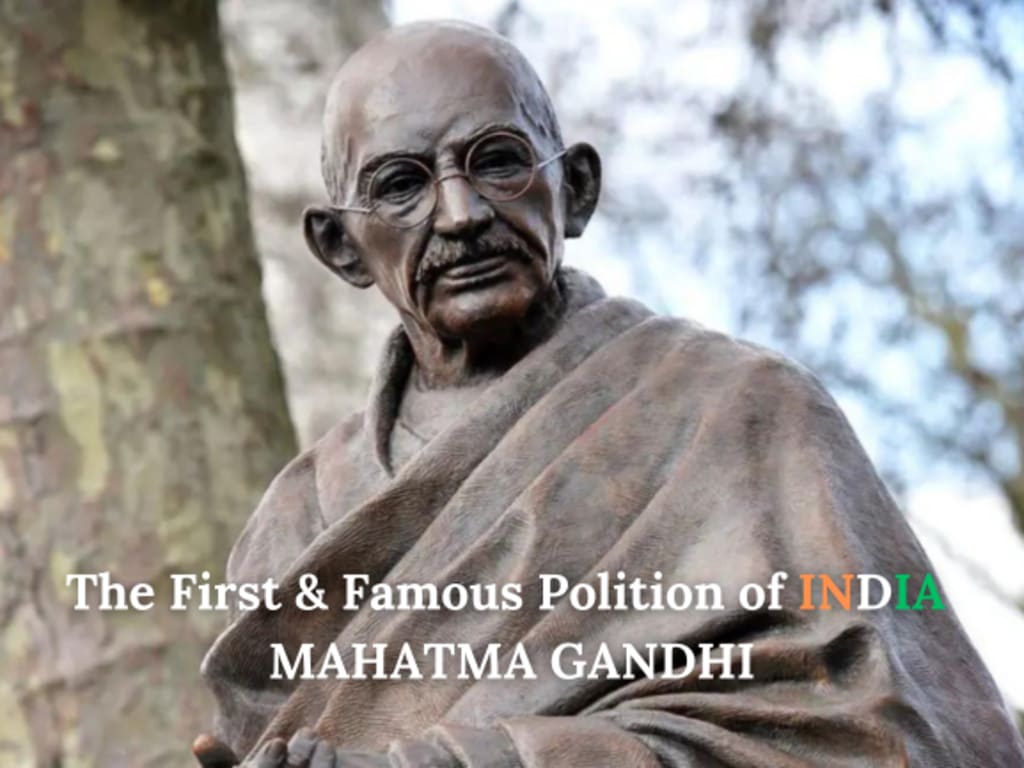
The First & Famous Polition of INDIA - MAHATMA GANDHI
Mahatma Gandhi: The Guiding Light of Nonviolent Revolution
Introduction
Mahatma Gandhi, also known as Mohandas Karamchand Gandhi, was a prominent leader who spearheaded India's struggle for independence from British rule. His principles of nonviolence, truth, and self-discipline continue to inspire people around the world. Gandhi's life and teachings serve as a timeless source of motivation and guidance, offering valuable lessons on perseverance, resilience, and the power of peaceful resistance. This blog aims to delve into the life and philosophy of Mahatma Gandhi, exploring his significant contributions, highlighting key principles, and ultimately elucidating why he remains an unparalleled source of motivation.
1. Early Life and Influence
Born on October 2, 1869, in Porbandar, India, Gandhi was raised in a devout Hindu family. His upbringing instilled in him the values of truth, simplicity, and compassion. Gandhi's early life experiences, including studying law in London and working as a lawyer in South Africa, exposed him to racial discrimination and injustice, fueling his determination to fight for equality and justice. These formative experiences laid the foundation for Gandhi's lifelong dedication to social and political change.
2. Principles of Nonviolence
Gandhi's most significant contribution to the world was his philosophy of nonviolence, known as Satyagraha. He believed in the power of love and compassion, advocating for peaceful resistance as a means to bring about societal transformation. Gandhi emphasized that nonviolence requires immense courage and discipline, asserting that it is not a passive or weak approach but a proactive force that can mobilize masses and challenge oppressive regimes. By promoting nonviolence, Gandhi demonstrated that peaceful means could be more effective in achieving lasting change and creating a harmonious society.
3. The Salt March and Civil Disobedience
One of the pivotal moments in Gandhi's fight for India's independence was the Salt March in 1930. In response to the unjust British salt tax, Gandhi led a nonviolent protest, walking 240 miles from Sabarmati Ashram to the coastal town of Dandi. This act of civil disobedience inspired millions and garnered international attention, highlighting the oppressive nature of British rule and fueling the independence movement. The Salt March symbolized Gandhi's unwavering commitment to justice, self-reliance, and the pursuit of truth.
4. Legacy and Global Impact
Gandhi's impact extended far beyond India's struggle for independence. His principles of nonviolence and peaceful resistance influenced numerous civil rights movements around the world, including Martin Luther King Jr.'s fight against racial segregation in the United States. Gandhi's teachings continue to resonate with individuals and communities striving for justice, equality, and peace. His message transcends borders and cultures, reminding us that change can be achieved without resorting to violence or hatred.
5. Personal Transformation and Self-Discipline
Gandhi firmly believed in the importance of self-discipline and personal transformation as catalysts for societal change. He advocated for simplicity, emphasizing that true freedom comes from inner peace and detachment from material possessions. By living a modest and minimalist lifestyle, Gandhi sought to lead by example, demonstrating that one's character and values should be the guiding force in life. His teachings remind us of the significance of self-reflection, self-control, and aligning our actions with our principles.
6. Conclusion
Mahatma Gandhi's life and philosophy continue to inspire millions worldwide. His unwavering commitment to truth, nonviolence, and self-discipline serves as a guiding light for those seeking to create positive change in their communities and the world at large. Gandhi's legacy reminds us that even in the face of adversity, there is strength and resilience in embracing peaceful means to challenge injustice. His teachings encourage us to cultivate empathy, compassion, and understanding, fostering a society where conflicts are resolved through dialogue and mutual respect.
Gandhi's emphasis on the power of nonviolence as a force for transformation remains relevant in our contemporary world, plagued by conflicts and social unrest. His life exemplifies the transformative potential of individual actions and the collective power of a united community. Gandhi's unwavering commitment to truth and justice serves as a reminder that the path to progress is often paved with personal sacrifices and unwavering conviction.
Today, as we navigate complex global challenges, Gandhi's teachings offer invaluable lessons in leadership, integrity, and empathy. His call for selfless service and dedication to the upliftment of the marginalized and oppressed echoes loudly in a world that seeks equity and justice for all. Gandhi's motivation and legacy inspire us to be agents of change in our own spheres of influence, striving for a world where peace, equality, and harmony prevail.
In conclusion, Mahatma Gandhi's life, principles, and tireless pursuit of justice continue to resonate with individuals across generations. His legacy stands as a testament to the transformative power of nonviolence and the indomitable spirit of human resilience. As we draw inspiration from his life, let us remember that we too can make a difference by embracing truth, nonviolence, and self-discipline, and working towards a more just and peaceful world, one step at a time.
About the Creator
Ameer Hamza Aman
Welcome to my Page!
I've embarked on as a professional motivational artical writter. It's a path that has allowed me to inspire and uplift others while constantly fueling my own passion for personal development and positive change.
Keep reading
More stories from Ameer Hamza Aman and writers in Motivation and other communities.
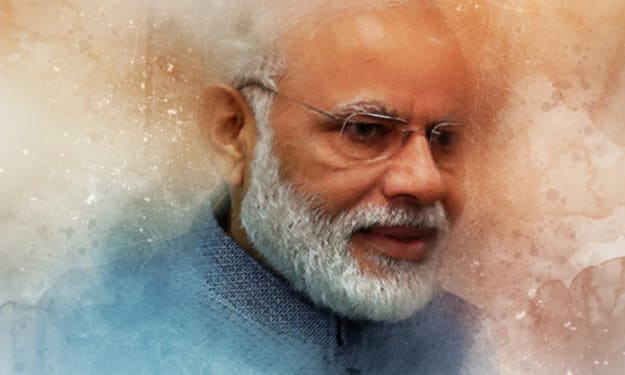
India's Most Famous Polition - NARENDRA MODI
Introduction: One of the notable aspects of Narendra Modi's leadership is his emphasis on embracing diversity and fostering inclusivity. In a nation as diverse as India, with multiple languages, religions, and cultural backgrounds, Modi has consistently worked towards unity and harmony. By promoting cultural exchange, celebrating festivals of different communities, and advocating for social inclusion, he has demonstrated the importance of embracing diversity as a source of strength rather than division. Modi's approach reminds us of the power of inclusivity in motivating individuals, fostering collaboration, and building a harmonious society where everyone feels valued and empowered to contribute their best.
By Ameer Hamza Aman3 years ago in Motivation
The Barefoot Boy Who Built Hyundai
In 1915, in a small poor village in what is now North Korea, a boy named **Chung Ju-yung** was born into hardship. His family were rice farmers. They lived in a straw-roof house, ate simple meals, and often went to bed hungry. Shoes were a luxury. Education was a dream. Survival was the goal.
By nawab sagar5 days ago in Motivation



Comments
There are no comments for this story
Be the first to respond and start the conversation.