
The Extraordinary Journey of Steve Jobs
How a College Dropout with a Vision Transformed the World of Technology and Became a Symbol of Innovation
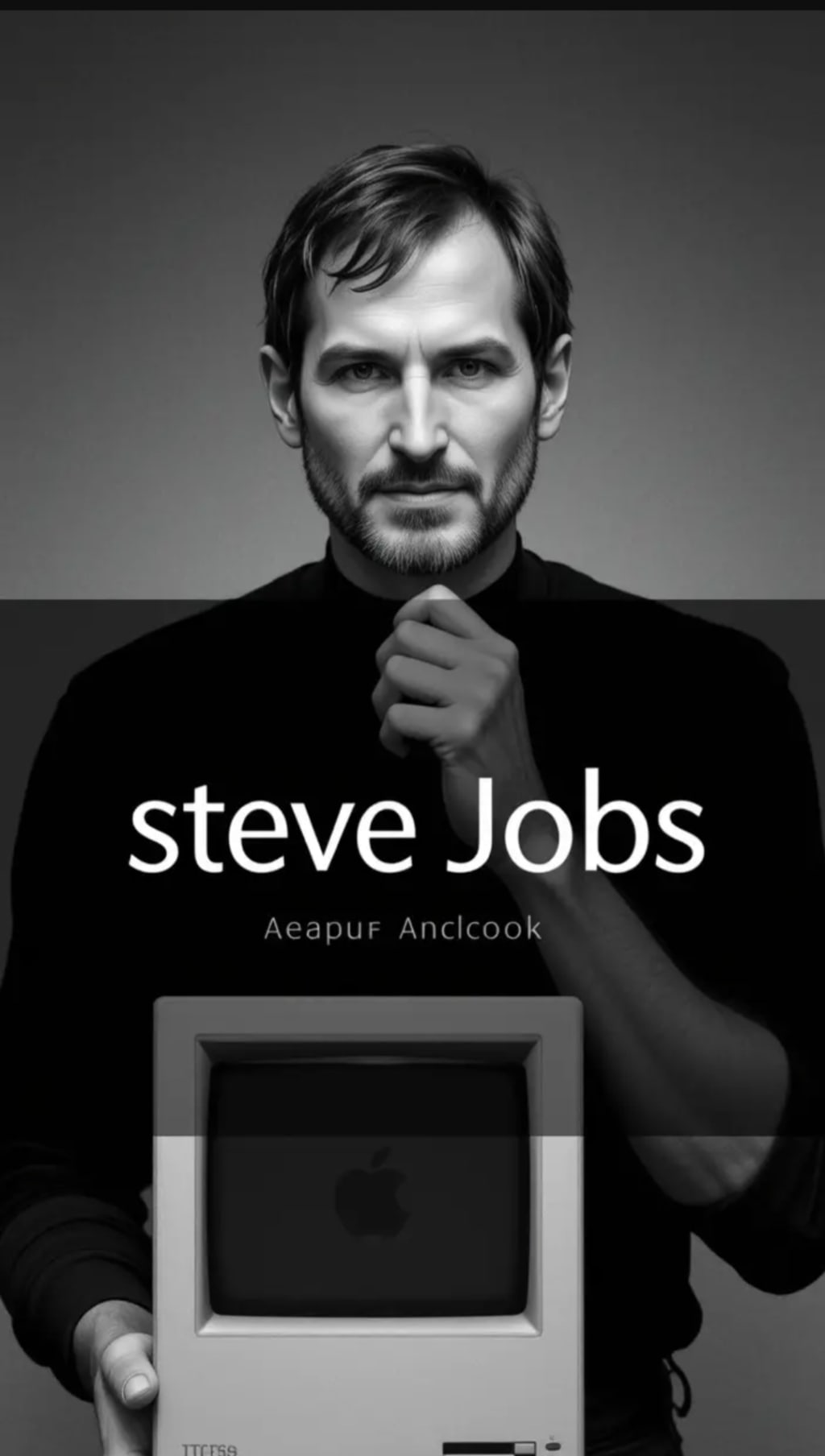
Introduction:
Steve Jobs was not just a tech entrepreneur — he was a revolutionary thinker, a visionary leader, and an artist of innovation. From humble beginnings in a garage to reshaping the way we live, communicate, and think, his journey is a lesson in bold dreams, fierce persistence, and timeless creativity. This is not just the story of Apple — it's the story of a man who refused to settle.
The Early Struggles: A Troubled Start
Steve Jobs was born in 1955 and adopted by Paul and Clara Jobs. His early life wasn’t luxurious or exceptional, but it was full of curiosity. He grew up tinkering with electronics in his family garage, and his rebellious spirit often clashed with traditional education.
Jobs dropped out of Reed College after just one semester, feeling that formal education was stifling his creativity. But instead of giving up, he audited creative classes like calligraphy, which would later influence the beauty of Apple’s typography.
At this point in his life, Steve was broke, barefoot, and walking miles for free meals at a Hare Krishna temple. But deep inside, he had a vision — to do something truly meaningful.
Apple Is Born: The Garage Dream
In 1976, Steve Jobs co-founded Apple with his friend Steve Wozniak in a garage. Their first computer, the Apple I, was hand-built and modest — but it marked the beginning of a revolution. Soon after, Apple II became a market success, and Apple became a public company in 1980, making Jobs a multimillionaire at just 25.
But Jobs was not content with wealth — he wanted perfection. He dreamed of computers that were not just functional, but beautiful, intuitive, and revolutionary.
The Macintosh and the Vision of Simplicity
In 1984, Jobs launched the Macintosh — a computer that changed everything. It featured a graphical user interface and a mouse — ideas taken from Xerox but refined into a product that anyone could use. The ad campaign during the Super Bowl became legendary.
Jobs believed in “making products people didn’t know they needed until they used them.”
But his perfectionism, temper, and vision also made him difficult to work with. In a shocking twist, he was fired from the very company he built in 1985.
Falling Down to Rise Higher
Being fired from Apple was a public humiliation — but Steve called it "the best thing that could have happened." He went on to create NeXT, a computer company focused on higher education. It didn’t succeed commercially, but it developed powerful software that would later become the foundation of macOS.
At the same time, Jobs bought a small animation company called Pixar — which would eventually change the film industry forever. With movies like Toy Story, Finding Nemo, and The Incredibles, Pixar became a storytelling powerhouse.
Jobs proved that resilience creates new opportunities.
The Return of the King: Apple Reborn
In 1997, Apple was on the brink of bankruptcy. Jobs returned to Apple, and within a few years, he turned it into one of the most valuable companies on Earth.
He simplified the product line, introduced the iconic iMac, and focused on design, elegance, and user experience. But that was just the beginning.
iPod, iPhone, iPad — A New Era of Innovation
Jobs unveiled the iPod in 2001, revolutionizing the way we listen to music. Then came the iPhone in 2007 — a product so groundbreaking that it changed the smartphone industry forever. It wasn't just a phone — it was a computer, camera, and music player in your pocket.
In 2010, he introduced the iPad, challenging the idea of what a computer should look like. Every launch was done with theatrical flair, and the world watched in awe as Jobs pulled one magical device after another from his signature black turtleneck.
The Philosophy of Steve Jobs: Design Meets Soul
Jobs believed that design was not just what it looked like, but how it worked. He was obsessed with the details — the curve of the glass, the sound of the click, the box the product came in.
He demanded excellence and simplicity. He pushed his team beyond limits. He believed that the customer didn’t always know what they wanted — but once they saw it, they would never go back.
His favorite phrase: "Stay Hungry, Stay Foolish."
The Final Years: Legacy Etched in Time
In 2003, Jobs was diagnosed with a rare form of pancreatic cancer. For years, he fought privately while continuing to innovate publicly. He stepped down as CEO in 2011 and passed away on October 5, 2011.
His death shocked the world. Presidents, CEOs, artists, and millions of fans mourned not just the man, but the mind that changed everything
Legacy: A Genius That Lives On
Steve Jobs left behind more than products — he left behind a way of thinking. A culture of creativity, a legacy of design, and a blueprint for every dreamer who wants to change the world.
Apple continues to dominate the tech world — not just because of what it makes, but because of what Steve Jobs believed in: thinking differently.
Conclusion: Lessons from a Visionary
Steve Jobs proved that success isn't about starting rich, having a degree, or following the crowd. It's about passion, vision, courage, and refusing to settle for "good enough."
His life teaches us:
Think boldly.
Fail gracefully.
Lead fearlessly.
Create beautifully.
Jobs said it best:
“The people who are crazy enough to think they can change the world, are the ones who do.”
About the Creator
Keep reading
More stories from Abdul Rahman and writers in Motivation and other communities.
The Real Path to Becoming Rich
Becoming rich is a dream shared by millions — a dream not rooted only in luxury but in freedom, impact, and self-worth. People often equate riches with luck or inheritance, but real wealth is rarely accidental. The truth? It begins with mindset, evolves through action, and is sustained by discipline. In this article, we break down the journey to wealth — from humble beginnings to financial freedom — step by step.
By Abdul Rahman 6 months ago in Motivation


Comments
There are no comments for this story
Be the first to respond and start the conversation.