
The Ethics of Giving When You Can’t Help Everyone
The Ethics of Giving When You Can’t Help Everyone

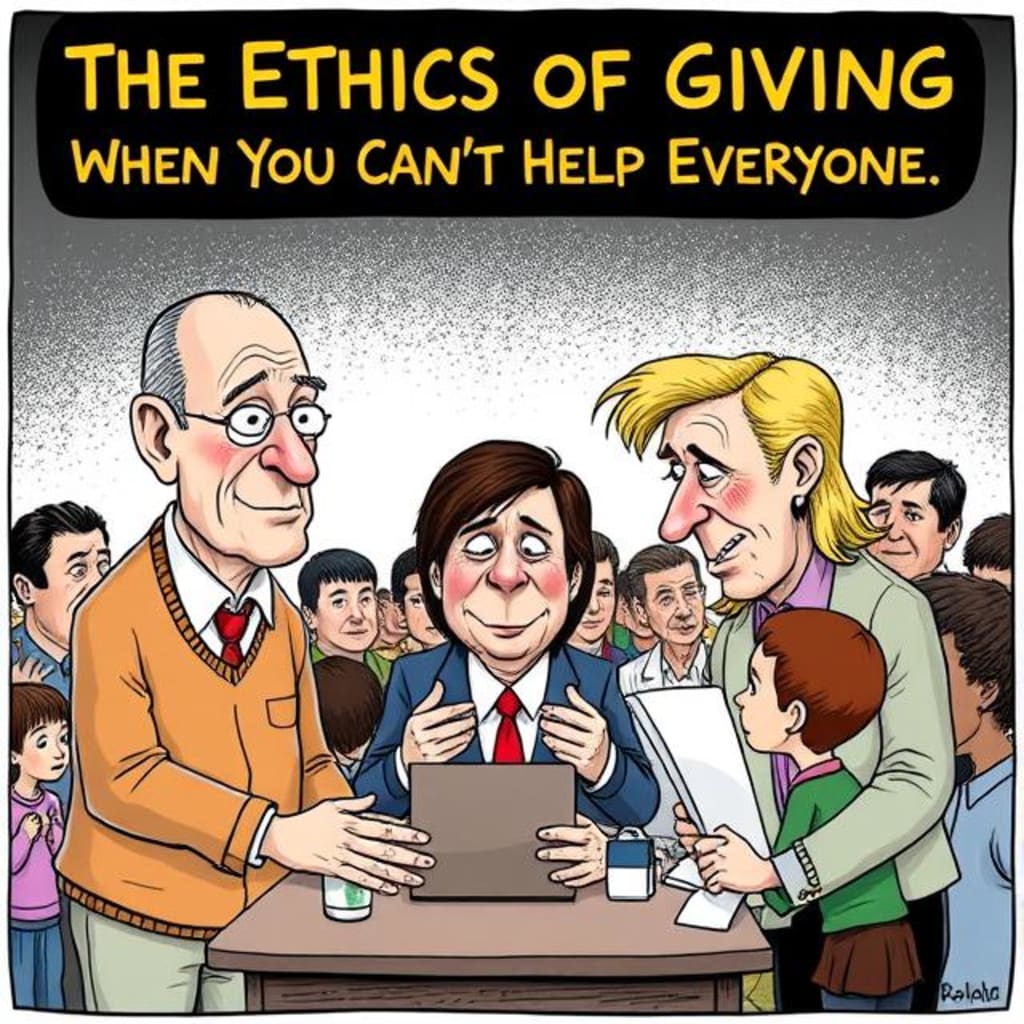
Every day, we are confronted with needs that outnumber our ability to meet them. A friend going through a hard time. A stranger asking for spare change. A fundraiser for disaster relief in another country. Whether on a personal or global scale, we often face a difficult but unavoidable question: Who should we help first?
This question is not only practical; it is deeply moral. Our time, resources, and energy are limited. To help wisely, we must make choices—sometimes uncomfortable ones—about where and how to direct our compassion.
The Emotional Pull vs. Rational Giving
Human beings are naturally inclined to help those who are close to them—emotionally, physically, or culturally. We give to causes that affect our communities or loved ones. We offer support to someone whose story moves us. This emotional instinct is powerful, but it can lead to what ethicists call “moral myopia”—a narrowing of our compassion to what feels immediately urgent or personally relevant.
On the other end of the spectrum is the effective altruism movement, which urges us to use evidence and reason to do the most good. This philosophy, championed by thinkers like Peter Singer, asks: If you can save five lives instead of one, shouldn’t you do so, even if those five lives are far away? Effective altruism encourages us to donate to causes where each dollar has the greatest impact—such as providing malaria nets or deworming medications—rather than more visible but less efficient forms of aid.
This rational approach challenges our instincts. It pushes us to look beyond proximity and emotion, and prioritize effectiveness: saving the most lives, relieving the most suffering, per unit of effort.
Proximity, Fairness, and Deservedness
In reality, our decisions about whom to help are shaped by more than just logic or compassion. We also think in terms of proximity—are they near or far?—and fairness—do they deserve help?
Some argue that we should help those closest to us first: family, friends, neighbors, and community members. There’s a practical reason for this: we know their needs more clearly, and our actions are more likely to have lasting effects when relationships are involved.
Others focus on systemic injustice—believing we should prioritize those who are not only suffering, but also oppressed or historically marginalized. For example, helping refugees, victims of racial discrimination, or those born into extreme poverty becomes not just charity, but a matter of justice.
This leads to another tough question: Does someone have to “deserve” our help? Should we prioritize people who are trying to help themselves, or those in the worst situations regardless of cause? These are ethical gray areas with no universally accepted answers.
Finding Balance
There’s no single formula for deciding who to help, and perhaps that’s a good thing. Moral decisions should involve both head and heart. While data can guide our giving, empathy ensures we don’t lose sight of the human stories behind the numbers.
One useful model is the “concentric circles” approach. At the center are those closest to you—family and friends. Around that are local communities, then national issues, then global causes. This model suggests a balanced approach: attend to those near you without ignoring the immense needs farther away.
Additionally, the idea of portfolio giving—spreading your efforts across multiple areas—can help you navigate moral trade-offs. You might volunteer locally while donating globally. You might support a struggling friend while also giving to organizations with proven large-scale impact.
Conclusion
Prioritizing who to help is not a problem we can solve once and for all. It is a lifelong moral practice, shaped by evolving beliefs, relationships, and realities. What matters most is that we take the question seriously. That we don’t let the overwhelming scale of suffering lead to paralysis or indifference.
We won’t always get it perfectly right. But if we choose to help at all—with thoughtfulness, humility, and purpose—we are already moving the world, and ourselves, in the right direction.
About the Creator
Fred Bradford
Philosophy, for me, is not just an intellectual pursuit but a way to continuously grow, question, and connect with others on a deeper level. By reflecting on ideas we challenge how we see the world and our place in it.
Keep reading
More stories from Fred Bradford and writers in Motivation and other communities.
Are You Living Your Values or Someone Else’s
Imagine waking up every day, checking off tasks, hitting milestones, and yet feeling a strange emptiness. You’re busy. You’re productive. You might even be successful by most definitions. But deep down, you’re not sure why you're doing any of it.
By Fred Bradford8 months ago in Motivation
Looking back: 2025 was a beast
It's difficult to know how to start this. I've suggested that it's been a tough one from my title and in many ways, it has; however, there is an argument that it's not been that extraordinary at all, merely this wonderful thing we call "life" with all its climaxes and pitfalls.
By Rachel Deeming25 days ago in Motivation
I Learned to Laugh So No One Would Ask Questions
I didn’t always laugh because something was funny. Sometimes, I laughed because silence felt dangerous. It started subtly. A smile here. A chuckle there. A light joke to smooth an uncomfortable moment. Laughter became my reflex, my shield, my way of steering conversations away from places I wasn’t ready to explore. People like laughter. It reassures them. It tells them everything is fine—even when it isn’t.
By Imran Ali Shah7 days ago in Motivation



Comments
There are no comments for this story
Be the first to respond and start the conversation.