
The Doctor Who Gave Soldiers New Faces
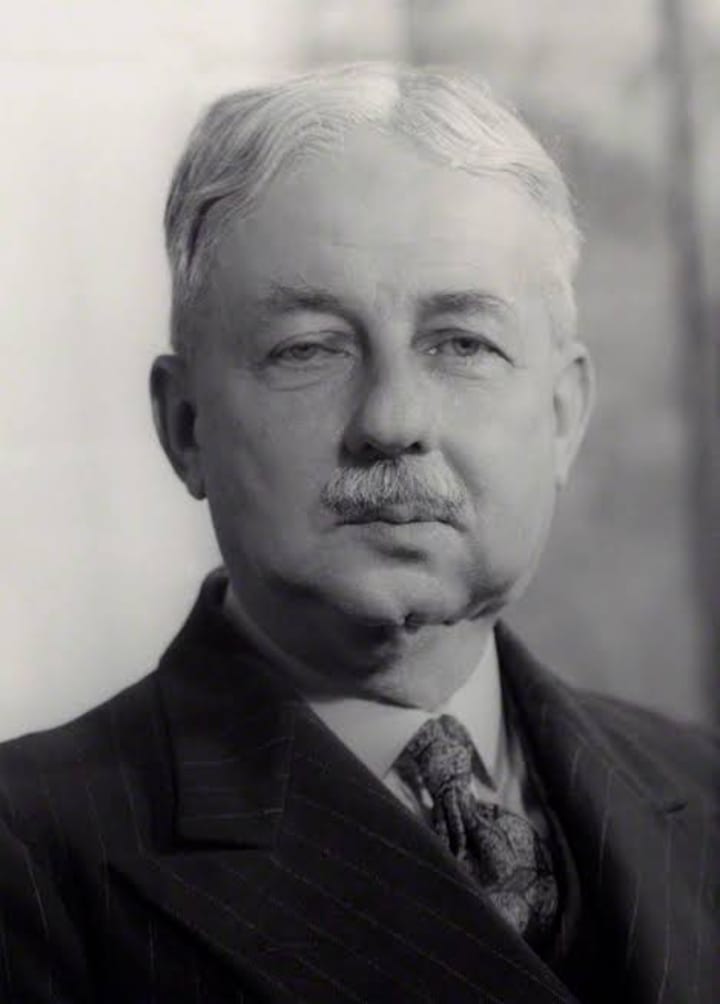
DR Harold Gillies was the pioneer of plastic surgery.


Gillies was born on 17 June, 1882, in New Zealand and trained in England before joining the Army Medical Corps at the onset of war.
He received formal surgical training at St. Bartholomews Hospital in London where he was named house surgeon to Douglas Harmer, chief of the newly formed Ear, Nose, and Throat Department. He joined the Royal Army Medical Corps at the age of 32 when World War I started.
Pioneering Facial Reconstruction Surgery
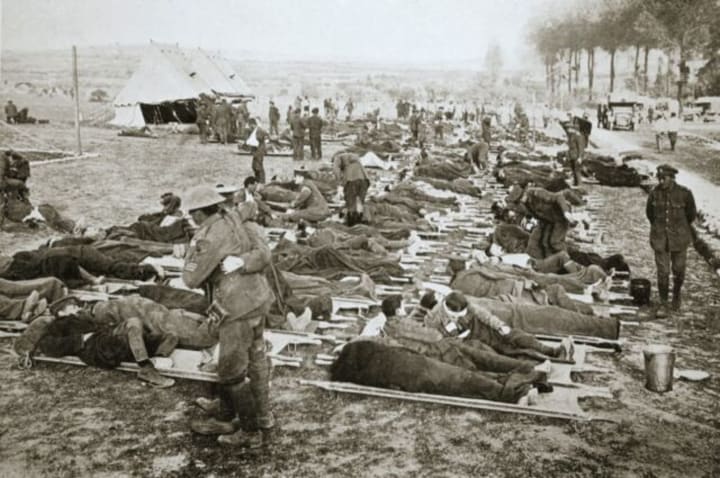
John Glubb, a British soldier in World War I, was struck in the face by a shell in August 1917. He remembered experiencing "torrents" of blood coming out of his left cheek and feeling what felt like a chicken bone moving around it. It turned out to be his jaw, which had been fractured in half by the impact.
Glubb was not the only WWI soldier who suffered a disfiguring facial injury. Shrapnel-filled shells were designed to do as much damage as possible, and the need to glance over the parapets of trenches to examine the battlefield or fire a shot meant a higher risk of being hit in the face by flying metal.
In contrast to losing a leg, these troops endured significant social and professional stigmas upon their return from the war front due to their disfigurement. When they were out in public, they were frequently assigned to specific blue benches as a warning to others to avoid their gaze.
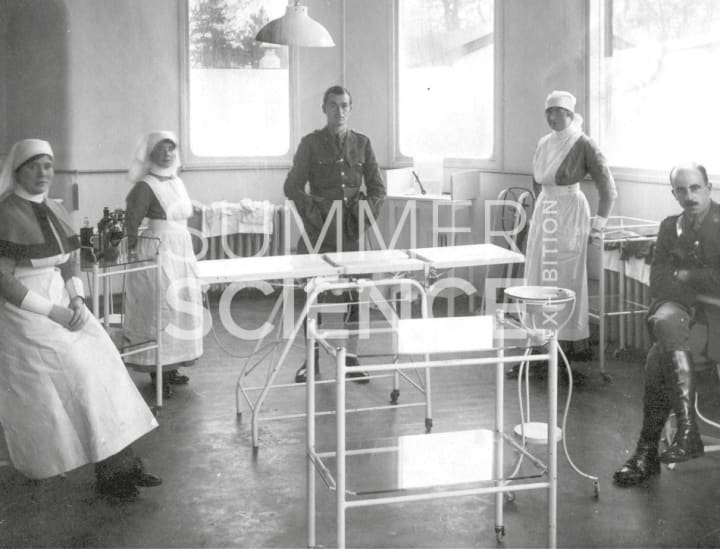
After seeing the damage during his service at the war front, Harold Gillies dedicated his life to discovering innovative techniques for repairing faces.
When he returned home, he established a special unit at the Cambridge Military Hospital in Aldershot, United Kingdom for soldiers with severe facial wounds.
He soon realized the unit was not enough, they needed something bigger. Finally convincing his superiors that a separate hospital was required; The Queen's Hospital opened in June 1917 and with its rehabilitation units provided over 1,000 beds. There Gillies and his colleagues developed many techniques of plastic surgery; more than 11,000 operations were performed on over 5,000 men (mostly soldiers with facial injuries, usually from gunshot wounds).
He is known as the "Father of Plastic Surgery" for this his pioneering work.
Harold Gillies Tubed Pedicle Technique
Gillies established at Queen Mary's Hospital a multidisciplinary team of surgeons and nurses. Due to the lack of antibiotics at the time, successful reconstructive surgery was extremely difficult due to the risk of infection. Gillies and his colleagues attempted groundbreaking surgeries including skin grafts and bone rib transplants.
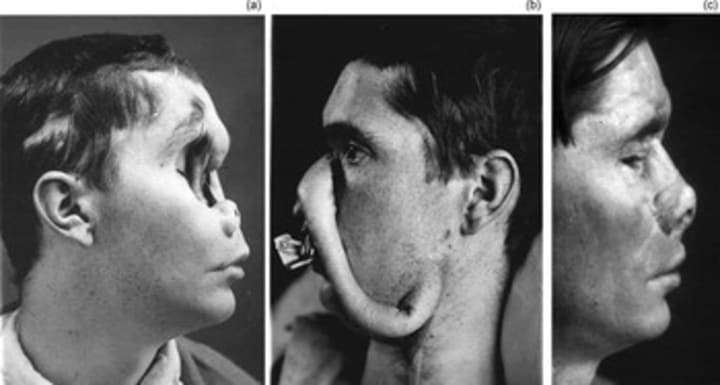
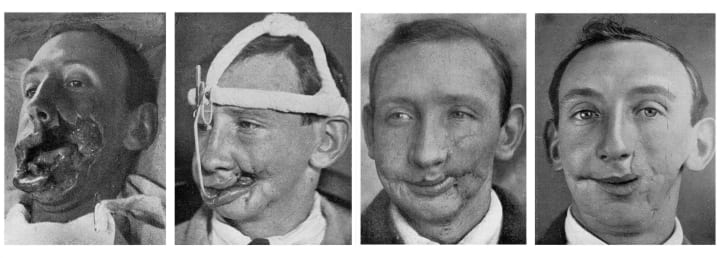
Gillies is well known for inventing the 'tubed pedicle,' a procedure that swung a flap of skin from the chest or forehead into place over the face. The flap was left connected but sewn into a tube.
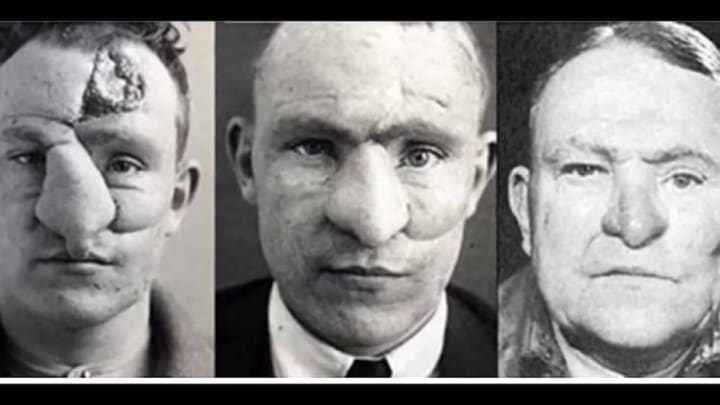
This preserved the original blood flow and significantly reduced infection rates. These surgical methods are described in the collection's case files and images.
Harold Gillies also reconstructed noses using cartilages harvested from the rib cage of the patient.
World War II
During WWII, Gillies worked as a consultant for the Ministry of Health, the Royal Air Force, and the Admiralty.
He established plastic surgery units throughout the United Kingdom and inspired colleagues to do the same. During and after the war, he taught plastic surgery to many doctors from Commonwealth countries.
Focusing in sex reassignment surgery
In 1946, he and a colleague performed one of the earliest female-to-male sex reassignment procedures on Michael Dillon.
He and colleagues performed one of the earliest modern sex reassignment procedures, from male to female, in 1951.
Death Of The Great Surgeon
On August 3, 1960, while performing a major operation on an 18-year-old girl's broken leg, Gillies, then 78 years old, experienced a mild cerebral thrombosis.
Gillies passed away on September 10, 1960.
About the Creator
Rare Stories
Our goal is to give you stories that will have you hooked.
This is an extension of the Quora space: Rare Stories
X(formerly Twitter): Scarce Stories
Writers:
....xoxo
Keep reading
More stories from Rare Stories and writers in Motivation and other communities.
The Incredible Survival Story Of Mauro Prosperi
What do you think is the most difficult surviving environment on the planet? From the windswept Antarctic to the huge Amazon rainforest, there are plenty of prospective choices. Whatever order you place these regions in, the Sahara desert is bound to be near the top of your list.
By Rare Stories3 years ago in Motivation
The Man Who Became a Lightning Rod: The Unbelievable Life of Roy Sullivan
In the vast, unpredictable theater of the natural world, there are statistical anomalies, and then there is Roy Cleveland Sullivan. To the average person, the odds of being struck by lightning in a given year are roughly one in a million. The odds of being struck seven times? Those are calculated at approximately 1 in 100,000,000,000,000,000,000,000,000 (that’s a septillion).
By Frank Massey 4 days ago in Motivation



Comments
There are no comments for this story
Be the first to respond and start the conversation.