
The Day My Phone Died — And I Finally Lived
What 24 Hours Without a Smartphone Taught Me About Real Life, Relationships, and Regret

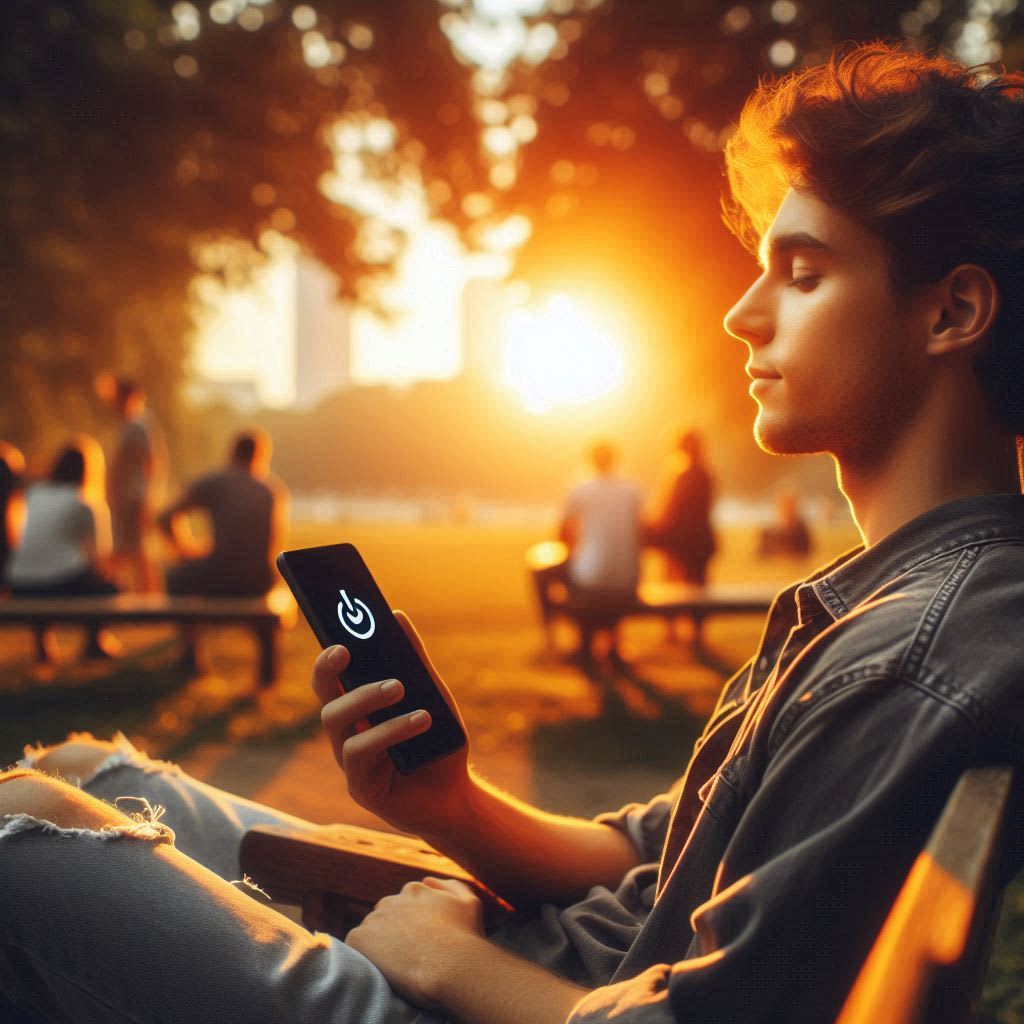
The digital umbilical cord, that sleek rectangle of glass and metal I affectionately (and perhaps a little pathetically) called my lifeline, went dark at precisely 7:17 AM. Not with a dramatic shatter or a final, sputtering gasp of battery, but with a quiet, unassuming surrender. It simply refused to power on.
Panic, swift and cold, clenched my chest. It wasn't just a broken device; it felt like a severed limb. My brain, so accustomed to the constant ping of notifications, the endless scroll of social media, the instant access to a universe of information (and cat videos), felt suddenly…hollow.
My initial reaction was a frantic dance of charging cables, desperate button-mashing, and even a silent plea to the silicon gods. But the phone remained stubbornly inert. And just like that, I was thrust into a reality I had unknowingly shielded myself from for years: a world unplugged.
The first few hours were a blur of anxiety and a surprising amount of awkward fidgeting. My commute to work, usually a curated playlist and a quick scan of the morning news, stretched into an eternity of my own thoughts. Thoughts that, without the usual digital distractions, felt strangely loud and insistent. I noticed the intricate patterns on the bus seats, the subtle shifts in the morning light, the hushed conversations of fellow passengers – details my perpetually glowing screen had rendered invisible. At work, the absence of my phone was a gaping void. No quick checks on emails during lulls, no surreptitious scrolls through Instagram during meetings (yes, I’m guilty). Instead, I found myself making eye contact with colleagues, engaging in actual conversations, and surprisingly…focusing better on my tasks. The constant temptation to flit between digital tabs was gone, replaced by a newfound concentration. I even rediscovered the joy of a handwritten to-do list, the satisfying scratch of pen on paper a tactile pleasure I’d forgotten.
Lunchtime was perhaps the most jarring experience. Usually spent mindlessly scrolling through social media while shoveling food, I was now faced with the daunting prospect of…just eating. I observed the other people in the cafe – couples laughing, friends deep in conversation, individuals lost in books. A pang of loneliness, a feeling I often masked with digital connection, surfaced. Was I truly connecting with anyone, or was I just a passive observer in the digital echo chamber? The afternoon brought an unexpected opportunity. Sarah, a colleague I usually exchanged only brief pleasantries with, lingered by my desk. Without the distraction of my phone, I was fully present when she mentioned she was struggling with a project. We ended up having a genuine conversation, brainstorming ideas, and discovering a shared passion for vintage films. It was a connection forged not through shared likes or comments, but through real, human interaction.
As the workday ended, a wave of unease washed over me. Evenings were typically spent catching up on social media, watching videos, and messaging friends. The thought of a phone-less evening felt strangely isolating. I decided to walk home, something I rarely did, always opting for a quick ride-share. The walk was revelatory. I noticed the vibrant colors of the bougainvillea cascading over garden walls, the laughter of children playing in a nearby park, the comforting aroma of street food vendors. It was my neighborhood, a place I technically inhabited, but had never truly seen. That evening, I found myself doing things I hadn’t done in years. I pulled out an old book, its pages yellowed and brittle, and lost myself in its narrative. I listened to music on an actual stereo system, the rich sound filling the quiet apartment in a way my tinny phone speakers never could. I even had a long, uninterrupted conversation with my mother, something that usually devolved into rushed snippets punctuated by the insistent buzz of notifications.
The absence of my phone forced me to confront aspects of my life I had conveniently ignored. My reliance on it wasn't just about convenience; it was a crutch, a shield against boredom, loneliness, and even genuine human connection. I realized how much of my "online life" was curated, a highlight reel that often left me feeling inadequate and disconnected from my own reality.
The 24 hours stretched on, initially feeling like an eternity, but eventually settling into a rhythm of simple, unadulterated existence. I slept better that night, my mind not buzzing with the last-minute scroll or the anxious anticipation of morning notifications.
The next morning, I reluctantly went to get my phone repaired. As the technician worked, I felt a strange mix of anticipation and apprehension. I knew I couldn't live entirely without a phone in today's world, but the experience had fundamentally shifted my perspective. When my repaired phone was finally handed back to me, I hesitated before turning it on. The screen, once dark and lifeless, now held the promise of instant connection. But I knew things had to change.
The 24 hours without my smartphone had been a forced detox, a jarring but ultimately liberating experience. It taught me the value of presence, the richness of real-world interactions, and the importance of confronting my own thoughts and feelings without the constant buffer of the digital world. I still use my phone, of course. It’s an indispensable tool. But now, it’s a tool I consciously wield, not a leash that dictates my attention. I’ve implemented "phone-free zones" in my day, especially during meals and before bed. I’ve started leaving it in another room when I want to focus. I’ve rediscovered the joy of simply being present in the moment, observing the world around me, and truly connecting with the people in my life.
The day my phone died wasn't a digital apocalypse; it was an awakening. It was the day I finally started to truly live, not just exist in the glow of a screen. And for that unexpected lesson, I am eternally grateful for the silence.
About the Creator
Mian Nazir Shah
Storyteller fueling smiles and action with humor, heart, and fresh insights—exploring life’s quirks, AI wonders, and eco-awakenings in bite-size inspiration.
Keep reading
More stories from Mian Nazir Shah and writers in Motivation and other communities.
The Man Who Sold Time
Rain tapped gently on the old windows of Maple Street as Sara hurried across the narrow sidewalk, her coat barely shielding her from the cold. Her eyes burned from exhaustion—eight hours at the diner, followed by a late shift cleaning offices. Her feet hurt, but what stung more was the missed phone call from her daughter’s school play.
By Mian Nazir Shah10 months ago in Motivation
My Body Is Not a Moral Failure
There are two labels that tend to arrive before people know anything else about me. Disabled. Obese. One is a neurological condition. The other is a number calculated from height and weight. Neither tells the full story of the body I live in.
By Millie Hardy-Sims2 days ago in Motivation



Comments
There are no comments for this story
Be the first to respond and start the conversation.