
In a small village nestled between the mountains and the desert, lived a young boy named Haris. He was quiet, thoughtful, and known for always attending the mosque with his father. Though his family was poor, Haris never complained. His heart was filled with contentment and a love for Allah that outshone the riches of the world.
After a long drought, the villagers got together one day to talk about how their crops were failing and their wells were drying up. The elders were worried, the farmers discouraged, and even the animals seemed to grow weaker by the day.
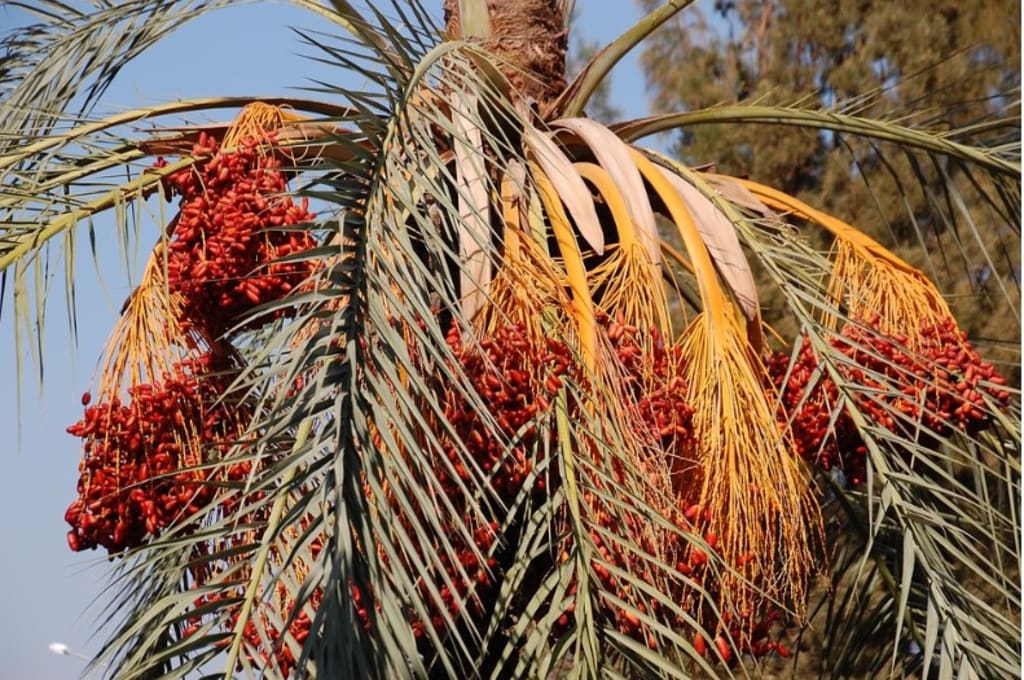
Haris listened quietly, then went home and found a single date in the pantry—old, dry, but uneaten. "This could grow into something more," he thought as he held it in his hand. If Allah wills, this single date might become a tree that feeds us for years."
He walked to a patch of dry earth outside his home and planted the date seed. His mother smiled gently. “Haris, there is no water. The soil is dry. It may not grow.”
“I know, Mama,” he said. “But Allah is Al-Razzaq—the Provider. He brings life to the dead earth. I will do what I can, and I will pray.”
And so he did. Every morning, Haris would walk to the well, draw a small pot of water, and pour it gently over the seed. It was hard work, especially under the hot sun. His friends mocked him.
“Still watering the dust, Haris?” They laughed. “You think a miracle will happen?”
Haris only smiled. “Allah is capable of all things.”
Weeks passed. Then months. The ground remained still. Nothing green appeared. But Haris did not stop. His heart remained firm in tawakkul—complete trust in Allah. Every prayer, he would raise his hands and say, “O Allah, if this tree will bring benefit, make it grow.”
One night, the sky finally broke open. Rain poured down over the village after nearly a year of dryness. The land drank deeply, and people rushed outside in joy. Haris ran to his small patch of earth—and there, barely visible, was a tiny green shoot pushing through the soil.
His mother gasped. “SubhanAllah… it lives.”
Years passed, and Haris continued to care for the tree. It grew slowly but steadily. People began to notice. “That’s the tree Haris planted when everyone gave up,” they would say.
By the time Haris became a young man, the date palm stood tall, strong, and full of fruit. During the next famine, when crops once again failed, Haris's tree gave more than enough to feed his family and many of his neighbors.
The same boys who once mocked him now sat in its shade, eating the sweet dates with awe. “How did you know?” They asked. “I didn’t,” Haris replied. “But I knew that if I did my part and relied on Allah, He would take care of the rest.”
An old man sitting nearby, the village imam, nodded. “This is the meaning of sabr (patience) and tawakkul. Haris did more than just plant a tree. He taught us all something.” Lessons from the Story
The Prophet Muhammad ﷺ said: “If the Hour (the Day of Judgment) is about to be established and one of you has a palm shoot in his hand, then he should plant it.” (Musnad Ahmad)
This story reflects that same spirit. Even when the world seems dark and hopeless, a believer trusts in Allah's plan, continues to work hard, and remains patient. Haris didn’t just plant a seed—he planted hope, faith, and a lifelong reminder of Allah’s mercy.
About the Creator
Keep reading
More stories from Hasan mahamud and writers in Motivation and other communities.
The Climb: A Story of Grit, Grace, and the Will to Rise
At the edge of a dusty village surrounded by quiet hills lived a boy named Arjun. His house was small, his shoes were torn, and opportunities were scarce—but his dreams were larger than life. While others his age were content with routines, Arjun believed he was born for something more.
By Hasan mahamud8 months ago in Motivation
“The Man Who Never Missed a Day”
When I was 17, I met a man who delivered newspapers in the rain. Not in a casual, half-hearted way—but fully committed, every single morning. He would leave his house before sunrise, his coat soaked, shoes falling apart, and the wind cutting through him like a knife. Yet, despite the cold and wet, he smiled at everyone on his route. To a teenager like me, it was both confusing and inspiring. I remember the first time I saw him struggle with a bundle of papers that seemed almost too heavy for him. He slipped on the wet pavement, muttered something under his breath, and kept walking. When he reached the next house, he knocked on the door, handed over the paper, and smiled as the door closed. That smile was strange to me—it wasn’t pride or satisfaction, it was… calm. Almost peaceful. Curious, I approached him one morning. “Why don’t you take a day off when it’s so hard?” I asked, shivering in my hoodie as the rain soaked me through. He laughed, a deep, gravelly sound that didn’t sound annoyed, only knowing. “Son, nobody cares about today,” he said, shaking his head. “What matters is tomorrow. You build your life the same way: one small effort, every day, even when nobody notices.” At the time, I didn’t understand. My life felt urgent, like it had to explode with success immediately. I was chasing big ideas, jumping from project to project, leaving most half-finished. I thought motivation was everything—without the spark of inspiration, nothing mattered. The idea of showing up every single day, even when tired, even when bored, even when invisible, felt almost insane. I watched him for weeks. Rain or shine, he was there. I started noticing small details I hadn’t seen before—the careful folding of the papers, the way he adjusted his wet coat to protect the bundle, the extra minute he took to smile at a child running out to grab the paper. Every morning, the same ritual. Every morning, the same effort. And yet, nobody cheered. Nobody noticed. Years passed. I went to college, chasing my own “big dreams,” my own versions of instant success. I started businesses, abandoned them; learned new skills, stopped halfway; made promises to myself I couldn’t keep. I told myself I was working toward greatness, but mostly, I was chasing the idea of success, not the work itself. Motivation was my fuel, and when it ran out, I stopped moving. Meanwhile, the memory of that man stayed with me. The quiet diligence, the smile in the pouring rain. I didn’t realize it at the time, but he had already taught me the most important lesson: consistency matters more than talent, and persistence matters more than inspiration. Years later, I found myself struggling. A career path crumbled beneath me, a relationship ended badly, and my confidence had hit rock bottom. I remembered the man with the newspapers. I thought about how small, invisible efforts can be the hardest to trust—because results are not immediate, and recognition is not guaranteed. Yet, he had shown me that those small efforts accumulate, slowly but inevitably, into a life that cannot be ignored. I started experimenting with this principle myself. Every morning, I wrote 500 words for my stories—even when tired, even when uninspired. I practiced my skills quietly, without posting or sharing. I did the work not for applause, but because it mattered to the person I wanted to become. Some days, it felt like nothing was happening. Some days, I wanted to give up. But then I remembered the man with the newspapers, and I kept showing up. It didn’t take long before I started noticing changes. The words I wrote flowed better, ideas connected in ways they never had before. People began noticing my work. Small victories became more frequent, and my confidence started to rebuild. What had seemed like meaningless, invisible effort had quietly transformed my life. That man never became famous. He never went viral. He had no thousands of followers, no awards, no recognition. But every paper he delivered, every smile he shared, every step he took in the rain—it all mattered. Each day of consistent effort built a life he owned completely, a life he could be proud of. I realized then that success is not a moment. It is not a sudden flash of recognition or a single lucky opportunity. Success is the sum of the quiet, consistent decisions we make when no one is watching. It’s the choice to wake up when it’s easier to sleep. It’s the decision to work when it’s easier to scroll on your phone. It’s the effort we put in when the world doesn’t applaud. And the truth is simple: showing up every day is more powerful than talent, motivation, or luck. Talent fades. Motivation fluctuates. But showing up—every single day, rain or shine—creates results you cannot imagine. Just like the man in the rain, your efforts may not be recognized immediately. People may overlook them, circumstances may feel unfair, progress may seem invisible. But over time, the cumulative effect of your daily effort will speak for itself. One day, the world will notice. One day, your consistency will transform your life. So, start today. Don’t wait for motivation. Don’t wait for inspiration. Show up. Every day. One small effort. One action. One step at a time. Let your grind be louder than your excuses. Because the man who never missed a day wasn’t special. He was ordinary. But through persistence, he became unstoppable. And so can you.
By Ihtisham Ulhaq6 days ago in Motivation



Comments
There are no comments for this story
Be the first to respond and start the conversation.