
The Dangerous Link Between Anxiety and Perfectionism—7 Ways to Cope
How Perfectionism Fuels Anxiety

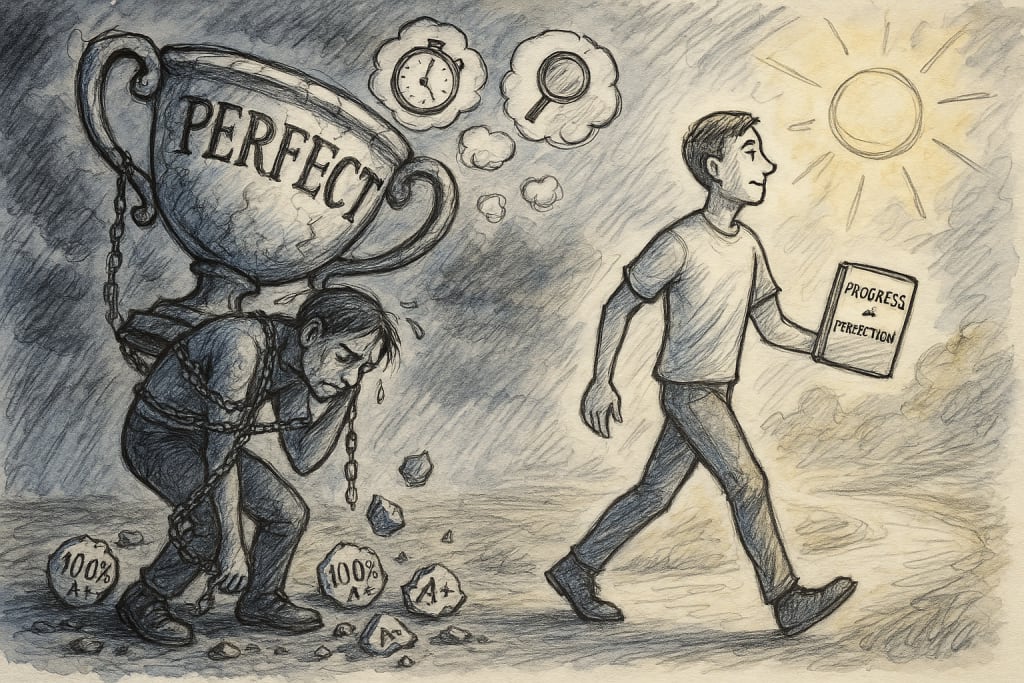
"Perfectionism isn’t striving for excellence—it’s fearing failure. And that fear? It’s quietly feeding your anxiety. Here’s what the research says, and how to break free."
In a world that often glorifies high achievers, perfectionism is frequently seen as a positive trait. After all, who wouldn’t want to be meticulous, detail-oriented, and always striving for excellence? Yet, beneath the surface, perfectionism can be a double-edged sword—one that fuels anxiety, self-doubt, and even burnout.
Research has shown that perfectionism and anxiety are closely linked, creating a vicious cycle where the fear of failure drives relentless self-criticism, which in turn heightens stress and worry. But why does this happen, and what can be done to break free from this exhausting pattern?
Understanding Perfectionism :-
Perfectionism isn’t just about wanting to do well—it’s an overwhelming need to avoid mistakes at all costs. Psychologists often categorize perfectionism into three types:
1. *Self-Oriented Perfectionism* – Holding oneself to unrealistically high standards.
2. *Other-Oriented Perfectionism* – Expecting others to be flawless.
3. *Socially Prescribed Perfectionism* – Believing that others demand perfection from you.
While some perfectionistic tendencies can drive success, excessive perfectionism often leads to chronic stress, procrastination (due to fear of failure), and even mental health struggles like anxiety and depression.
How Perfectionism Fuels Anxiety:-
1. *Fear of Failure*
Perfectionists often equate mistakes with personal failure. This creates a constant state of worry—what if my work isn’t good enough? What if people judge me? Over time, this fear can escalate into generalized anxiety, where even small tasks feel overwhelming.
2. *All-or-Nothing Thinking*
Perfectionists tend to see things in black and white—either something is perfect, or it’s a total failure. This rigid mindset leaves little room for growth, making setbacks feel catastrophic. When reality inevitably falls short of their ideals, anxiety spikes.
3. *Chronic Self-Criticism*
A perfectionist’s inner voice is often harsh and unforgiving. Phrases like *“I should have done better”* or *“Why can’t I get this right?”* reinforce feelings of inadequacy, feeding into anxiety loops.
4. *Procrastination and Avoidance*
Ironically, the pressure to be perfect can lead to procrastination. If a task feels too daunting, perfectionists may avoid it altogether to escape potential failure. This avoidance then increases anxiety about unfinished work, creating a paralyzing cycle.
5. *Social Pressure and Comparison*
In today’s social media-driven world, the pressure to appear perfect is stronger than ever. Comparing oneself to curated online personas can intensify feelings of inadequacy, worsening anxiety.
Breaking the Cycle:-
While perfectionism can be deeply ingrained, it’s possible to develop healthier ways of thinking and reduce anxiety. Here are some strategies:
1. *Challenge Unrealistic Standards*
Ask yourself: *Would I expect this level of perfection from a friend?* Often, we’re much harder on ourselves than we are on others. Learning to set realistic goals can ease unnecessary pressure.
2. *Embrace “Good Enough*
Not everything needs to be flawless. Practice accepting *good enough* outcomes, especially in low-stakes situations. Over time, this helps reduce the fear of imperfection.
3. *Reframe Mistakes as Learning Opportunities*
Instead of seeing errors as failures, view them as part of the growth process. Many successful people attribute their achievements to lessons learned from mistakes.
4. *Practice Self-Compassion*
Treat yourself with the same kindness you’d offer a friend. When self-criticism kicks in, counter it with affirmations like, *“I’m doing my best, and that’s enough.”*
5. *Seek Professional Help if Needed*
If perfectionism and anxiety feel unmanageable, therapy (such as Cognitive Behavioral Therapy) can help reframe thought patterns and develop coping strategies.
Final Thoughts:-
Perfectionism may masquerade as a strength, but when left unchecked, it can become a significant source of anxiety. The constant pursuit of flawlessness is not only exhausting—it’s unsustainable. By recognizing the link between perfectionism and anxiety, we can begin to shift toward a healthier, more balanced approach to success—one that values progress over perfection.
After all, life isn’t about being perfect. It’s about being human.
"Did this resonate? Let me know in the comments—or share your own story of overcoming perfectionism."
About the Creator
Zakir Ullah
I am so glad that you are here.
Reader insights
Outstanding
Excellent work. Looking forward to reading more!
Top insight
Heartfelt and relatable
The story invoked strong personal emotions
Keep reading
More stories from Zakir Ullah and writers in Motivation and other communities.
Searching for Meaning
I never expected an existential crisis to show up in a coffee shop. It was just a gray Thursday afternoon. The kind where the sky looks like wet concrete and every sound seems muffled by the drizzle. I stood in line, half-scrolling my phone, waiting to order the same latte I always did, when it hit me.
By Zakir Ullah10 months ago in Motivation
Beyond the Profile: How Influential Women Are Redefining Leadership on Their Own Terms?
Beyond the Profile: How Influential Women Are Redefining Leadership on Their Own Terms The definition of influence is changing. It’s no longer just about a title, a corner office, or a mention in a traditional power list. Today, Influential Women are shaping industries, redefining success, and building communities on their own terms. They are founders, executives, and thought leaders who understand that true leadership isn’t about being covered—it’s about having the authority to share their own narrative.
By influentialwomenmagazine4 days ago in Motivation
The Sound of Walking Alone
No one warns you about this: the path to your dreams gets quieter the further you go. At first, it’s all noise. Opinions. Advice. Encouragement. Even skepticism feels loud. Everyone has something to say—how you should start, when you should stop, who you should listen to.
By Habib Rehman2 days ago in Motivation




Comments
There are no comments for this story
Be the first to respond and start the conversation.