
"The Art of Doing Nothing: Why We All Need to Embrace Boredom
"How boredom boosts creativity and why it's time to slow down."

iting
The Art of Doing Nothing: Why We All Need to Embrace Boredom
In a world that constantly glorifies productivity, hustle, and busyness, doing nothing has become an almost shameful act. Our schedules are packed, our minds are overstimulated, and even moments of rest are filled with endless scrolling through social media. Yet, in the quiet moments when we’re not actively doing something—those stretches of so-called “boredom”—we often find the most meaningful insights, creativity, and peace. This is the art of doing nothing, and it’s a skill we must all learn to embrace in order to truly thrive.
Redefining Boredom
Boredom is often viewed negatively. It’s associated with laziness, inefficiency, or a lack of purpose. However, boredom is not inherently bad—it’s simply the absence of immediate stimulation. When we experience boredom, our minds are free to wander, reflect, and reset. It’s in these unstimulated states that our brains begin to connect ideas, dream up solutions, or even question the direction of our lives.
Psychologists have found that boredom can enhance creativity. A 2014 study published in the journal Academy of Management Discoveries found that people who engaged in a boring activity—like sorting beans by color—came up with more creative solutions to problems afterward than those who were actively engaged in more stimulating tasks. In short, boredom can be a breeding ground for innovation.
The Pressure to Be Busy
Modern society equates being busy with being important or successful. There’s a constant pressure to “do more,” to “stay productive,” and to fill every moment of our day with a task, a goal, or a screen. Even our downtime has been hijacked by the need for stimulation—Netflix, TikTok, YouTube, podcasts, emails, and texts all fight for our attention.
This relentless pace leaves little room for stillness, which is essential to our mental and emotional well-being. Constant stimulation doesn’t allow the brain to rest, which can lead to stress, anxiety, and burnout. We become so used to distractions that the mere idea of sitting quietly, doing nothing, can feel uncomfortable or even frightening. But this discomfort is precisely why doing nothing is so important.
The Art of Doing Nothing
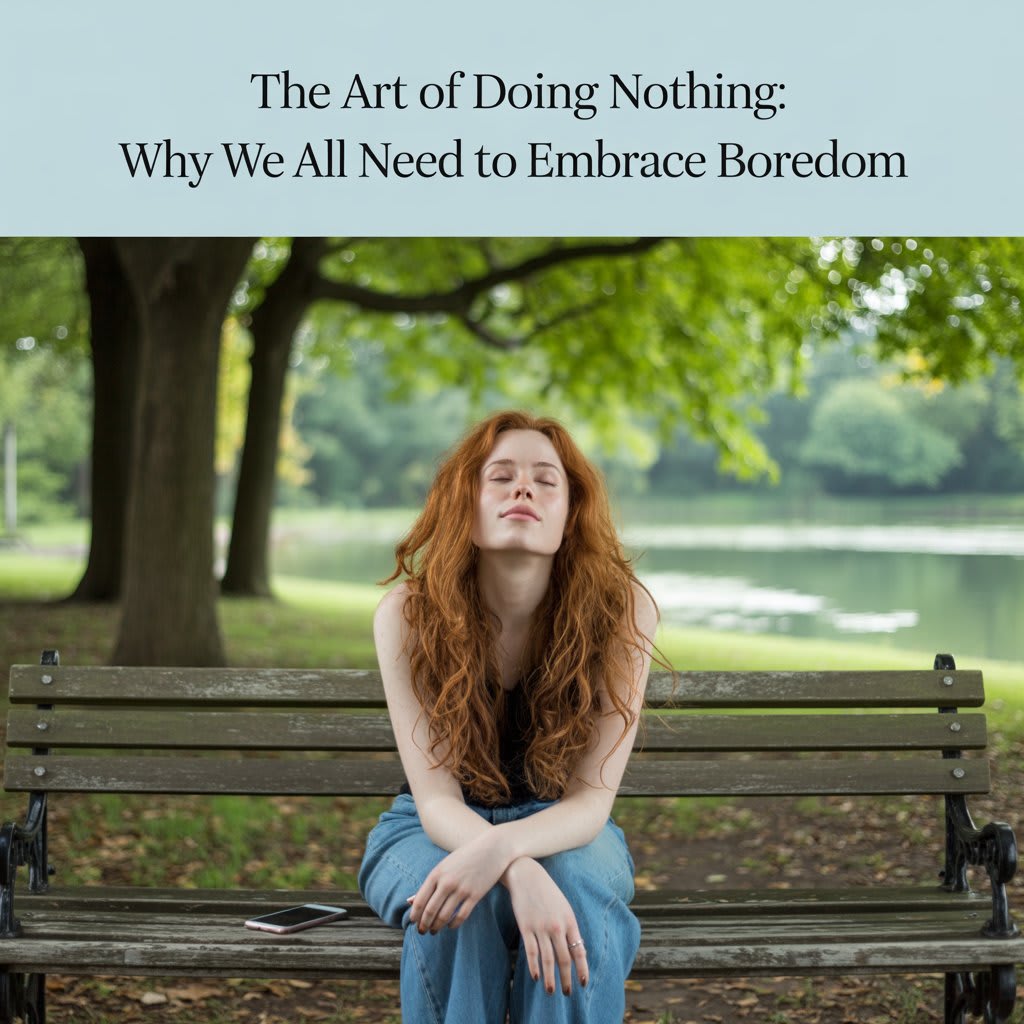
Doing nothing doesn’t mean being lazy or unproductive in the long term. It means allowing yourself space to be present without the need to perform or achieve. It’s about giving your mind and body a break from the constant pressure of output. This could mean sitting on a park bench without your phone, lying on the grass and watching clouds, sipping coffee in silence, or simply daydreaming.
In many cultures, the concept of doing nothing is celebrated. In Italy, it’s called dolce far niente—the sweetness of doing nothing. In the Netherlands, they embrace niksen, which literally means “doing nothing” and is recognized as a legitimate way to reduce stress and restore balance. These philosophies acknowledge that rest, stillness, and unstructured time are not luxuries but necessities.
Benefits of Embracing Boredom
When we allow ourselves to be bored and unoccupied, several positive things happen:
1. Mental Clarity: Without the constant noise of distraction, we begin to hear our inner voice more clearly. Thoughts and emotions rise to the surface, allowing us to better understand ourselves.
2. Creativity Boost: The idle mind becomes a playground for the imagination. Some of the best ideas arise when we’re not trying to think of anything specific.
3. Stress Reduction: Doing nothing helps to calm the nervous system and counteract the stress hormone cortisol, leading to a greater sense of calm and well-being.
4. Better Focus: Just like muscles need rest to grow stronger, our attention span needs downtime to remain sharp and effective.
5. Reconnection with the Present: In boredom, we return to the now. We become more aware of our surroundings, sensations, and simple pleasures we usually overlook.
How to Practice Doing Nothing
Embracing the art of doing nothing starts small. You don’t need to schedule hours of boredom—just find small windows of time where you allow yourself to simply be. Try leaving your phone behind during lunch, sitting quietly for five minutes in the morning, or taking a short walk without any destination or earbuds.
It’s important to resist the urge to fill every moment. Let boredom arise. Let your thoughts roam. And when you feel uncomfortable, stay with that feeling. That’s where the transformation begins.
Conclusion
Doing nothing is not a waste of time—it’s a radical act of self-care in a world addicted to noise and motion. Boredom isn’t a void to be feared but a space to be cherished. It’s in this stillness that we rediscover who we are, tap into deeper creativity, and find true rest. So the next time you find yourself bored, don’t reach for your phone. Sit with it. Embrace it. Let boredom do its quiet, necessary work.
About the Creator
Abid khan
"Writer, dreamer, and lifelong learner. Sharing stories, insights, and ideas to spark connection."
Keep reading
More stories from Abid khan and writers in Motivation and other communities.
“5 Signs You're Living Someone Else’s Dream”
It Took Me Years to Realize—Don’t Make the Same Mistake I was 26 when I landed the job everyone said I should want. The salary was great. The office was sleek. The business card even had that satisfying weight to it—the kind that made you feel important when you slid it across a table. My parents were proud. My friends were impressed. My LinkedIn glowed.
By Abid khan10 months ago in Motivation
The Joy Of Sharing
Sharing Your Facebook Friend's Vocal Stories Yesterday I got a Facebook notification that my name had been mentioned, so I went to check up on it and was shocked in the most beautiful way by what was said about me as Lena Beana shared one of my stories. It was one of my fiction stories that you can read here:
By Mike Singleton 💜 Mikeydred 6 days ago in Motivation
The Light in the Library Window
On a quiet street in a small town stood an old library that most people had forgotten. The building was small and worn, its brick walls faded by years of wind and rain. The wooden door creaked loudly whenever someone pushed it open, and the tall windows were often covered with a thin layer of dust.
By Waleed khan6 days ago in Motivation



Comments (1)
Nice