
The Age of Simulated Success: Why We Chase Validation in a World Built on Illusions
In the era of filtered achievements and curated identities, how do we measure real success—or even recognize it?

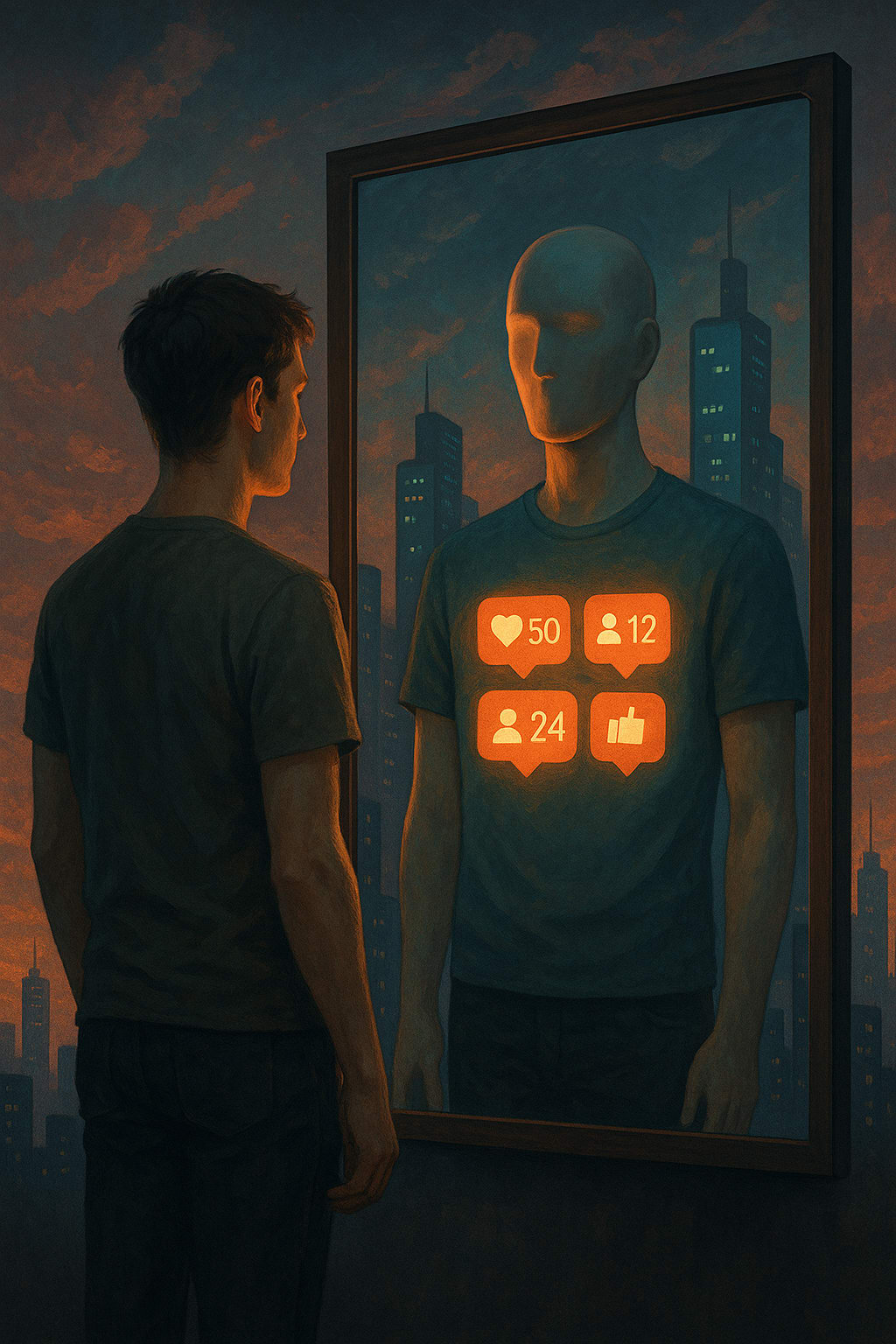
In a quiet corner of the internet, a young woman posts a photo of her new car. “Dreams come true,” the caption reads. A cascade of likes and heart emojis flood in. What’s not shown: the crippling debt, the anxiety-ridden nights, the trade-offs she’s made in private. Still, the image tells a complete story—one that feels real, aspirational, and successful.
Welcome to the age of simulated success, where the symbols of achievement often matter more than the substance, and where identity has become a brand to be managed, polished, and constantly broadcast.
The Simulation Economy
We are no longer just participating in real-world economies of labor and capital—we’re deeply embedded in attention economies, where perception equals value. Our timelines, stories, and profiles form a second skin: one that’s often more influential than who we are offline.
This is not merely about social media vanity. It’s about psychological survival in an image-saturated world, where being seen as successful can open doors more quickly than actually being successful. An Instagrammable lifestyle can lead to real-world partnerships, networking opportunities, even job offers.
But this game comes at a cost.
Validation as Currency
In traditional societies, success was slow, effortful, and usually confirmed by others within a shared physical community. Today, success is self-declared. You can call yourself a CEO, an artist, or a thought leader—even if you’re just starting out—and still be validated by strangers online.
This redefinition of success creates both freedom and fragility. You’re no longer limited by gatekeepers. But you’re also locked in a feedback loop where dopamine becomes your measure of self-worth. External validation replaces internal satisfaction.
It’s no coincidence that burnout, depression, and impostor syndrome have skyrocketed—especially among young, digitally-native generations.
Hyperreality and the Baudrillard Effect
Philosopher Jean Baudrillard introduced the idea of hyperreality—a condition where simulations of reality become more real than the reality itself.
We live there now.
A vacation is less about rest and more about proving that you went. A job title is less about the work and more about the prestige it signals. Success becomes something to be staged, rehearsed, and performed. In the hyperreal world, optics matter more than essence.
This creates a dangerous dissonance between who we are and who we feel we need to appear to be.
Who Are We Without the Applause?
There’s a haunting question beneath the filtered lives we showcase: If nobody knew I did this, would it still matter to me?
Much of our modern behavior is subtly shaped by this dilemma. Would we pursue a degree, take up a hobby, or relocate to a new city if it weren’t “share-worthy”? If we strip away the feedback loops, what drives us?
This is not to say that digital success is fake or that social sharing is inherently bad. It’s to ask: What happens when performance overshadows purpose?
How to Reclaim Authenticity in a Simulated World
Redefine Success Internally
Create private definitions of progress that don’t require external applause. Did you grow? Did you struggle and still persist? That counts—whether or not it was posted.
Pause Before You Post
Ask yourself: Am I sharing this to inspire—or to be admired? Am I creating or just curating?
Value Depth Over Visibility
It’s better to touch a few deeply than to impress many briefly. Focus on real impact, not perceived reach.
Build in Silence
Sometimes, your most meaningful achievements happen when no one’s watching. Let your work be your validation.
The Path Forward
We can’t escape the digital stage. But we can choose how much of ourselves we perform. In the age of simulated success, realness becomes radical.
The world doesn’t need more perfect people. It needs more honest ones—those who dare to be seen without a script, who embrace their humanity over their highlight reel.
In a culture obsessed with image, authenticity is rebellion.
About the Creator
Ahmet Kıvanç Demirkıran
As a technology and innovation enthusiast, I aim to bring fresh perspectives to my readers, drawing from my experience.
Keep reading
More stories from Ahmet Kıvanç Demirkıran and writers in Motivation and other communities.
Fuel for the Climb
Motivation is easy when the results come fast. But what happens when they don’t? You set a goal. You start strong. You’re energized, focused, and excited. But then comes the quiet part—the plateau. The part where the scale stops moving, your code keeps breaking, your writing doesn’t get reads, or your applications are met with silence. And suddenly, you’re not sure if what you’re doing is working anymore.
By Ahmet Kıvanç Demirkıran9 months ago in Motivation
BE HAPPY
Almost everyone have heard the hit single 'Don't Worry, Be Happy' by Bobby McFerrin. The song has a very catchy way of conveying its message of being happy to everyone. Bobby McFerrin’s simple message surely made a lot of people by telling them not to worry.
By Junaid Shahid a day ago in Motivation




Comments (2)
Interesting and nicely written ✍️🏆🏆🏆
Such a interesting story and well written.