
Sylvester Stallone — The Man Who Wrote His Own Destiny
RAMBO

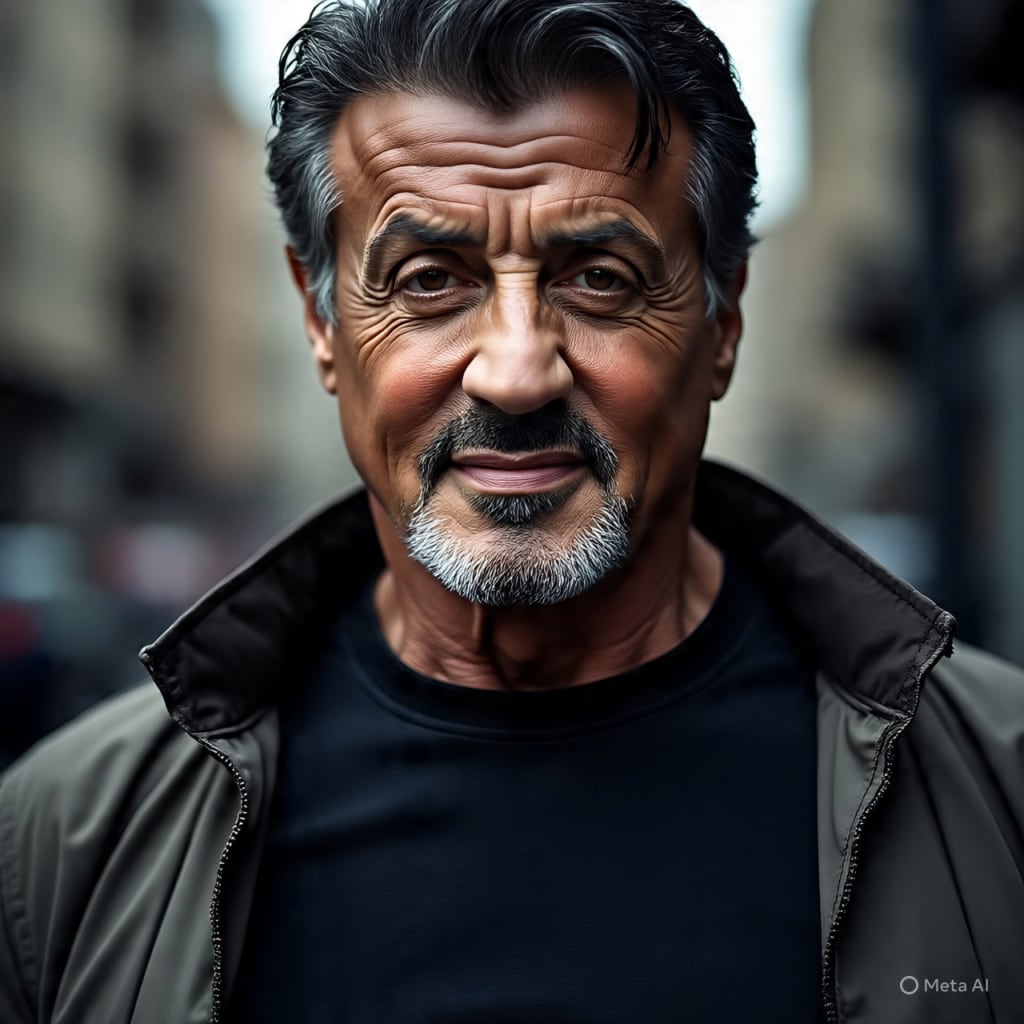
If life were a boxing match, Sylvester Stallone’s first rounds would have left most people flat on the canvas. But Stallone wasn’t built to stay down. He was the kind of fighter who could take hit after hit — from poverty, rejection, humiliation — and still find the strength to get back up. The world would one day know him as Rocky Balboa, but before that, he was just a struggling young man in New York City, clutching a dream so stubborn it refused to die.
A Rough Start
Michael Sylvester Gardenzio Stallone was born on July 6, 1946, in Hell’s Kitchen, Manhattan — a place where toughness wasn’t optional, it was survival. His birth wasn’t smooth; complications during delivery damaged the nerves on the left side of his face, leaving him with a partially paralyzed lip, slurred speech, and a distinctive snarl that the world would later recognize instantly.
For a boy growing up in a world that valued smooth talkers and perfect smiles, this was a cruel disadvantage. Kids at school mocked him. Teachers doubted him. His self-esteem took blow after blow. Yet even as a child, Stallone had a fire in him — a hunger to prove everyone wrong.
But proving himself wasn’t easy. His home life was unstable, and his parents’ marriage was turbulent. By the time he was a teenager, Stallone had been in and out of foster homes. The streets became his classroom, and survival his main subject.
Drifting, Searching, Fighting
As a young man, Stallone drifted between odd jobs — theater usher, zookeeper’s assistant, fish market cleaner. He even took on jobs that barely paid enough for a meal. But what he really wanted was to act. He saw it as a way out, a way to be more than just another face in the crowd.
The problem? Hollywood didn’t see him as leading man material. Casting directors couldn’t look past his slurred speech and unconventional looks. Time after time, the answer was “No.” They told him he wasn’t handsome enough, his voice wasn’t clear enough, his acting wasn’t refined enough. He wasn’t just rejected — he was dismissed.
Still, he refused to give up. Acting wasn’t just a career choice for Stallone; it was oxygen. And when the roles wouldn’t come, he decided he’d have to create his own.
The Breaking Point
By the mid-1970s, Stallone was flat broke. He couldn’t pay rent. He slept in bus stations and, at his lowest point, sold his beloved dog, Butkus, for $40 just to buy food. It was the kind of decision that broke his heart. He loved that dog like family, but hunger doesn’t care about sentiment.
He was also facing a deeper fear: that maybe everyone who doubted him was right. That maybe the dream wasn’t possible. But then — like in every great movie — fate handed him a moment.
The Fight That Changed Everything
One night, Stallone went to watch a boxing match between Muhammad Ali and Chuck Wepner. Wepner was a huge underdog, expected to crumble in the ring. But to everyone’s shock, he held his own against Ali, lasting almost the entire fight before finally being knocked out. It wasn’t victory, but it was proof that heart could defy the odds.
Stallone went home that night buzzing with inspiration. He locked himself in his apartment and, over the next three days, poured his soul into writing a screenplay. That script would become Rocky — the story of a small-time boxer who gets an unexpected shot at the world heavyweight championship.
The Million-Dollar Offer He Refused
When Stallone finished the script, he shopped it around. Producers loved it. They wanted to buy it immediately. There was just one condition: Stallone couldn’t play Rocky. They wanted a more “marketable” star in the role.
They offered him as much as $360,000 for the rights — a fortune for a man who had just sold his dog to eat. But Stallone said no. He refused every offer that didn’t let him star in his own film. He knew Rocky was his shot, and he wasn’t going to hand it over.
Finally, a deal was struck: he could play Rocky, but the budget would be just $1 million — tiny even for the 1970s. Stallone didn’t care. He had his chance.
Filming Rocky — Against All Odds
Rocky was shot quickly, on a shoestring budget. Stallone used his real-life struggles to fuel his performance. He even bought back Butkus and gave him a role in the film. Many of the extras in the crowd scenes weren’t actors; they were locals paid with sandwiches.
The boxing scenes were brutal. Stallone insisted on realism, which meant he actually took hits in the ring. He ended up with bruised ribs and a swollen face. But when the cameras rolled, you couldn’t see the pain — you could only see the fight.
The Knockout
Rocky hit theaters in 1976 and was an instant sensation. Audiences connected with the underdog story because it was real. Stallone wasn’t just playing Rocky — he was Rocky. The film won three Oscars, including Best Picture, and turned Stallone into a global star.
In a matter of months, he went from sleeping in a bus station to walking the red carpet. He had written himself into Hollywood history.
Beyond Rocky
Stallone could have stopped there, but he didn’t. He went on to create another iconic character — John Rambo — in the First Blood series. Rambo was different from Rocky: darker, grittier, a reflection of the wounds soldiers carried after Vietnam. The role cemented Stallone’s status as one of the biggest action stars in the world.
But like any fighter, he had ups and downs. Some films flopped. Critics mocked him. Personal struggles made headlines. Yet each time, Stallone came back swinging — writing, directing, acting, refusing to be counted out.
The Comeback King
In 2006, thirty years after the first Rocky, Stallone returned to the ring with Rocky Balboa. Many laughed at the idea of a 60-year-old boxer headlining a movie. But when it hit theaters, audiences stood and cheered. The film was a box office hit and a reminder that you can still chase dreams at any age.
Then came Creed in 2015. Stallone didn’t just reprise Rocky; he transformed him into a mentor, passing the torch to a new generation. The performance earned him an Academy Award nomination — four decades after his first one for the same character.
The Real Message
Sylvester Stallone’s story isn’t just about Hollywood or boxing. It’s about grit. It’s about holding onto a dream even when the world says you’re delusional. It’s about betting on yourself when no one else will.
When he refused to sell the Rocky script without playing the lead, he was choosing faith over fear. When he kept making films despite the critics, he was proving that resilience beats approval. His life is a masterclass in writing your own destiny — with your own pen, on your own terms.
Five of Sylvester Stallone’s Most Motivational Quotes
“Going one more round when you don’t think you can — that’s what makes all the difference in your life.”
“I believe there’s an inner power that makes winners or losers. And the winners are the ones who really listen to the truth of their hearts.”
“It ain’t about how hard you hit. It’s about how hard you can get hit and keep moving forward.”
“Every time I’ve failed, people had me out for the count, but I always come back.”
“Your spiritual sense will make you either a fighter or a quitter, and you have to decide which you want to be.”
About the Creator
Frank Massey
Tech, AI, and social media writer with a passion for storytelling. I turn complex trends into engaging, relatable content. Exploring the future, one story at a time
Keep reading
More stories from Frank Massey and writers in Motivation and other communities.
The Man Who Made the World Laugh — While Fighting His Own Battles
There’s a peculiar kind of magic in laughter — the way it cracks through the hardest days, the way it can pull you back from the edge when the world feels too heavy. Jim Carrey knew that magic intimately. What the world didn’t know — what we still sometimes forget — is that behind the rubbery face and the explosive energy was a boy who learned to make people laugh because he knew what it was like to feel empty.
By Frank Massey 6 months ago in Motivation



Comments
There are no comments for this story
Be the first to respond and start the conversation.