
Superstitions and inhuman social practices of Hinduism—An analysis
হিন্দু ধর্মের কুসংস্কার ও অমানবিক সামাজিক আচার—একটি বিশ্লেষণ

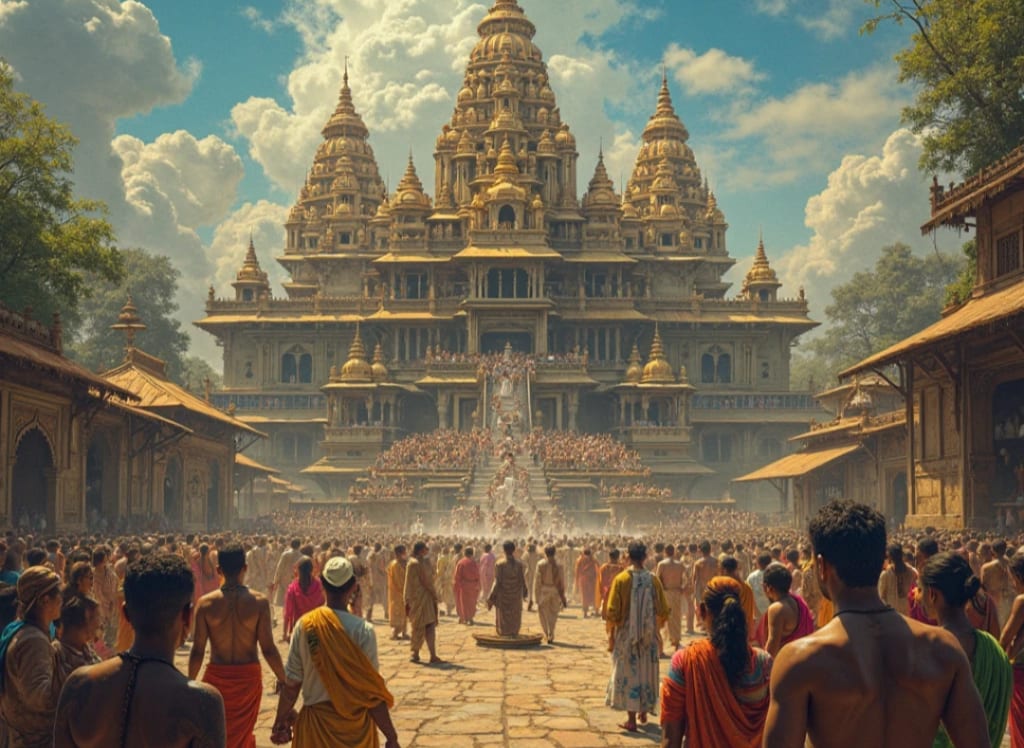
Superstitions and Inhuman Social Practices of Hinduism—An Analysis
Although Hinduism is one of the oldest religions in the world, it contains many beliefs, rituals, customs, and traditions that challenge modern humanity and rationality. Even if the antiquity of a religion or philosophy honors it, if its practices are filled with superstitions and oppress people mentally and physically, then it is very important to question, analyze, and try to change that religious practice. Deep within Hinduism, there are many beliefs and practices that are scientifically unreasonable, socially discriminatory, and anti-human.
First of all, we have to talk about the concept of "impure" or "impurity." In Hinduism, a woman's menstrual period is considered impure. During this time, women are not allowed to enter the kitchen, are prohibited from participating in worship, and in many cases, are even kept separate from other members of the house. This behavior is not only superstition, but also an expression of hatred towards women. Declaring a natural physiological process impure socially shames women, which is not only a personal insult but also a cultural insult to the entire female race.
Then comes the concept of “the wrath of the gods” or “the wrath of God”. When a person suffers from suffering, in Hindu society it is often interpreted as the result of sins from a previous birth, or as a curse from God. As a result, a poor, sick or disabled person is subjected to contempt and humiliation instead of sympathy. This belief gives rise to cruel practices like casteism, where a person is born ‘inferior’ or ‘unworthy’. This creates a religious legitimacy for discrimination, which is completely against human rights.
Another inhuman social practice is “sati”. Although it is banned today, this practice was prevalent in Hinduism for centuries. When a husband died, a wife was burned alive so that she could go to heaven with her husband. This was a form of extreme humiliation for women, where their lives depended solely on the shadow of men.
There are also “ghost entry into the body”, “kul dosha”, “grahadosh”, “rahu-kaal”, “mangaler abhisaap”—all such beliefs that make people mentally ill and instead of going on the path of real solutions, push them towards amulets-charms, priests, yagnas, or donations-dakshina. In many cases, these rituals become a means of economic exploitation of the poor. Instead of seeking medical treatment, a common man runs to the door of a sorcerer or a tantric, believing that a “ghost has taken hold of him”, with disastrous results.
Excessive faith in Ganga water in this religion is also an extreme superstition. Many people believe that Ganga water washes away sins, purifies, and even cures diseases. However, in reality, in many places, the Ganga is so polluted that bathing in it increases the chances of disease. Such religious beliefs keep people away from science and reality.
Animal sacrifice in the name of gods is a horrific practice that is still prevalent in many parts of India. Goats, chickens, and even buffaloes are sacrificed to Goddess Kali or Goddess Durga. On the one hand, they claim that ‘non-violence is the supreme religion’, while on the other hand, they cause the blood of innocent animals to be shed in the name of gods. This hypocrisy is not just religious, it is an oppressive culture.
Moreover, “worship of household deities in case of danger”, “taking vows in temples if one does not have children”, “blaming women for not having children”—these practices are still firmly present in society. They humiliate women, divert people from real treatment, and lead them into the illusory trend of seeking solutions to everything from an imaginary God.
These superstitions become even more horrific when they are mixed with business and politics. A business worth crores of rupees is conducted around big temples, ashrams, and gurus. Donations, worship, sacrifices, festivals—everything becomes a commodity. Religion is not a faith of the heart, but a tool of power, money, and fear.
The most worrying thing is that these superstitions are not limited to the villages or the uneducated people, but their influence is deeply spread among the educated and urban people as well. Many scientists, doctors, and administrators also determine the future by looking at palm lines, going to astrologers, or avoiding working at inauspicious times. This is a cultural weakness that transforms society from rational citizens into superstitious, fearful devotees.
These religious superstitions and rituals not only harm individual lives, but also hinder the progress of the entire nation. When the leadership of a society is driven by superstitions, then the places of science, education, healthcare, and human justice are neglected. People abandon their own intelligence, analysis, and logic and become slaves to tradition.
It cannot be said that all religious rituals are harmful. But when a practice becomes irrational, discriminatory, and inhumane, it is not just a culture, but an oppression. There are many parts of Hinduism that are culturally diverse and philosophically profound, but at the same time, the prejudices within it need to be exposed, questioned, and an alternative, humane consciousness must be developed in society.
About the Creator
Keep reading
More stories from Abdul Barik and writers in Motivation and other communities.
Islam takes away women's rights and subordinates them to men.
Allegation: Islam takes away women's rights and subjugates men. This accusation is often heard in the modern world, especially from the Western media, secular feminist groups and some Islamophobic thinkers. They say that Islam has placed women below men, taken away their freedom and dignity and has confined them to a life of domestic confinement. How true is this claim? Has Islam really taken away women's rights? Or is this idea a distorted portrayal that contradicts the true message of the Quran and Hadith?
By Abdul Barik8 months ago in Motivation
Looking back: 2025 was a beast
It's difficult to know how to start this. I've suggested that it's been a tough one from my title and in many ways, it has; however, there is an argument that it's not been that extraordinary at all, merely this wonderful thing we call "life" with all its climaxes and pitfalls.
By Rachel Deeming27 days ago in Motivation



Comments (1)
Well written.