
Islam takes away women's rights and subordinates them to men.
ইসলাম নারীদের অধিকার হরণ করে এবং পুরুষদের অধীনে রাখে।

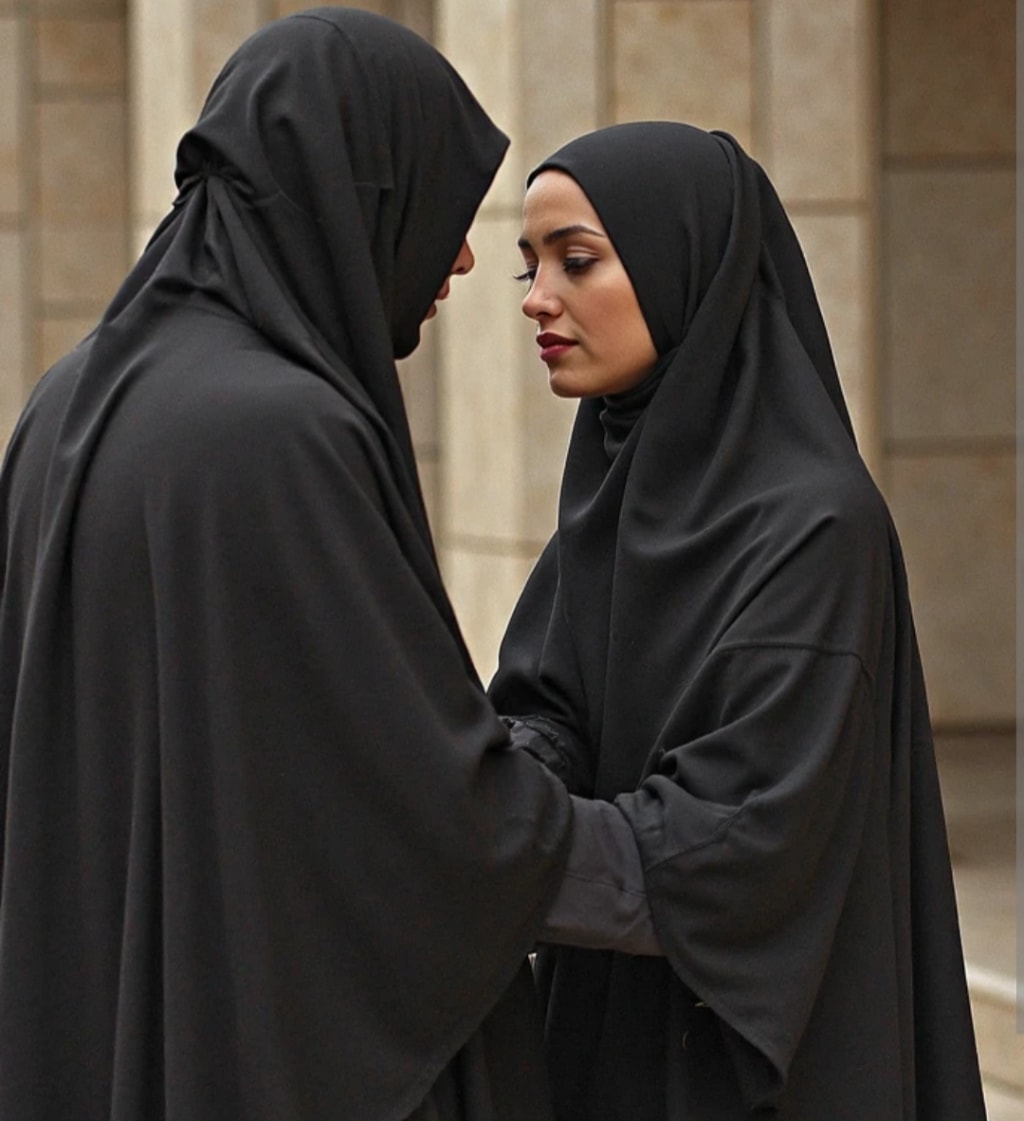
Allegation: Islam takes away women's rights and subjugates men.
This accusation is often heard in the modern world, especially from the Western media, secular feminist groups and some Islamophobic thinkers. They say that Islam has placed women below men, taken away their freedom and dignity and has confined them to a life of domestic confinement. How true is this claim? Has Islam really taken away women's rights? Or is this idea a distorted portrayal that contradicts the true message of the Quran and Hadith?
We know that before the advent of Islam, the condition of women in Arab society was very miserable. The birth of a female child would bring grief to the family, and even cases of burying them alive were not uncommon. The Quran portrays that horrific scene as follows:
“And when one of them is given the good news of a female child, his face turns black and he becomes angry.”
(Surah An-Nahl, 16:58)
In this barbaric era, Islam brought about a revolution. Women were declared as full human beings for the first time, with rights, respect and dignity. The Quran says:
“I will not deprive anyone of you of his work, whether male or female - you are parts of one another.”
(Surah Al-Imran, 3:195)
In this verse, Allah Almighty describes women and men as equal in work and as complementary to each other. Islam has given women rights that no other religion or social system of that time could have imagined.
First, Islam has given women the right to acquire knowledge. In a hadith, the Messenger of Allah ﷺ said:
“Acquiring knowledge is obligatory upon every Muslim.”
(Ibn Majah, Hadith: 224)
Here, the word “Muslim” also refers to women, as is well known. The Messenger ﷺ himself learned many hadiths from Aisha (RA), and his companions also sought knowledge from her.
Second, Islam has given women the right to property. The rights of women to the property of no one – father, husband, child or brother – have not been curtailed. Rather, the Quran’s Surah An-Nisa’ has detailed provisions regarding inheritance for both men and women. Even married women have the right to keep their own property, and it is not obligatory for their husbands to touch it.
Thirdly, Islam has recognized women’s individuality and self-respect. It has presented women as the central pillar of the home and society, not as prisoners. The Prophet ﷺ said:
“The best among you is the one who is best to his wife.”
(Tirmidhi)
This hadith directly establishes women in a dignified position. In every form – wife, daughter, mother – Islam has established the dignity of women. And the most dignified position of a woman is to be a “mother.” In the hadith, the Prophet ﷺ said:
“Who is most deserving of your good treatment?”
He said, “Your mother.”
It was asked again, who is next?
He said, “Your mother.”
Then?
“Your mother.”
Then?
“Your father.”
(Sahih Bukhari and Muslim)
In this hadith, Islam has established the highest status for women by prioritizing the mother three times, which no other ideal in the world has been able to give.
However, a misinterpretation is often made here—for example, some say that the Quran has made it mandatory for women to wear veils, which has restricted them. But the Quran’s veiling provision is not only for women, but also for men:
“Tell the believing men: Let them lower their gaze and guard their private parts…”
(Surah An-Nur, 24:30)
Then it is said to women that they should conceal their beauty and behave modestly. This is not a unilateral suppression, but rather a principle of maintaining social balance. Islam has never restricted women’s movement or pace of life—Umm Salama, Asma bint Abu Bakr, Khadija (may Allah be pleased with them)—all were active workers, traders, war supporters, and teachers.
Many people ask, why is the testimony of women half in Islam? Isn't this discrimination? No. The Quran says:
“...Take two witnesses from among your men. But if you cannot find two men, then one man and two women...”
(Surah Al-Baqarah, 2:282)
This verse applies only to financial transactions, where women had little experience at that time. It is not about giving testimony in any moral or family matter. Rather, a woman's sole testimony is accepted in cases of caring for a newborn, breastfeeding, etc.
The ultimate reflection of the humiliation of women in Islam is the presentation of women's bodies as consumer goods, which is happening in modern capitalist society. Islam values women not by their bodies, but by their intellect, character and dignity.
Therefore, it can be said that the accusation that "Islam takes away women's rights" is just a fabricated propaganda, not reality. Islam has given women recognition, protection, respect and freedom - which no religion or society could give thousands of years ago.
About the Creator
Keep reading
More stories from Abdul Barik and writers in Motivation and other communities.
Looking back: 2025 was a beast
It's difficult to know how to start this. I've suggested that it's been a tough one from my title and in many ways, it has; however, there is an argument that it's not been that extraordinary at all, merely this wonderful thing we call "life" with all its climaxes and pitfalls.
By Rachel Deeming27 days ago in Motivation
Wild Card Weekend Recap: What Happens Now?
I think I figured out why I love Wild Card Weekend so much. It's because it's the first playoff anything of the calendar year. The NFL season starts in the fall, and once upon a time, the champion was crowned either on or slightly before New Year's. The evolution of the NFL schedule has resulted in the playoffs starting just into the New Year, and currently, the final week of the season falls on the first weekend of the New Year, with Wild Card Weekend coming a week after that. So yes, chronologically, the NFL's Wild Card Weekend serves as the first playoff anything of the calendar year.
By Clyde E. Dawkins6 days ago in Unbalanced




Comments
There are no comments for this story
Be the first to respond and start the conversation.