
Strings of the Heart
A grieving shoemaker, a runaway boy, and the music that healed them both.

Tucked away in a mist-covered valley was the humble village of Windmere, where people lived slow lives and secrets aged quietly. Among them lived an old cobbler named Elias, who spent his days hunched over worn-out boots in a shop that smelled of leather, glue, and memory.
Long ago, Elias had been a violinist. Not famous, not rich—just passionate. But he hadn’t touched the instrument in decades, not since the fire that took his daughter, Mira. After that night, the music stopped, as did his laughter. The violin, once his joy, now sat on a dusty shelf above his tools, ignored and nearly forgotten.
The villagers never pressed him. They respected Elias’s silence, buying their shoes and nodding gently, careful not to awaken his grief. Though many pitied him, they never truly knew the depth of the emptiness he lived with.
Then, on a night heavy with rain, fate knocked—literally.
A soaked, scrappy boy stood shivering at his door, hair wild with curls and mischief in his eyes.
“I’m Tomi,” he said. “I ran away from the orphanage.”
Elias raised an eyebrow. “Why?”
“They make us eat boiled cabbage every day. You ever had to survive on cabbage alone?”
Elias shook his head. “Can’t say I have.”
“Then you get it.”
Against better judgment, Elias let him in. He offered soup, dry clothes, and a warm corner to sleep in. The next day, Elias fully intended to return the boy to the orphanage—but something made him pause. Tomi, for all his trouble, filled the silence with laughter. He was loud, nosy, and full of questions that made Elias groan and chuckle at the same time.
“Why don’t you ever laugh with your eyes?”
“Did you use to smile before your hair turned gray?”
“What’s that old box with strings in it?”
Elias grumbled but never truly got angry. Something about the boy’s energy chipped away at the walls he’d built around his sorrow.
One day, Tomi opened the violin case and found the instrument inside—aged, dusty, but still whole.
“Can you still play it?” he asked, holding it up gently.
“No,” Elias replied flatly.
“You mean you won’t.” The boy’s tone was matter-of-fact.
Later that evening, Tomi presented a drawing: Elias, smiling, playing the violin, surrounded by people with tears in their eyes.
“I drew this so you don’t forget,” he said.
That night, after the boy had fallen asleep, Elias took the violin out. The bow felt foreign in his hand, but he tried. The sound that came out was jagged, almost comical. Tomi, listening from his bed, giggled.
“You sound like a goose getting tickled.”
For the first time in years, Elias laughed—a deep, rusty sound.
So, he tried again. Each night. Slowly, the music returned. Not perfect, but honest. Tomi would listen with wonder, always requesting new songs.
“Play something happy!” he once said.
Elias attempted a cheerful tune, but the music betrayed his heart—it ended with a wistful note.
“That’s okay,” Tomi said. “Happy songs are allowed to miss people too.”
Word of the music spread across Windmere. Villagers started gathering quietly outside the cobbler’s window, just to hear a few notes. Then came an unexpected invitation: the town wanted Elias to perform at the Harvest Gathering.
He declined. “I’m not who I used to be.”
“But maybe,” Tomi said gently, “you’re becoming someone again.”
Eventually, Elias agreed. On the evening of the festival, under twinkling lights, Elias stepped onto the village stage. Tomi sat front row, proudly wearing shoes Elias had stitched just for him.
Elias began with a slow, aching melody. It told a story without words—a story of loss, love, and long silences. But midway through, the notes turned playful, full of bounce and mischief. People laughed. Some cried.
When he finished, the crowd gave a standing ovation. Elias bowed deeply, overwhelmed.
Backstage, Tomi ran to him. “That was amazing!”
“I only found the courage because of you,” Elias said, kneeling beside him. “Thank you for giving me back the music—and my heart.”
That winter, Elias officially adopted Tomi. It wasn’t easy. The paperwork was tangled, and officials questioned his age and lifestyle.
“You think you can raise a child?” they asked.
“I’ve already started,” he said. “And he’s helped raise me too.”
The two became inseparable. Tomi grew taller, learned to play the violin better than Elias ever had. Together, they taught music to local children, repaired shoes for those in need, and brought laughter to the once-quiet cobbler’s shop.
Every year at the Harvest Gathering, they played a duet—always ending on a quirky, joyful tune that made people laugh through their tears.
Elias no longer lived in silence. He laughed with his eyes. And every evening, like clockwork, Tomi would yell, “Dinner’s ready! No cabbage—I swear!”
In a village that once held its breath around his grief, the old shoemaker and the runaway boy became living proof: grief may shape us, but love—and a little bit of music—can mend even the deepest cracks.
About the Creator
Keep reading
More stories from Mushtaq Ahmad and writers in Motivation and other communities.
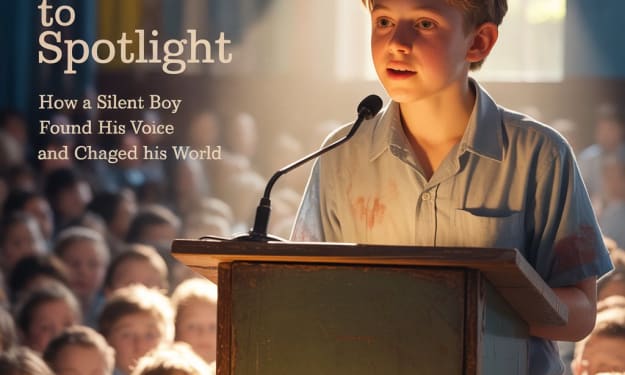
“From Shadows to Spotlight”
In a quiet village nestled between dusty roads and sun-scorched fields, there lived a boy named Arjun. He wasn’t the kind of student anyone remembered — in fact, most people didn’t notice him at all. He always sat on the last bench in class, not because he liked it, but because he felt that was where he belonged — out of sight, out of mind.
By Mushtaq Ahmad7 months ago in Motivation
The Habit Nobody Applauded
When people talk about success, they love to talk about big moments. The first million. The viral video. The lucky break. But nobody talks about the quiet years. This story is about one of those quiet years. Ayaan was not born poor, but he was not comfortable either. His life sat in that dangerous middle place where dreams exist but resources don’t. Every morning, he woke up with the same heavy feeling in his chest — not fear, not sadness — just uncertainty. He worked a regular job. Long hours. Average pay. Endless routine. Wake up. Work. Eat. Sleep. Repeat. At night, when the city slowed down, Ayaan would scroll on his phone, watching people online talk about success, habits, discipline, and freedom. Everyone sounded confident. Everyone had answers. Ayaan had questions. One night, he came across a simple sentence that stayed in his mind: “Your life is a reflection of your daily habits.” It didn’t sound magical. It didn’t promise fast money. But it felt… true. So he decided to try something small. No big plans. No announcements. No motivation speeches. Just one rule: Every single day, one hour, same time, no excuses. He didn’t even know exactly where this habit would take him. Some days he studied skills. Some days he learned about money. Some days he practiced writing. Other days he just failed and felt confused. But the hour was non-negotiable. The first week was easy. The second week was uncomfortable. The third week was painful. His mind resisted. His body resisted. His friends mocked him. “Why are you acting like a monk?” “You think one hour will change your life?” “Relax, enjoy life.” Ayaan smiled and said nothing. Because explaining discipline to undisciplined people is a waste of energy. After two months, nothing had changed externally. Same salary. Same problems. Same stress. And that’s where most people quit. Ayaan almost did. One night, he sat on his bed, tired, frustrated, asking himself, “What’s the point?” But then he realized something powerful: The habit was no longer about results. It was about identity. He was no longer someone who wanted to improve. He was someone who showed up daily. That realization changed everything. Months passed. The habit began reshaping his thinking. He noticed patterns others ignored. He learned how money actually flows. He understood how skills compound. He became sharper — not louder, not arrogant — just sharper. Still, no applause. No one noticed his consistency. No one celebrated his discipline. No one cared. And that was the blessing. Because habits grow best in silence. One year later, something unexpected happened. An opportunity appeared — small, unimpressive to outsiders. A short project. Low pay. High effort. Old Ayaan would have ignored it. New Ayaan saw leverage. He accepted it, delivered beyond expectations, and learned from the process. That led to another project. Then another. Not fast. Not viral. But real. Slowly, money started behaving differently around him. It no longer escaped instantly. It stayed. It grew. It multiplied. His confidence changed — not the loud type — the quiet kind that comes from competence. People who once laughed now asked questions. “How did you do it?” “What changed?” “What’s your secret?” Ayaan gave them the honest answer: “I didn’t change my life. I changed what I did daily.” Some listened. Most didn’t. Because habits sound boring to people addicted to shortcuts. Years later, Ayaan sat at a better desk, in a better room, with a calmer mind. He wasn’t famous. He wasn’t a motivational speaker. He was free. And freedom didn’t come from luck. It came from a habit nobody applauded. That’s the truth about habits: They don’t impress people early. They don’t give quick rewards. They don’t feel exciting. But they build a version of you that money respects. And once you become that person, money stops running away. Final Truth (Perfect for Ending Voice-Over) If you’re waiting for motivation, you’ll wait forever. If you’re waiting for support, you’ll quit early. But if you build one habit and protect it like your life depends on it — one day, your life will prove that it did.
By Siraj khanabout 22 hours ago in Motivation


Comments
There are no comments for this story
Be the first to respond and start the conversation.