
Salma Hayek: A Story of Struggle, Courage, and Triumph
A motivational story


When you see Salma Hayek on the red carpet, dressed in grace and confidence, it’s easy to forget how difficult her journey was. To the world, she is a successful actress, producer, activist, and fashion icon. But behind her smile lies a story of courage, rejection, persistence, and strength. Salma’s life is not only about fame and success—it is about the power of never giving up when the world tells you to quit.
This is the story of Salma Hayek’s struggles and how she rose against all odds to become one of the most influential women in Hollywood.
Humble Beginnings in Mexico
Salma Hayek was born on September 2, 1966, in Coatzacoalcos, a small coastal town in Veracruz, Mexico. Her father, Sami Hayek, was a businessman of Lebanese descent, and her mother, Diana Jiménez, was a Spanish opera singer. Though her family was well-off financially, the conservative environment of Mexico was not welcoming to women who dreamed differently.
As a child, Salma suffered from dyslexia. Reading and writing were extremely difficult for her, and many teachers believed she would never succeed academically. She remembers being made fun of in school and often feeling less than others. But even then, she had an inner fire—she loved storytelling, movies, and the performing arts.
At 12, her parents sent her to study at a Catholic boarding school in Louisiana. But her strong personality clashed with the strict discipline there. After being expelled for misbehavior, she returned home and convinced her parents to let her pursue acting.
Her mother wanted her to go to college, but Salma knew her heart belonged to the stage. She enrolled at the Universidad Iberoamericana in Mexico City, where she studied International Relations—yet her true love remained performance.
The Breakthrough in Mexican Television
In the late 1980s, Salma auditioned for Mexican telenovelas (soap operas). Despite her dyslexia and the stigma against her “different look” at the time, she quickly impressed producers with her determination and emotional depth.
Her big break came in 1989 when she landed the lead role in the soap opera “Teresa.” The show became a massive hit across Mexico, turning Salma into a household name. Suddenly, she had fame, recognition, and a fan following.
But Salma wasn’t satisfied. She felt trapped in the limited roles Mexican television offered women—usually stereotypes of the innocent girl, the maid, or the weeping lover. She wanted to tell bigger stories, to act on the world stage.
So, at the peak of her fame in Mexico, she made the boldest decision of her life: she left everything behind and moved to the United States to chase her dream of becoming a Hollywood actress.
Struggles in Hollywood
When Salma arrived in Los Angeles in 1991, she was 25 years old. She had money from her successful TV career in Mexico, but she had no connections in Hollywood.
Her first challenge was language. She spoke English with a thick accent, and casting directors often laughed at her during auditions. Some even told her to “go back to Mexico.” Hollywood, at the time, had very few opportunities for Latina actresses. Roles were usually limited to maids, illegal immigrants, or background characters.
Salma recalls going to auditions where directors wouldn’t even look at her because of her accent. One producer once told her: “Your accent is never going to change, and people don’t want to hear it.”
On top of that, Salma suffered from epilepsy, a condition she had battled since childhood. The stress of rejection only made it worse. Many nights, she cried alone in her small Los Angeles apartment, wondering if she had made the biggest mistake of her life.
But Salma was not ready to give up. She hired English tutors, worked tirelessly on her speech, and went to every audition she could find—even when she knew the odds were against her.
Quentin Tarantino, Robert Rodriguez, and “Desperado”
Salma’s persistence finally paid off in the mid-1990s. Director Robert Rodriguez was casting for his film “Desperado” (1995), starring Antonio Banderas. Salma auditioned and impressed both Rodriguez and Quentin Tarantino, who was producing the film.
This movie changed everything. Though her role was not the lead, Salma’s performance caught the attention of Hollywood. Her beauty, charm, and screen presence were undeniable. For the first time, she was seen not as a stereotype but as a leading lady with global appeal.
Still, the journey wasn’t smooth. Many critics focused more on her looks than her talent. In interviews, she was constantly asked about her accent or her “exotic appearance” instead of her craft. But Salma kept moving forward, determined to be taken seriously as an actress.
The Dream Role: “Frida”
The turning point of Salma’s career came with her passion project, “Frida” (2002). For years, she had dreamed of making a film about the life of Mexican painter Frida Kahlo.
But Hollywood producers didn’t believe a Latina-led biopic would succeed. Salma fought for years, facing rejection after rejection. At one point, a powerful Hollywood executive told her she would “never make that movie.”
Instead of backing down, Salma doubled her efforts. She started her own production company, Ventanarosa, and gathered a team of supporters. When the movie was finally made, Salma not only starred as Frida but also served as producer.
The result? “Frida” became a critical and commercial success. Salma’s performance earned her an Academy Award nomination for Best Actress, making her only the third Latina in history to achieve this honor.
This was more than just a career milestone—it was proof that Salma’s struggles had not been in vain.
Facing Harassment and Speaking Out
Behind the scenes, however, Salma faced battles few knew about. In 2017, during the rise of the #MeToo movement, she revealed in an emotional essay for The New York Times that she had endured years of harassment from disgraced Hollywood producer Harvey Weinstein.
She recounted how Weinstein repeatedly pressured her for unwanted advances while she was making Frida. When she refused, he tried to sabotage the film. She described nights of crying and emotional breakdowns, but still, she persisted until the movie was completed.
Her decision to speak out was not just about her—it was about inspiring other women in the industry to break their silence. Salma’s courage added momentum to the global conversation about equality and respect in Hollywood.
Personal Life, Family, and Balance
Salma Hayek’s success is not just professional. In 2009, she married French billionaire François-Henri Pinault, and together they have a daughter, Valentina.
Balancing Hollywood and family life hasn’t been easy, but Salma often says that motherhood is her greatest role. Despite her wealth and fame, she keeps her personal life private and prioritizes time with her family.
She has also remained proud of her roots. Salma frequently returns to Mexico and has been active in philanthropy, supporting education for young girls, raising awareness about domestic violence, and helping communities in need.
Legacy and Inspiration
Today, Salma Hayek is not just an actress—she is a trailblazer. She opened doors for Latina actresses in Hollywood, proving that talent, persistence, and courage can break barriers.
From battling dyslexia and rejection to facing harassment and prejudice, her journey is filled with struggles. Yet, each struggle made her stronger.
Her story reminds us that success is not about avoiding failure—it is about refusing to quit, no matter how many obstacles stand in the way.
Salma once said:
“I proved to myself that I was strong. And once I knew that, I couldn’t be stopped.”
Her life is proof that with courage, passion, and persistence, even the most impossible dreams can come true.
About the Creator
Frank Massey
Tech, AI, and social media writer with a passion for storytelling. I turn complex trends into engaging, relatable content. Exploring the future, one story at a time
Keep reading
More stories from Frank Massey and writers in Motivation and other communities.
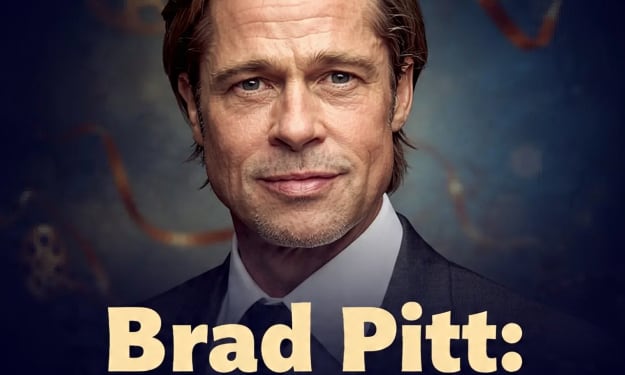
Brad Pitt: A Journey Through Stardom, Struggles, and Legacy
William Bradley Pitt, known across the globe as Brad Pitt, is far more than just one of Hollywood’s most familiar faces. His life story is not simply about charm, fame, or fortune. It is a portrait of persistence, transformation, and resilience in the middle of both personal battles and public scrutiny. From his modest beginnings in Oklahoma and Missouri to becoming one of Hollywood’s most bankable actors and visionary producers, Pitt’s journey reflects ambition, artistry, and the enduring strength of the human spirit.
By Frank Massey 5 months ago in Motivation
How to Manage Money When Income Is Irregular
Managing money is challenging for anyone, but it becomes especially difficult when your income is irregular. Freelancers, self-employed workers, gig workers, commission-based earners, creatives, and seasonal workers often face months of feast followed by months of famine. Without a fixed paycheck, traditional budgeting advice can feel unrealistic or even useless.
By Emma Adeabout 3 hours ago in Motivation



Comments
There are no comments for this story
Be the first to respond and start the conversation.