

Think back to the early teenage you. Reflect on all those awkward pubescent middle school years. The years of bad haircuts, sullen smiles, braces, and pimple-covered faces. Remember the times of being rebellious, careless, and feeling invincible. Maybe you were faced with the struggles of depression and loneliness from being excluded. Perhaps you felt as though you didn’t quite fit in with your peers simply because you looked different. If that described you, I know exactly how you felt. There were countless times when I felt like an outcast, a freak. I felt as though I didn’t belong, and nobody liked me. It was not easy to ditch that mindset. It took me several years to escape the feeling of not being wanted. I had to overcome more adversity than the average teenager to do so. I was basically like any other teenager, trying to figure out who I was and what to make of the world. There was just one evident difference that separated me from my peers; I was in a wheelchair. My name is Sean Crosby, and this is my story of a time when I faced, overcame, and learned from my experience in “social shock.”
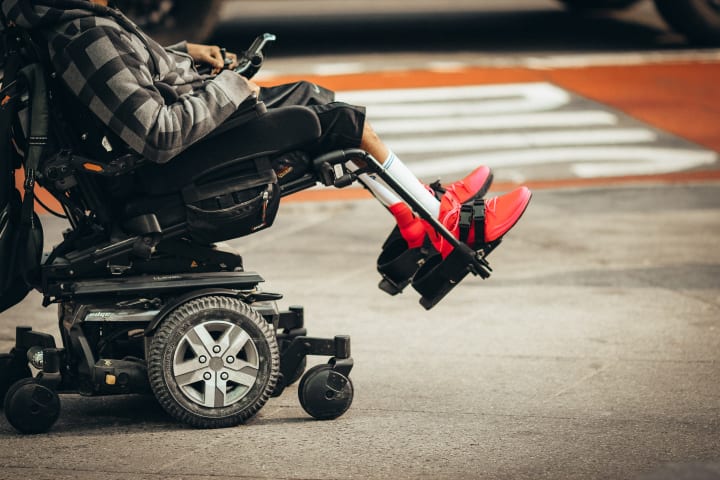
Time for a quick backstory. I have Duchenne Muscular Dystrophy (DMD), a degenerative, muscle-wasting, disease. I was wheelchair-bound by the time I turned 11 years old. I had a horrific fall in the school bathroom, falling headfirst, backward, which resulted in a concussion and a baseball-sized bump on my head. It was apparent the time had come for me to no longer be ambulatory. It was a bittersweet moment receiving my first wheelchair. I was saddened to be forever wheelchair dependent, but I was overcome with excitement that I would be given back the independence that had been absent for so long. That excitement quickly turned to uncanny trepidation as I would be starting middle school the following year. I had the feeling that kids my age would not accept me because I was not like them. I had a couple of friends from my pre-wheelchair days of childhood, but up until that point they had not seen me in a wheelchair except for the short amount of times when my legs would fatigue. Fast forward one year and the apprehension that consumed me from the year prior became justifiable.
Once kids go to middle school, they completely change. They start portraying who they truly are. Friends that I thought were friends, were no more. Many did not associate themselves with me or even speak to me. Kids that did not know me were harsh. Some would ask me “what happened?” “How did you get that way?” ”Why don’t your legs work?” Question after question was thrown at me. Some of the kids may have meant well and were genuinely curious. Maybe some were just blurting things out because they had never encountered someone their age in a wheelchair and were taken aback. Whatever their reason was, I did not enjoy it one bit. Here I am, almost 13 years old, the first day of middle school, have no friends, do not know anybody, only student in a wheelchair, and questions are feverishly being hurled my way. That is a lot to handle. I felt so alone at that moment. I sat in isolation at lunch, in the classroom, and at recess. The only person that would occasionally converse with me was the teacher on duty at the time. This happened every day for the first several weeks of the school year. I did not want to be known as “The Wheelchair Kid.” I knew I needed to find a way to fit in with the other kids. It also occurred to me that I would have to be the one that initiates the friendship.
I started using (and still use to this day) a technique that I called “common connections.” I looked for common interests that another student and I shared. If I saw a student was wearing a shirt of a band that I liked, I would start a conversation with them. Another student might be wearing a watch and I would compliment the watch and ask questions about it. Even if I did not know much about a certain topic I would “fake it until I made it.” I made my first middle school friend using the common connections method. He was wearing an Ohio State football jersey. Football was my favorite sport. So having a conversation about football was easy and put me in my comfort zone. Finally, my first friend! A huge weight was lifted off my chest. It was a moment of self-fulfillment and relief. From that point forward we talked about sports every day. My new friend was a quiet kid as well and did not have many friends himself. I never ate another lunch or spent another recess alone. It was a challenging road to get to that point. It did not happen overnight. I had to be patient and stay positive. We remain great friends to this day. I continued using the common connections technique and formed even more friendships. Using the common connections technique skyrocketed my confidence level, improved my communication and social skills, tested my patience, persistence, perseverance, and provided me with the lifelong friendships I now have.
I learned a lot about myself and others during those middle school years. I learned most teenage kids do not want to be seen with somebody that looks different. They do not want to hang out with ”The Wheelchair Kid.” Maybe it is considered ”uncool.” It is not always easy for the average teenager to navigate through life. It can be even more difficult for teenagers with disabilities. For all the teenagers with or without a disability that feel like they are not good enough or do not belong, this one is for you. I have been there. I felt like there was no hope for my life and I was worthless. You are wrong. You are meant for so much more. Tough times don’t last, tough people do. Get back in the ring, take another swing, and keep rolling with the punches.
About the Creator
Keep reading
More stories from writers in Motivation and other communities.
One Hard Thing
Stop me if you’ve heard this one before: You have the number, you know your schedule- you’ve even picked out the perfect day and time to make this appointment. Shoot, you’ve even picked out alternative days and times just in case their schedules can’t accommodate you!
By Taylor Rigsby2 days ago in Motivation
New Podcast: Letters to the Listener
Hi everyone! I am SO excited to announce that I will be reviving "The Shrug" podcast spirit, the one where I find poems from authors and writers like you and read them out loud. You may find comments from me asking if I can read your poems on my podcast, asking for consent, of course! This will include an article I write about my finds for the week, and then link your poem there!
By Jazzy 2 days ago in Motivation
Autonomy Is The Real Privilege
Good morning, freedom-seekers! Today we’re gonna be looking at autonomy. A strange word, I know; one many would probably look at blankly and run away from on sight. We’re gonna figure out what it actually means, consider how it’s achieved, and decipher just how deeply most of us are tangled up in dependence without realising it.
By That ‘Freedom’ Guy7 days ago in Humans



Comments
There are no comments for this story
Be the first to respond and start the conversation.