
Natalie Portman: A Life Between the Spotlight and the Classroom
Natalie Portman Story

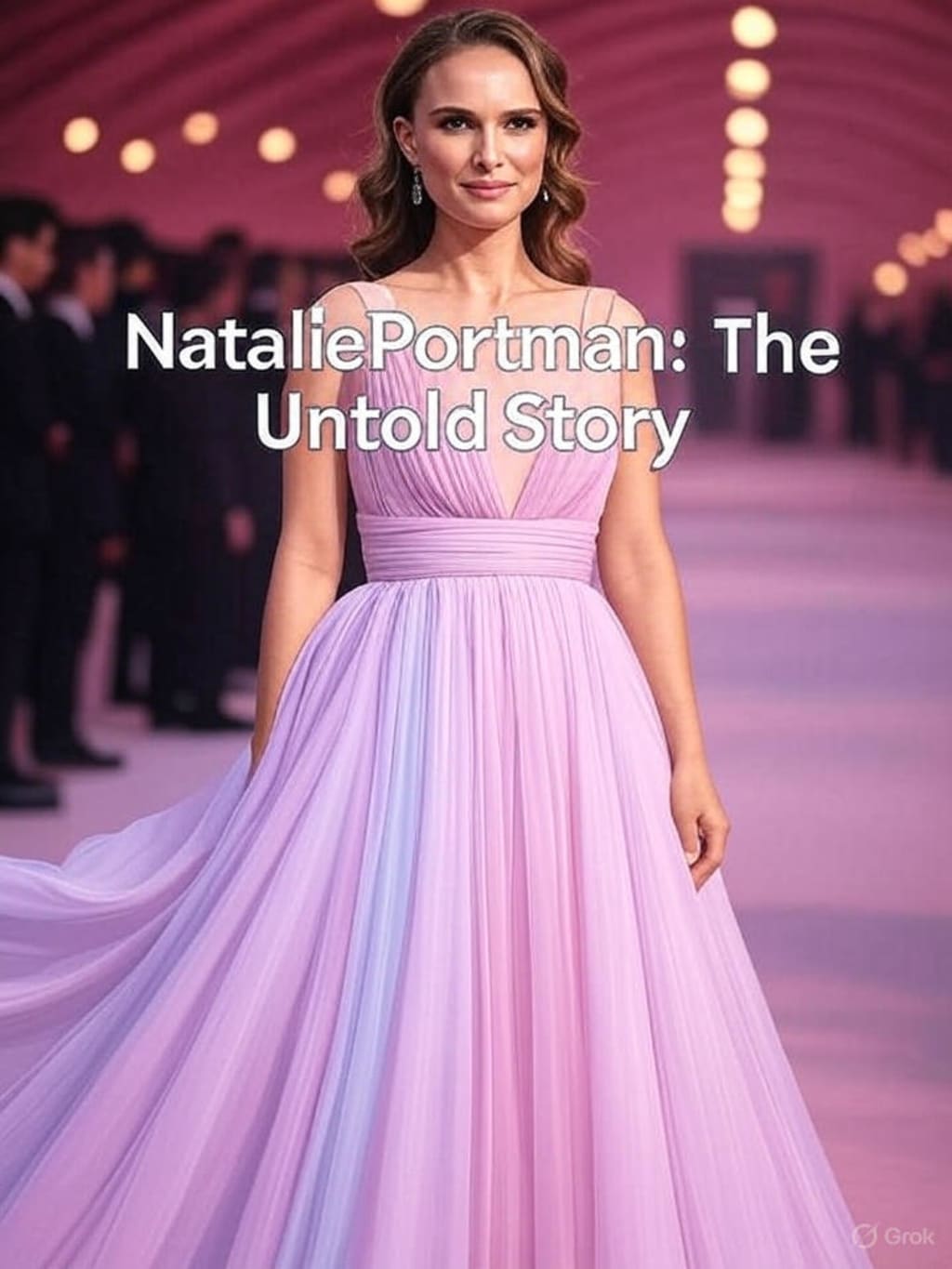
When we look at Hollywood, it’s rare to find someone who has managed to live two lives at once—one under the blinding lights of fame, and another shaped by intellect, discipline, and a determination to be more than a movie star. Natalie Portman is that rare figure. An actress, an activist, and an academic, her journey from a child actress in Léon: The Professional to one of the most respected voices in cinema is not just about talent—it’s about choices.
Her story begins far from Hollywood’s glittering streets, in Jerusalem, Israel.
From Jerusalem to the United States: A Global Childhood
Natalie Portman was born Neta-Lee Hershlag on June 9, 1981, in Jerusalem. Her father, Avner Hershlag, was an Israeli fertility specialist, and her mother, Shelley, was an American homemaker who later became her agent. The family’s life was a blend of Israeli heritage and American culture. Her dual identity shaped her worldview from the very beginning.
When Natalie was three, the family relocated to the United States. After a short stay in Washington, D.C., and then Connecticut, they finally settled in Long Island, New York. Here, Natalie’s academic brilliance and artistic interests started to shine. Unlike many children who dreamed of becoming stars, she was described as “serious, studious, and determined.”
Even as a little girl, Natalie showed qualities that would define her entire career: a stubborn independence and a curiosity about the world. While other children were playing outside, she was often found reading, learning, and pushing herself. Teachers called her “exceptionally gifted.”
It wasn’t long before life presented her with an unexpected path.
Discovered at a Pizza Parlor
When she was just 10 years old, Natalie was spotted in a Long Island pizza parlor by a representative from Revlon cosmetics. They asked if she wanted to try modeling. Most kids would have been thrilled. Natalie wasn’t.
She told them she wasn’t interested in modeling, but she did want to act. That single choice—turning away from a superficial career to pursue something deeper—set her apart. Soon, she began attending acting auditions.
In 1994, at the age of 12, Natalie landed her first film role—and it was no ordinary debut.
Léon: The Professional (1994) — The Birth of a Star
Natalie’s first acting job was in Luc Besson’s Léon: The Professional, playing Mathilda, a young girl who becomes the protégé of a hitman (played by Jean Reno) after her family is murdered.
The role was controversial. The film blurred lines of innocence and maturity, with Natalie playing a child caught between trauma and revenge. For a 12-year-old, the performance was astonishing. Critics immediately recognized her emotional depth, her ability to express vulnerability, pain, and strength—all in one performance.
Yet, Natalie herself has admitted in later years that the role was difficult, even troubling. She was too young to fully grasp the implications of the story, but she approached it with professionalism beyond her age. For the world, Léon marked the arrival of a prodigy.
After the film’s release, directors and casting agents wanted more of Natalie. But she and her parents were careful. Unlike many child stars whose careers burn out quickly, Natalie balanced acting with education.
Balancing Fame and School
Throughout her teenage years, Natalie took roles in films like Heat (1995), Beautiful Girls (1996), and Mars Attacks! (1996). Each role allowed her to show range, moving from drama to comedy to science fiction. But she never let acting consume her life.
In interviews, Natalie often spoke about how she didn’t want to become just another Hollywood story. Her priority was always school. She was a straight-A student, excelling in math and science as well as languages. She even learned Hebrew and French fluently.
In a famous quote, she once said:
“I’d rather be smart than be a movie star.”
This wasn’t just a line—it was a philosophy she lived by. While filming, she brought schoolwork to the set. While other young actresses were swept up in Hollywood parties, Natalie stayed away from the limelight.
But Hollywood wasn’t done with her yet. Her biggest test was about to come.
The Star Wars Prequels: Queen Amidala
In 1999, Natalie Portman took on a role that would make her internationally famous: Padmé Amidala in George Lucas’s Star Wars prequel trilogy.
At just 18, she became the queen of a galactic empire, starring alongside Liam Neeson, Ewan McGregor, and Hayden Christensen. For fans, Natalie’s face was suddenly everywhere—on posters, toys, and lunchboxes. She had become part of one of the biggest franchises in cinema history.
But the Star Wars years weren’t easy.
The films received mixed reviews, and Natalie faced criticism from fans and critics alike for what they saw as “stiff” acting. In truth, much of this came down to George Lucas’s script and directing style, which often left actors little room for natural expression. Natalie, who was capable of raw emotion and authenticity, struggled in the CGI-heavy, dialogue-heavy world of Star Wars.
Years later, she admitted she thought her career might be over after Attack of the Clones (2002). Hollywood directors didn’t take her seriously. “Everyone thought I was a terrible actress,” she once confessed.
But true to her character, Natalie didn’t break. She went back to what she always relied on: her studies.
From Hollywood Sets to Harvard Classrooms
During the same period she was filming Star Wars, Natalie enrolled at Harvard University. She majored in psychology, a subject that fascinated her and connected to her curiosity about human behavior.
At Harvard, Natalie became just another student. She lived in dorms, attended lectures, and kept a relatively low profile. Some classmates recall being starstruck, while others said she blended in as a serious, hardworking scholar.
In one interview, she famously said:
“I don’t care if [college] ruins my career. I’d rather be smart than a movie star.”
It was a risk few Hollywood actors would ever take—stepping away from the industry at the height of fame to pursue education. But for Natalie, it was non-negotiable. She thrived academically, even co-authoring research papers that were later published in scientific journals.
By the time she graduated in 2003, she had earned respect not just as an actress, but as a thinker.
Finding Her Voice
After Harvard, Natalie returned to acting with a new sense of self. In 2004, she starred in Closer, opposite Jude Law, Clive Owen, and Julia Roberts. Her performance as Alice, a mysterious young woman caught in a web of relationships, won her the Golden Globe Award for Best Supporting Actress and an Academy Award nomination.
This was the turning point. Critics who once doubted her began to see her as more than the girl from Star Wars. She was an actress of depth and substance.
That same year, she shaved her head for her role in V for Vendetta (2005), a performance that became iconic. Playing Evey Hammond, a woman transformed by political rebellion, Natalie showed fearlessness—not just in her look but in her dedication to telling bold stories.
By her mid-twenties, she had established herself as one of the most versatile actresses of her generation. But the greatest performance of her life was still to come.
Natalie Portman: A Life of Art, Advocacy, and Authenticity
(Part 2)
Finding Balance: Stardom and Scholarship
By the early 2000s, Natalie Portman was at the height of her fame. With Star Wars making her an international sensation, she faced pressures that would have overwhelmed many young stars. Yet, instead of simply basking in the Hollywood spotlight, Natalie made a rare and brave decision: she stepped back.
She enrolled at Harvard University, where she studied psychology while continuing to act. For a rising actress to prioritize academics over career momentum was unheard of, yet it revealed her deep commitment to personal growth. Her Harvard years shaped not only her intellect but also her values. She once said, “I don’t care if college ruins my career. I’d rather be smart than a movie star.”
This balance—between fame and substance, art and intellect—would become a defining theme of her life.
The Rise of a Versatile Artist
After graduation, Portman returned to the screen with renewed focus. She starred in Closer (2004), a searing drama about love, betrayal, and human fragility. Her performance as Alice earned her a Golden Globe Award and an Academy Award nomination.
She continued to challenge herself with bold roles:
V for Vendetta (2005), where she famously shaved her head on camera, symbolizing her fearless commitment to authenticity.
The Other Boleyn Girl (2008), where she played Anne Boleyn with fiery intensity.
Black Swan (2010), her most transformative role yet.
In Black Swan, Natalie immersed herself in the world of ballet, training for months, enduring injuries, and pushing her body to extremes. The film became a haunting portrayal of obsession and perfectionism—and earned her the Academy Award for Best Actress. Standing on stage at the Oscars, pregnant with her first child, she thanked her loved ones with humility, a reminder that despite her accolades, she remained grounded.
Activism Beyond the Camera
Even as her career soared, Portman never allowed fame to silence her conscience. She became a vocal advocate for women’s rights, animal rights, and environmental protection. A vegetarian since childhood and later vegan, she used her platform to promote ethical living.
In 2008, she narrated Eating Animals, a documentary exposing the cruelty of factory farming. She also invested in ethical fashion, launching a line of vegan shoes.
Natalie’s activism wasn’t performative—it was personal. She frequently marched for gender equality and has spoken at events like the Women’s March and the United Nations. She has consistently emphasized that being a public figure comes with responsibility: “We have the privilege of being heard. That privilege should never be wasted.”
Love, Family, and Private Happiness
On the set of Black Swan, Natalie met Benjamin Millepied, a French dancer and choreographer. Their connection grew quickly, grounded in a shared love for art and culture. In 2012, they married in a private Jewish ceremony in California. Together, they built a family, welcoming their children Aleph and Amalia.
Despite her global fame, Natalie has fiercely protected her children’s privacy. She has often spoken about wanting to shield them from the glare of Hollywood, providing them with as normal a life as possible.
In interviews, she has described motherhood as her most transformative role. “Nothing compares to the joy and challenge of raising children,” she shared, highlighting her desire to raise them with kindness and empathy.
A Voice for Change in Hollywood
As the #MeToo movement swept across Hollywood, Natalie emerged as one of the most articulate and fearless voices calling for change. At the 2018 Golden Globe Awards, she stood on stage and introduced the Best Director nominees with pointed irony: “Here are the all-male nominees.”
Her boldness was praised worldwide, as she used her influence to highlight the lack of female representation in Hollywood. She became part of Time’s Up, a movement advocating for safe and fair workplaces for women.
In addition, she has directed films such as A Tale of Love and Darkness (2015), proving that she’s not just an actress but also a storyteller committed to diverse narratives.
Recent Years: Returning to Blockbusters and Beyond
In 2022, Portman returned to the Marvel universe in Thor: Love and Thunder. This time, however, she wasn’t just a supporting character—she was the Mighty Thor. Her transformation into a superhero was symbolic: it represented not only her physical strength but her ability to reinvent herself as an actress in an ever-evolving industry.
Even in blockbuster franchises, she carefully chooses roles that empower women and challenge stereotypes.
Legacy: More Than a Star
Natalie Portman’s story is not just about acting. It’s about a young girl who valued books as much as movies, who chose authenticity over comfort, who used her fame to amplify the voices of the voiceless.
Her legacy is multifaceted:
As an actress, she has delivered some of the most unforgettable performances of her generation.
As a scholar, she proved that intelligence and artistry can coexist.
As an activist, she has inspired countless people to live ethically and fight for justice.
About the Creator
Frank Massey
Tech, AI, and social media writer with a passion for storytelling. I turn complex trends into engaging, relatable content. Exploring the future, one story at a time
Keep reading
More stories from Frank Massey and writers in Motivation and other communities.
Emma Watson: The Voice Beyond the Screen
Part 1 The room was silent, yet every pair of eyes was fixed on her. Under the glare of spotlights at the United Nations headquarters in New York, Emma Watson stood at the podium, her voice steady, her words deliberate. She wasn’t reciting a spell from a film. She wasn’t Hermione Granger, nor was she the little girl who had stumbled into global stardom before she even turned twelve. She was Emma Watson, a woman who had lived in the shadow of fame, who had fought with her own identity, and who now stood as a voice for millions of women around the world.
By Frank Massey 5 months ago in Motivation
Corrosion Resistance That Endures: The Strength of Hot-Dip Galvanized Steel
Steel remains essential to infrastructure, manufacturing, and development across the nation. However, corrosion constantly threatens its durability and performance. When steel comes into contact with moisture and oxygen, rust begins to form and slowly spreads. Over time, this process weakens structures and increases safety risks. Therefore, engineers and asset owners seek protection methods that deliver long-term reliability. Hot-dip galvanizing provides a proven answer to this ongoing challenge.
By Frontier Galvanizingabout 10 hours ago in Motivation
The Devil's Cut
“Comrade, finally you’re awake.” The voice was smooth, sensual. A flickering incandescent bar was all that lit the white, sterile room. All Vladimir remembered was everything going black. He tried to move his arms and found them strapped to the gurney.
By Matthew J. Fromm3 days ago in Fiction


Comments
There are no comments for this story
Be the first to respond and start the conversation.