
Max and the Big Mess
How One Man's Carelessness Polluted a Town and Ruined His Life
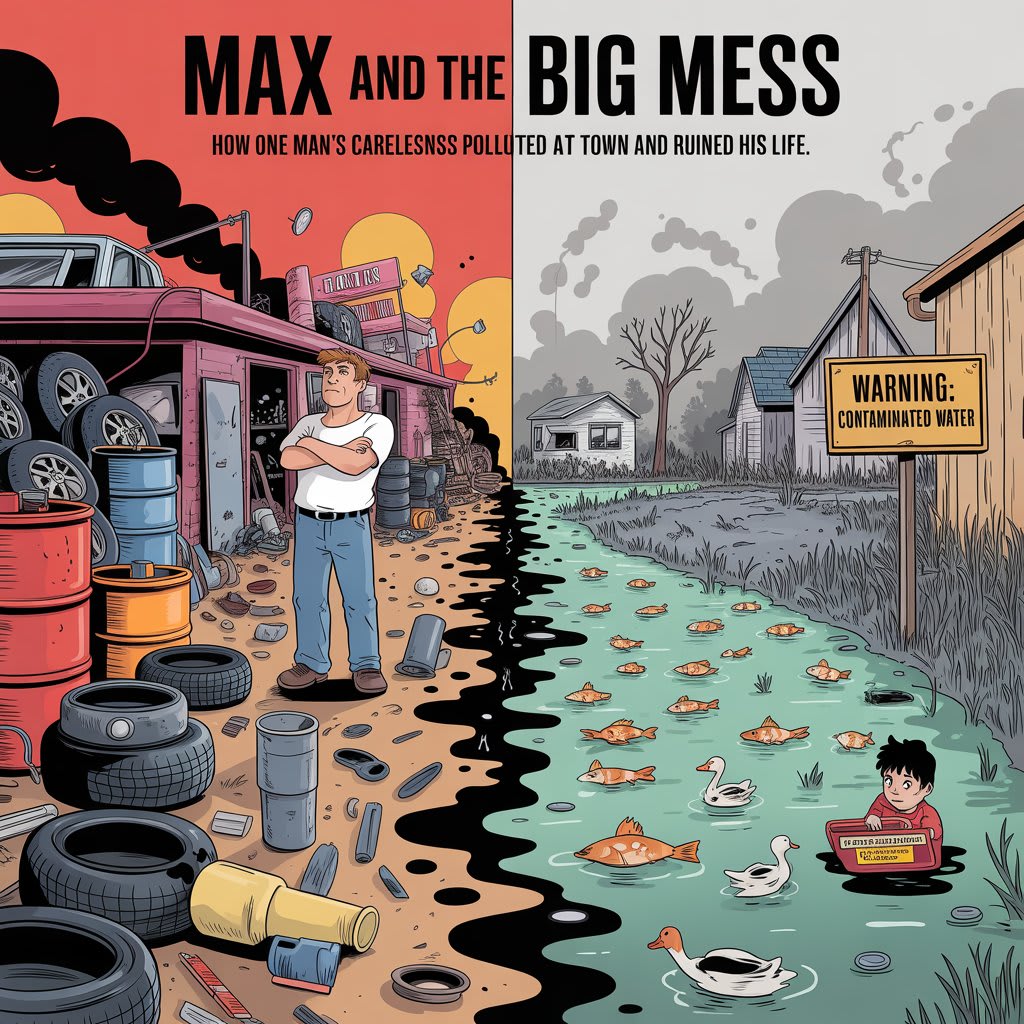
Max Turner ran a small car repair shop on the edge of Greenhill, a peaceful town surrounded by woods, farms, and a river that snaked through the valley. People in Greenhill cared about their environment—farmers composted, kids recycled at school, and even the mayor rode a bicycle to work on most days. But Max? Max didn’t care.
To him, the environment was someone else’s problem. His shop was always busy, and he didn’t want to waste time or money dealing with things like proper oil disposal, tire recycling, or chemical storage. When he drained motor oil from a car, he dumped it in a shallow pit behind his shop. Old tires were tossed into the woods. Car batteries with leaking acid were left outside in the rain, next to piles of scrap metal and oily rags.
“Nature’ll take care of it,” he muttered one day when his apprentice, Jordan, hesitated to throw a cracked battery into the back lot.
“But isn’t that dangerous?” Jordan asked. “What about the creek?”
Max snorted. “That little trickle? It’s just water. Been there forever. A bit of junk won’t hurt it.”
Jordan didn’t argue, but he didn’t stay long either. He quit two weeks later and left town.
As the months passed, neighbors started noticing changes. The creek behind Max’s shop, once clear and full of minnows and frogs, turned cloudy. Insects buzzed around oily patches on the surface. A dog that drank from it got sick. Children who used to play nearby were told to stay away. A strange chemical smell drifted over the neighborhood on humid days.
Still, Max didn’t care. Business was booming. People brought their cars in from other towns because he charged less. He didn’t have to pay for waste disposal, after all. When a local environmental group came to ask about his practices, Max smiled politely and then laughed as soon as they left.
“Tree-huggers,” he said to a customer. “Nothing better to do.”
But nature doesn’t ignore a mess forever.
One summer evening, after weeks of dry weather, a massive storm rolled in. Rain poured for hours. The dry ground couldn’t absorb the water fast enough, and the creek behind Max’s shop swelled and overflowed. Everything Max had dumped—oil, batteries, tires, metal shards—was carried downstream into the neighborhood.
Lawns were covered in slick, black grime. Gardens were ruined. Children got rashes from playing in the muddy water. One toddler ended up in the hospital with severe skin irritation. The town’s duck pond, which had been a popular family spot, was now ringed with rainbow-colored sludge and filled with garbage.
The town was outraged.
Investigators traced the pollution back to Max’s shop. It didn’t take long—photos from hikers, complaints from neighbors, and even a few receipts for improperly disposed materials all pointed to Max. The Department of Environmental Protection stepped in. Max was fined tens of thousands of dollars. He was ordered to shut down his business and pay for part of the cleanup, which would take months and involve professionals in hazmat suits.
Max tried to fight it in court, but he lost. Local news covered the story. He was labeled “The Man Who Poisoned Greenhill.” No one wanted to be seen with him. Former friends stopped talking to him. Even people who had once admired his “no-rules” attitude turned away.
He sold his shop to pay part of the fines and moved into a small apartment outside of town. Every time he went to the store or walked down the street, people whispered. Some glared. Others just looked away. He had made a mess, a big mess, and now he couldn’t escape it.
And still, sometimes, when he passed by the brown, lifeless creek, he muttered, “It wasn’t that bad.”
But the silence of the frogs, the empty duck pond, and the yellow warning signs said otherwise
Moral of the story
Neglecting the environment for personal gain may bring short-term success, but it leads to long-term consequences—for both the community and yourself.
This story highlights the importance of environmental responsibility and shows that actions that harm nature will eventually come back to affect people, especially those who caused the damage.
About the Creator
Keep reading
More stories from Doost Muhammad and writers in Motivation and other communities.
Mental Health and Trauma
It was a gray Monday morning when Jordan sat in the waiting room of the student counseling center. The hum of fluorescent lights and distant footsteps in the hallway felt louder than they should have. He held his phone in his hand, unlocking and locking it without reading any messages, pretending he wasn’t nervous. He wasn’t sure why he came—only that he couldn’t take much more of the silence in his head.
By Doost Muhammad8 months ago in Chapters
Looking back: 2025 was a beast
It's difficult to know how to start this. I've suggested that it's been a tough one from my title and in many ways, it has; however, there is an argument that it's not been that extraordinary at all, merely this wonderful thing we call "life" with all its climaxes and pitfalls.
By Rachel Deeming27 days ago in Motivation



Comments
There are no comments for this story
Be the first to respond and start the conversation.