
Maulana Khanzeb: A Silent Warrior for Pashtun Dignity and Peace.
Through courage, wisdom, and tireless service, Maulana Khanzeb became a beacon of hope for the Pashtun people—until his voice was silenced, but never forgotten.
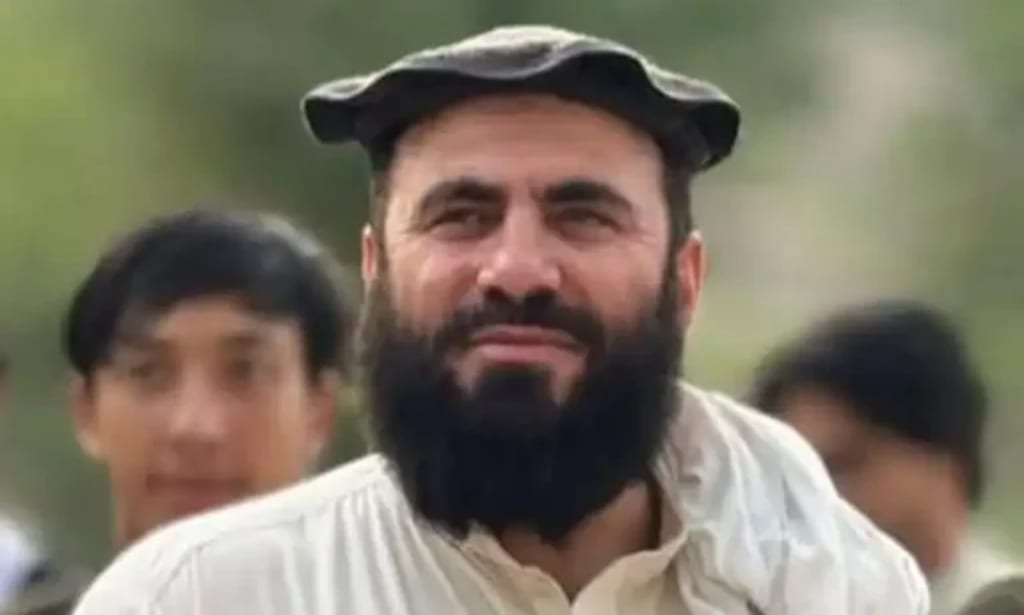
In the rugged terrains of Bajaur, where the echoes of conflict have long overshadowed the melodies of peace, emerged a figure whose quiet determination and unwavering commitment sought to redefine the narrative. Maulana Khanzeb, a revered Islamic scholar and dedicated political activist, stood as a testament to the power of resilience and the enduring spirit of the Pashtun people.
Early Life and Scholarly Pursuits
Born in Nawagai Tehsil of Bajaur District, Maulana Khanzeb hailed from the Salarzai-Shaykhan subtribe of the Tarkalani clan. His early education culminated in matriculation from Government High School, Nawagai. Driven by a thirst for knowledge, he pursued Islamic theology, completing the Dars-i-Nizami in 1999. Under the mentorship of the esteemed Sheikh-ul-Hadith Maulana Hassan Jan, Khanzeb not only delved deep into religious studies but also cultivated a profound understanding of the socio-political dynamics affecting his community.
Bridging Faith and Politics
Maulana Khanzeb's journey transcended the confines of traditional religious scholarship. Recognizing the intricate interplay between faith and governance, he aligned himself with the Awami National Party (ANP), a secular political entity championing Pashtun rights. As the Secretary for Ulema Affairs in the ANP's central cabinet, he adeptly bridged religious discourse with political activism, advocating for peace, education, and socio-economic development in the tribal regions.
Championing Pashtun Rights and Cultural Preservation
A prolific writer, Khanzeb authored a Pashto book detailing the rich cultural tapestry and history of Bajaur, aiming to instill a sense of pride and identity among the youth. His contributions to publications like Daily Shahbaz, Tribal News Network, and Pakhtoon Magazine further amplified his voice, addressing pressing issues and advocating for the rights of the marginalized.
In the political arena, he contested the 2023 general elections from NA-8 (Bajaur) on the ANP ticket, securing over 12,000 votes—a testament to his growing influence and the trust reposed in him by the electorate.
A Relentless Advocate for Peace
In a region marred by militancy and unrest, Maulana Khanzeb emerged as a steadfast proponent of peace. His involvement with the Bajaur Peace Action Committee and participation in anti-extremism demonstrations underscored his commitment to fostering harmony. Despite facing personal threats and surviving multiple attacks on his residence, including missile strikes that left him temporarily hearing-impaired, he remained undeterred in his mission.
The Tragic Assassination
On July 10, 2025, while campaigning for the "Aman Pasoon" (Peace March) scheduled for July 13, Maulana Khanzeb's life was tragically cut short. Unidentified gunmen on motorcycles ambushed his vehicle near Shindai Mor in Bajaur, resulting in his death and that of his police guard, Sepahi Sher Zada. Three others sustained injuries in the attack.
National Mourning and Legacy
The assassination sent shockwaves across the nation. The ANP declared three days of mourning, with leaders like Aimal Wali Khan and Mian Iftikhar Hussain condemning the attack and highlighting its implications on Pashtun consciousness and the broader peace movement. Prime Minister Shehbaz Sharif expressed profound grief, acknowledging Khanzeb's unwavering dedication to peace. Thousands attended his funeral in Nawagai, paying homage to a man whose life epitomized selfless service. The Human Rights Commission of Pakistan lauded him as a leading peace campaigner, emphasizing the void his demise left in the ongoing struggle for stability in the region.
An Enduring Inspiration
Maulana Khanzeb's legacy transcends his assassination. His life's work continues to inspire countless individuals committed to the ideals of peace, justice, and cultural preservation. In the annals of Pashtun history, he remains a symbol of resilience—a silent warrior whose voice, though silenced, echoes in the hearts of those who strive for a harmonious and dignified existence.
Maulana Khan Zeb was not just a scholar or politician—he was a fearless voice for peace, justice, and Pashtun identity. His legacy lives on in hearts committed to unity.
About the Creator
Mansoor ahmad
•Simple & Professional:
Hi, I'm Mansoor Ahmad — a passionate writer who believes in the power of words to inspire, heal, and connect. I write stories that speak from the heart.
• Creative & Engaging:
Storyteller by passion, learner by nature.
Keep reading
More stories from Mansoor ahmad and writers in Motivation and other communities.
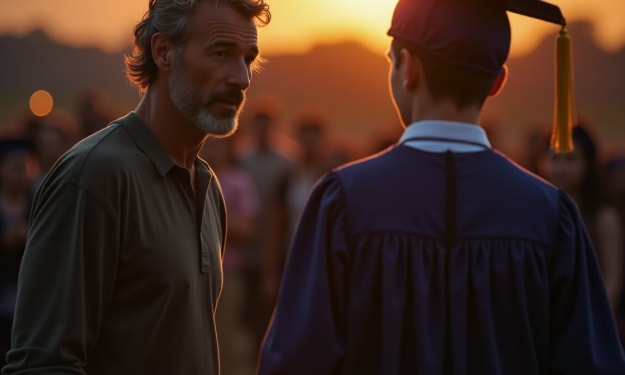
A Father’s Silent Sacrifice: The Unseen Pillar Behind His Son’s Journey.
The sun had just begun to rise, casting golden streaks through the worn-out curtains of a modest brick house. In that gentle morning light, Mansoor stood quietly in front of the mirror, adjusting the tie around his neck. Today was different. Today he would receive his university degree, a moment he had dreamt of for years. But as he smiled at his reflection, his thoughts drifted not to his accomplishments—but to his father, Kareem.
By Mansoor ahmad6 months ago in Motivation


Comments
There are no comments for this story
Be the first to respond and start the conversation.