
Living Before Dying: The Existential Wisdom of Zom 100
How a Zombie Apocalypse, Stoic Philosophy, and a Bucket List Inspire Us to Redefine Life’s Purpose
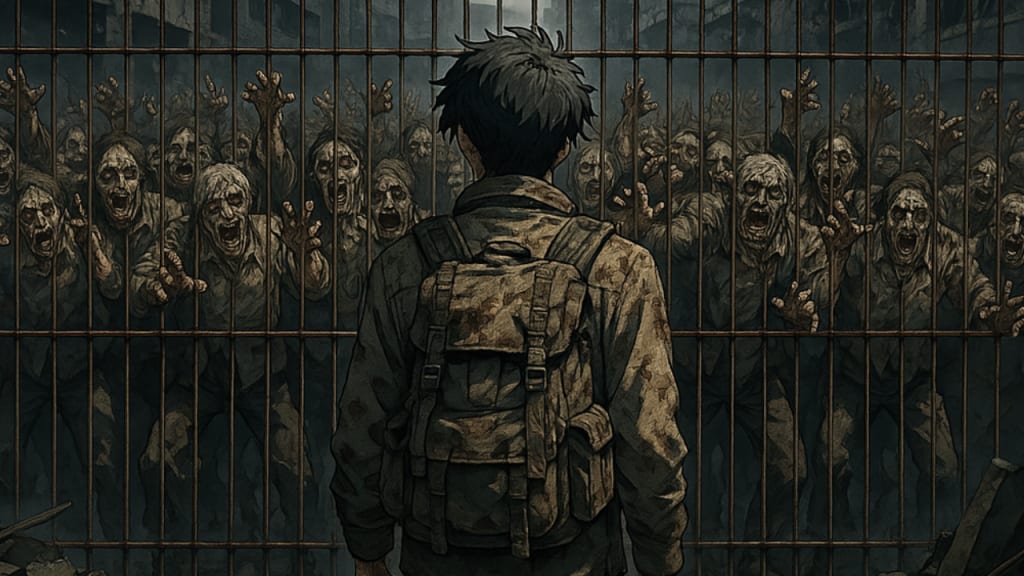
The fear of death, or the uncertainty of life itself, can play a powerful role in shaping our goals. The thought of our mortality often brings the fragility of life into sharp focus, granting us a clearer perspective on what truly matters.
Amidst our thousands of thoughts and dreams, it becomes easier to create a bucket list of achievable successes and experiences possible in our short lives. This awareness also helps us prioritize that list. After all, if I knew I only had one day or one week left, wouldn't I have to think about what I could truly accomplish in that time? What would be the absolute most I could do?
This very philosophy has been brilliantly explored by three renowned thinkers. Marcus Aurelius, a key proponent of Stoicism, argued in his book 'Meditations' (AD 161-180) that the inevitability of death is a vital guide for defining our values and goals. Another great Stoic, Seneca, discussed how awareness of death helps us to value and properly utilize every moment of our lives. Similarly, the German existentialist philosopher Martin Heidegger, in his famous work 'Being and Time' (1927), identified death as a central component of life.
Interestingly, Islamic philosophy echoes a similar sentiment. The Holy Qur'an states, "Every soul will taste death" (Surah Al-Imran, Verse 185) and "He gives life and causes death" (Surah Yunus, Verse 56).
We see a powerful visual representation of this philosophy in a Japanese anime series that first appeared in 2018. 'Zom 100: Bucket List of the Dead' masterfully weaves extraordinary philosophical ideas into a seemingly simple story. Following the manga's success, a live-action Korean drama series with the same name and core philosophy, but set in a realistic context, arrived on Netflix in 2023.
This horror-action-comedy blend also garnered significant praise from audiences, currently holding a rating of over 7 out of 10 on 'MyDramaList'—definitely worth a watch. The story revolves around a protagonist who is desperate to land a nine-to-five job at his dream company. But the question is, what happens after he gets it? In a city overrun by zombies, our hero, by a stroke of luck, survives the apocalypse.
He hadn't realized that the daily grind had already turned him into a living zombie long before the outbreak. His dream was to work for a big company with a great salary, a positive environment, and plenty of praise. The biggest perk? Exceptionally friendly colleagues. Who wouldn't want a job like that?
Most of us probably would. But we should also consider the downsides that come with the perks. I want to be clear: my goal isn't to constantly criticize the nine-to-five life. In today's world, someone who is doing 'something' is in a better position than someone doing nothing. We can hope that they might one day become an entrepreneur, finding freedom for themselves and creating opportunities for others.
However, this story shows us that with a bigger company comes greater responsibility and a heavier workload. It also highlights how workplace politics become more prevalent in larger organizations. Our protagonist, though, isn't too concerned with office politics. He's singularly focused on winning everyone over with his hard work, desperate for a promotion.
Seeing his dedication, his colleagues pile even more work onto him, revealing a subtle but clear hierarchy. This power dynamic makes the protagonist feel small, but he isn't one to give up. He continues to work from dawn till dusk. In a comically tragic scene, he sees the woman he likes getting a little too close to his boss. It's at this moment that he truly loses his sense of purpose.
His life is at a low point. First, for reasons unknown, he can't get his promotion. Second, he lives alone in a rented apartment, far from his family. Third, the woman he adores is slipping through his fingers. And fourth, the overwhelming workload has become a form of torture. Then one morning, after his alarm wakes him a little late, he rushes out for the office only to find the entire city, including his own apartment building, teeming with zombies. This is where the real story begins, so I won't spoil the rest.
Finding himself alone in a zombie-infested city, the protagonist, Akira Tendo, doesn't feel the loneliness he once did. He suddenly has an abundance of time—something that was once an impossible luxury during his working life. He becomes acutely aware of one thing: since everyone else has turned into a zombie, his own transformation is inevitable.
With the undead roaming all around him, the miraculously-survived Akira starts searching for a new meaning in life. He comes to a decision: before he turns into a zombie, he wants to complete 100 things he's always wanted to do. He wants to be the hero of his own story—a superhero.
You can find a fascinating blend of Friedrich Nietzsche's 'Übermensch' concept and Stoic philosophy in both the anime and the live-action series, where the central theme is death itself. Here, death is the inspiration to live. Death provides the timeline, the deadline, for fulfilling life's goals. After all, our life is just a collection of moments.
Akira Tendo's approach to setting and achieving his life's goals is incredibly compelling. He creates a bucket list of 100 items, ranging from the smallest, most achievable tasks and dreams to the grandest ones.
Many of us are risk-averse. We consider just being alive to be an achievement in itself. But Akira is not like that. For him, simply existing shouldn't be the sole purpose of a person's life. He believes that if we act, we will see results. We need to define our life's purpose and work towards it.
The way Korean and Japanese series and animations have been incorporating Stoic philosophy has elevated their films, series, and dramas to a higher level. 'Zom 100: Bucket List of the Dead' will entertain you, inform you if you're curious, teach you if you're willing to learn, and make you laugh or cry... it all depends on what kind of viewer you are.
I highly recommend both the Japanese anime and the Korean drama. Add them to your watchlist. Perhaps they'll inspire you to create your own bucket list before your time is up. Happy watching!
About the Creator
Keep reading
More stories from Selina Khatun and writers in Motivation and other communities.
Meet Your Sexual Shadow: The Hidden Desires That Secretly Run Your Life
We almost never want to kill ourselves. We want to kill the 'things' that torment us: the despair, the nagging sense of failure, the fear, the insecurity, the relentless inner critic, the envy, and the crushing lack of confidence.
By Selina Khatun 7 months ago in Psyche
What is your calling
What is a model human being? Can anyone follow all of these steps and guides in a life unpredictable? Yes there are privileged individuals out there who take a very structured path to success but for 90% of people in the world this is not reality, and mor
By Malachai Hough5 days ago in Motivation



Comments
There are no comments for this story
Be the first to respond and start the conversation.