
Lionel Messi: From Rosario Streets to Barcelona Dreams
Success Story

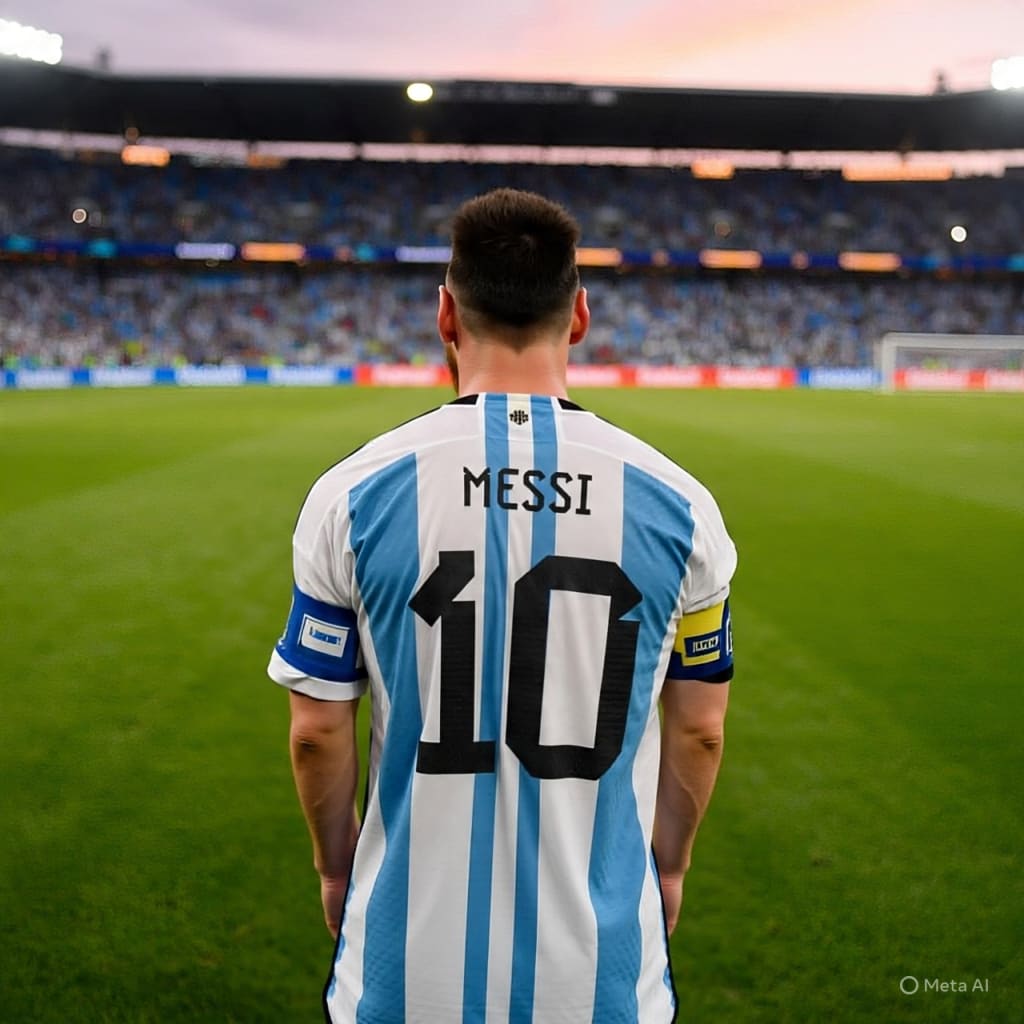
Lionel Messi: From Rosario Streets to Barcelona Dreams (Part 1)
When you think of Lionel Messi today, you think of a football genius. A man who has conquered every stage of the game — from Barcelona’s Camp Nou to lifting the World Cup trophy in Qatar. But before the glory, before the fame, there was a quiet boy from Rosario, Argentina, whose life was filled with challenges, doubts, and an uncertain future. His story is not just about football. It’s about family, sacrifice, resilience, and the belief that even the smallest boy can dream the biggest dreams.
---
🌱 Childhood in Rosario
Lionel Andrés Messi was born on June 24, 1987, in Rosario, a city in central Argentina known for its working-class spirit. His father, Jorge Messi, worked in a steel factory, and his mother, Celia, was a part-time cleaner. The Messi family lived a simple life, far from luxury.
Like many Argentine children, Messi grew up with a football at his feet. In the narrow streets of Rosario, he would spend hours playing with his brothers Rodrigo and Matías, as well as his cousins. Family and neighbors quickly noticed that this boy had something different. Even when the ball was too big for his tiny legs, Messi had an extraordinary sense of control.
But there was one thing that worried everyone: his size. While other kids his age were growing taller and stronger, Messi remained unusually small. His parents hoped he would catch up, but the difference became more obvious with each passing year.
---
⚽ The Early Signs of a Football Genius
Messi’s first organized team was Grandoli, a small local club coached by his father. He was only four years old when he started playing, and though he was shy and quiet, the ball seemed like an extension of his body. Coaches and parents from other teams would gather to watch this tiny boy dribble past kids twice his size.
At just six years old, he joined Newell’s Old Boys, one of Rosario’s top youth clubs. There, Messi became part of a team nicknamed “The Machine of ’87”, made up of boys born the same year. Together, they went on an incredible winning streak — more than 500 matches in five years. But Messi was always the star, scoring goals in ways that left spectators in disbelief.
Still, despite the magic on the pitch, a storm was brewing. At age 10, Messi was diagnosed with a growth hormone deficiency (GHD). His body was not producing enough of the hormone needed to grow properly. Doctors warned that if untreated, Messi might never grow taller than 4 feet 7 inches.
The treatment existed, but it was expensive — around $900 a month for hormone injections. For the Messi family, this was an impossible amount. Jorge’s job at the factory could barely cover basic needs, and Celia’s part-time work helped little. Their son had the talent of a future legend, but without treatment, he might not even reach professional level.
---
💔 Rejection in Argentina
The Messi family tried everything. They approached Newell’s Old Boys, hoping the club would cover the medical expenses. But the club was struggling financially and said no. They then turned to River Plate, one of Argentina’s biggest clubs. Messi even had a trial there and impressed the coaches, but again, the costs of treatment made the deal fall apart.
For a while, it seemed like the dream might end right there. The Messis had the talent, the desire, but not the money. Young Lionel continued playing, continued scoring goals, but the weight of uncertainty hung over the family.
---
✈️ The Barcelona Miracle
In 2000, when Messi was just 13 years old, everything changed. The family heard that scouts from FC Barcelona were looking for young talent in South America. Jorge and Lionel traveled all the way to Spain, hoping for a miracle.
At Barcelona’s famed training ground, Messi was asked to show what he could do. He dribbled past defenders with ease, controlled the ball like no other, and scored goals as if it were second nature. The coaches were stunned. One of them reportedly said:
"This boy is different. He is born for football."
But there was still a problem — Messi’s age and medical condition. Many at the club hesitated. They were unsure if a small Argentine teenager was worth the investment. The turning point came when Carles Rexach, Barcelona’s sporting director, watched Messi play. Rexach was so convinced by his talent that he grabbed a napkin in a restaurant and wrote a promise: Barcelona would sign Messi and pay for his treatment.
That napkin became one of the most famous contracts in football history.
---
🌍 A New Life in Spain
In 2001, the Messi family moved to Barcelona. It was not an easy transition. They left behind relatives, friends, and the life they knew in Rosario. For Lionel, who was shy by nature, the move was overwhelming. He barely spoke Spanish in the Catalan dialect, and he often felt homesick.
But when he stepped onto the pitch at La Masia, Barcelona’s youth academy, everything made sense. Messi finally had access to proper medical treatment. Slowly, he began to grow. More importantly, he was now surrounded by top-level coaches and teammates who helped sharpen his skills.
Even among Barcelona’s brightest prospects, Messi stood out. His low center of gravity, balance, and speed were unmatched. Coaches noticed how he could change direction in an instant, leaving defenders helpless. He wasn’t just fast; he was smart, reading the game two steps ahead of everyone else.
---
🥇 First Steps Toward Stardom
By 16, Messi was already training with Barcelona’s first team. At 17, in October 2004, he made his official debut in La Liga against Espanyol, becoming the youngest player to represent the club in an official match. A year later, he scored his first senior goal against Albacete, assisted by Ronaldinho.
Ronaldinho, then Barcelona’s biggest star, reportedly told teammates:
"This kid will be even better than me."
And he was right.
---
✨ Part 1 Closing Thoughts
Lionel Messi’s story up to this point is already a tale of resilience. A boy from a working-class family, told he might never grow tall enough for football, who faced rejection after rejection in his homeland. Yet through determination, sacrifice, and an act of faith from FC Barcelona, he found a new home and a new chance at life.
Part 1 of Messi’s journey is about struggles, family support, and survival. But Part 2 will be about his rise to global superstardom — from winning Ballon d’Or titles, dominating European football, facing heartbreak with Argentina, and ultimately achieving the greatest triumph of all: the 2022 World Cup.
Lionel Messi: The Making of a Legend (Part 2)
When Lionel Messi made his debut for Barcelona at the age of 17, few could have predicted that this quiet, small boy from Rosario would one day become the heartbeat of the club. But with every game, Messi began rewriting football history. His journey from being Ronaldinho’s apprentice to becoming the greatest player of all time is nothing short of extraordinary.
---
🌟 Rising at Barcelona
By 2005, Messi was no longer just a promising youngster. He had become an essential part of Barcelona’s attack. With Ronaldinho guiding him, Messi started showing flashes of genius — darting runs, impossible goals, and an uncanny ability to read the game.
In 2006, Messi won his first Champions League title as part of a Barcelona side that defeated Arsenal in the final. Though he didn’t play due to injury, his presence was already being felt.
The breakthrough came in 2007 when Messi scored a wonder goal against Getafe, dribbling past six defenders in a style eerily similar to Diego Maradona’s legendary World Cup goal against England. Argentina and the world took notice: this was not just a rising star — this was the heir to Maradona.
---
🏆 The Guardiola Era
When Pep Guardiola became Barcelona’s coach in 2008, Messi’s career truly exploded. Guardiola built the team around him, alongside legends like Xavi, Iniesta, and Puyol. The style was fast, fluid, and relentless.
In 2009, Barcelona achieved a historic treble, winning La Liga, Copa del Rey, and the Champions League. Messi was the star, scoring in the Champions League final against Manchester United. That year, he won his first Ballon d’Or, the award given to the best player in the world.
It was only the beginning.
Between 2009 and 2012, Messi became virtually unstoppable. He won four consecutive Ballon d’Ors, breaking records that seemed impossible. In 2012 alone, Messi scored 91 goals in a single calendar year, surpassing Gerd Müller’s long-standing record.
---
⚔️ The Ronaldo Rivalry
No story of Messi is complete without mentioning Cristiano Ronaldo. While Messi was dazzling in Barcelona, Ronaldo was conquering Europe with Manchester United and later with Real Madrid.
The rivalry between Messi and Ronaldo defined a generation of football. Fans around the world debated endlessly: Who is better? Ronaldo with his power, athleticism, and lethal finishing, or Messi with his vision, dribbling, and pure artistry?
Every El Clásico (Barcelona vs Real Madrid) became a global spectacle. Millions tuned in just to watch Messi and Ronaldo go head-to-head. While rivalry fueled debates, it also pushed both players to new heights, ensuring that football fans witnessed an era unlike any other.
---
🇦🇷 Heartbreak with Argentina
While Messi was winning everything with Barcelona, his journey with Argentina’s national team was filled with pain.
In 2014, Messi led Argentina to the World Cup final in Brazil. The nation dreamed of a repeat of Maradona’s 1986 glory. Messi carried the team through, scoring crucial goals and winning the tournament’s Golden Ball. But in the final against Germany, Argentina lost 1-0 in extra time. The image of Messi walking past the World Cup trophy, head bowed, became a symbol of heartbreak.
Worse followed. In 2015 and 2016, Argentina lost back-to-back Copa América finals to Chile on penalties. After the 2016 loss, an emotional Messi announced his retirement from international football, saying, “The national team is over for me. It’s not for me.”
But the world refused to accept it. Fans across Argentina begged him to return. Children held up signs, saying: “Don’t go, Leo. Football needs you.”
Messi came back.
---
🌍 The Later Barcelona Years
Messi continued to dominate at Barcelona, but as years passed, cracks began to show. The club’s management made poor financial and sporting decisions, leading to decline. Still, Messi gave everything. He scored hat-tricks, broke records, and carried the team single-handedly at times.
In 2019, Messi won his sixth Ballon d’Or, further cementing his legacy. But behind the scenes, frustration grew. Barcelona’s shocking 8-2 defeat to Bayern Munich in the Champions League was a low point.
In 2021, financial issues forced Barcelona to announce the unthinkable: Messi was leaving the club.
---
🇫🇷 A New Chapter at PSG
Messi’s tears at his Barcelona farewell press conference broke the hearts of millions. After 21 years, his home was no longer his. Soon after, he signed with Paris Saint-Germain (PSG).
In France, Messi joined Neymar and Kylian Mbappé, forming a dream attacking trio. His first season was challenging, as he adapted to a new league, new city, and new style. Critics questioned if Messi’s magic had faded. But in his second season, he silenced them — leading PSG to titles and showing flashes of his brilliance.
---
🏆 The Ultimate Redemption: World Cup 2022
All doubts about Messi ended in Qatar 2022. At 35 years old, many thought the World Cup would be his swan song. Instead, it became his masterpiece.
Messi scored seven goals, provided crucial assists, and led Argentina with unmatched passion. His performances against Mexico, the Netherlands, Croatia, and France will be remembered forever.
The final against France was a thriller — 3-3 after extra time, decided by penalties. Messi scored twice, Mbappé scored a hat-trick, and the world held its breath. Argentina triumphed, and Messi finally lifted the trophy that had haunted him his entire career.
The image of Messi kissing the World Cup in his captain’s armband became immortal. Argentina celebrated for weeks, millions filled the streets, and Messi was hailed as the greatest of all time.
---
🌟 Legacy of Lionel Messi
Today, Lionel Messi is more than just a footballer. He is an icon of resilience, humility, and excellence. From a small boy in Rosario who needed hormone treatment, to a global superstar who inspired billions, his journey is a reminder that dreams can come true with determination and support.
Off the pitch, Messi is known for his modesty. Despite his fame, he avoids scandals, focusing on family and charity work through the Leo Messi Foundation, which supports healthcare and education for vulnerable children.
With 8 Ballon d’Ors, countless records, Champions League titles, and the World Cup, Messi has nothing left to prove. Yet, every time he steps on the field, he plays with the same joy as the boy from Rosario kicking a ball on the streets.
---
✨ Closing Thoughts
Lionel Messi’s story is not just about football. It’s about fighting against the odds, about family sacrifices, about carrying a nation’s hope, and about never giving up. From Barcelona’s rise to Argentina’s redemption, Messi’s journey will be told for generations.
As one fan wrote after the 2022 World Cup:
“We are lucky to live in Messi’s time.”
About the Creator
Frank Massey
Tech, AI, and social media writer with a passion for storytelling. I turn complex trends into engaging, relatable content. Exploring the future, one story at a time
Keep reading
More stories from Frank Massey and writers in Motivation and other communities.
Madonna: The Making of a Pop Queen
Madonna: The Making of a Pop Queen (Part 1) Madonna Louise Ciccone, better known to the world simply as Madonna, is a name synonymous with reinvention, boldness, and artistic fearlessness. To millions, she is the Queen of Pop, a cultural chameleon who has never stopped pushing boundaries. But before the global fame, before the controversies, and before the billion-dollar empire, there was a girl from Michigan with a dream and $35 in her pocket.
By Frank Massey 4 months ago in Motivation
“He Kept Going When No One Was Watching — And That Changed Everything”
No one ever noticed the days he almost gave up. There were no messages asking if he was okay. No one wondered why he became quieter. No one asked how much effort it took just to keep going. To the world, he was just another ordinary man. His name was Ayaan. Ayaan’s life didn’t collapse in one dramatic moment. It slowly faded. Missed opportunities. Rejected ideas. Silent disappointments. Every failure was small, but together they became heavy. He had dreams once. Big ones. Dreams that kept him awake at night, imagining a future where his hard work would finally matter. But over time, those dreams began to feel unrealistic—almost embarrassing. People around him seemed to move forward effortlessly. They celebrated promotions, achievements, and milestones. Ayaan watched from the side, smiling politely while feeling invisible. At work, his efforts were ignored. Among friends, his voice faded. At home, expectations weighed heavily on him. Slowly, a dangerous thought settled into his mind: “Maybe I’m not good enough.” That thought followed him everywhere. It followed him on crowded buses. It followed him into sleepless nights. It followed him every time he tried again and failed. One night, after scrolling through endless success stories online, Ayaan closed his phone and stared at the dark ceiling. His chest felt tight, not because of pain—but because of exhaustion. He whispered quietly, “How long do I keep trying?” There was no answer. But that night, Ayaan made a decision—not a loud one, not a confident one. A tired decision. He decided to keep going, even if nothing changed. The next morning felt the same. The same routine. The same doubts. The same fear of wasting his life. But Ayaan showed up anyway. He worked when no one praised him. He studied when no one guided him. He practiced when no one believed in him. Some days, motivation disappeared completely. On those days, discipline took over. He reminded himself: “I don’t need applause. I need progress.” Weeks passed. Nothing dramatic happened. No sudden success. No recognition. No miracle. But something subtle began to shift. Ayaan became calmer under pressure. He learned to sit with discomfort instead of running from it. He stopped comparing his journey to others. The silence that once scared him now became his training ground. Months later, a serious problem appeared at his workplace. It was complicated, risky, and easy to blame on someone else. Most people avoided it. Some pretended it wasn’t their responsibility. Ayaan didn’t announce himself. He didn’t seek attention. He simply started working. Late nights. Mistakes. Corrections. Learning. There were moments he wanted to quit. Moments when fear whispered, “You’re not ready.” But he answered back, “I’ll learn.” Slowly, the problem began to disappear. Not perfectly—but steadily. People noticed, quietly. One afternoon, his manager called him into the office. Ayaan expected criticism. Instead, he heard a question that stunned him: “Where did you learn all this?” Ayaan paused. How could he explain years of silent effort? How could he explain working when no one cared? He simply replied, “I kept going.” That moment didn’t change his life overnight. He didn’t become famous. He didn’t suddenly become successful. But it changed something far more important. His belief in himself. For the first time, Ayaan understood that life doesn’t always reward effort immediately. Sometimes, it watches. It watches who continues without praise. Who improves without recognition. Who grows in silence. Years later, Ayaan looked back at the version of himself who almost quit. The man who felt invisible. The man who thought no one was watching. And he smiled. Because he finally understood the truth: Life was always watching. Not to judge. Not to rush. But to see if he would keep going when it was hardest. The world doesn’t reward those who only work when they’re seen. It rewards those who build strength in silence. And sometimes, the moment that changes everything doesn’t come with applause. It comes quietly. After patience. After effort. After consistency. That is when everything finally begins to change. Final Message Keep going—even when no one is watching. Especially then.
By Inayat khan4 days ago in Motivation



Comments
There are no comments for this story
Be the first to respond and start the conversation.