
Lessons from My No-Buy Year
Indulgence doesn’t equal freedom


Late-stage capitalism has obscured our idea of normal consumption. We are pressured to spend our hard-earned income on material goods that add nothing but indulgence to our lives. Whether it’s Stanley Cups, special edition books, or Bath & Body Works lotion, there is something to allure even the most frugal of us.
Thanks to curated algorithms, social media sites know me better than I do. While scrolling TikTok and Instagram, we are bombarded with advertisements and haul videos. And I, like most people, fall prey to sales and ads that seem perfectly tailored to my interests. I frequently get shown cute cat toys, books, and home decor that, in the moment, I feel I simply must have.
These in-the-moment online purchases offer a dopamine hit, but it never lasts long. This has trapped me in a cycle of instant gratification and depleting funds.
My partner and I sat down, with the help of a Notion template, and wrote down all of our spending habits. Writing each purchase down was painstaking, but effective. It was just the amount of accountability we needed to shift our view on our household spending. We realized that we both had negative spending habits that were costing us hundreds of dollars each month.
We decided it was time to tighten our budget and limit our spending to the essentials. I found the No-Buy trend online and have adapted my lifestyle accordingly. It has taken several months, but I am now in a much better place financially.
Thanks to the No-Buy trend, I have been able to save more of my monthly income on things that actually matter and change my perspective on shopping.
The No-Buy trend encourages us to stop all unnecessary purchases. The main goal is to save as much of our income as possible while encouraging mindful spending.
The No-Buy trend is, in actuality, normal consumerism. Buying the things we need while thinking deeply about the rest.
It is up to the individual to set limits and strict budgets according to their lifestyle and saving goals. This video, by finance Youtuber, Christina Mychas, helped me pinpoint just where I wanted my money to actually go. She highlights the importance of keeping your goals simple and clear, while also bearing in mind that slipups are almost inevitable in our consumerist world. She gave me a lot of encouragement and the tools I needed to prepare for my no-buy year.

I spent two months observing my budget. I manually tracked everything from transportation fees and groceries to movie theater tickets and ice cream in a designated spending journal. I came to understand that I was spending around 500 USD each month on Food delivery, coffee shops, and shopping. I reflected on these purchases and realized that I hardly remembered what I even bought. So, I decided to cut this number down to 200 USD so I could put the other 300 into a high-yield savings account.
I still wanted a bit of money so that I could meet my friends and enjoy the occasional nice meal. Since I am a freelancer and work from home, I don’t get a lot of adult interaction, so meeting friends feels like a necessity. Also, with freelancing, I do not have a set income, so keeping my spending limited helps to ensure that I’m not unexpectedly in the red. Being so strict that I could never enjoy my life would bring me a lot of stress and would ultimately not be sustainable. This budget of 200 dollars ultimately saves me money each month, and it also gives me the wiggle room to make mistakes and not harbor on feeling guilty.
Most purchases are not investments. Only homes tend to increase in value, while everything else depreciates with time.
Throughout my life, I’ve been encouraged to ‘invest’ in good shoes, bags, and accessories. I understand why people encourage buying a higher-priced item, in the hope that it is of better quality. But this isn’t always the case. It takes a bit a research and time to figure out which items are actually worth your money.
Everyone has their vices. I used to spend a lot of money each month on coffee shop visits and bookstores. They are my happy place. But I have so many books that still need to be read at home. So, I decided to write down all the books I’ve been wanting to buy in my journal. This way, I can alleviate the initial urge to swipe my card and think critically on the books I want to have in my life.
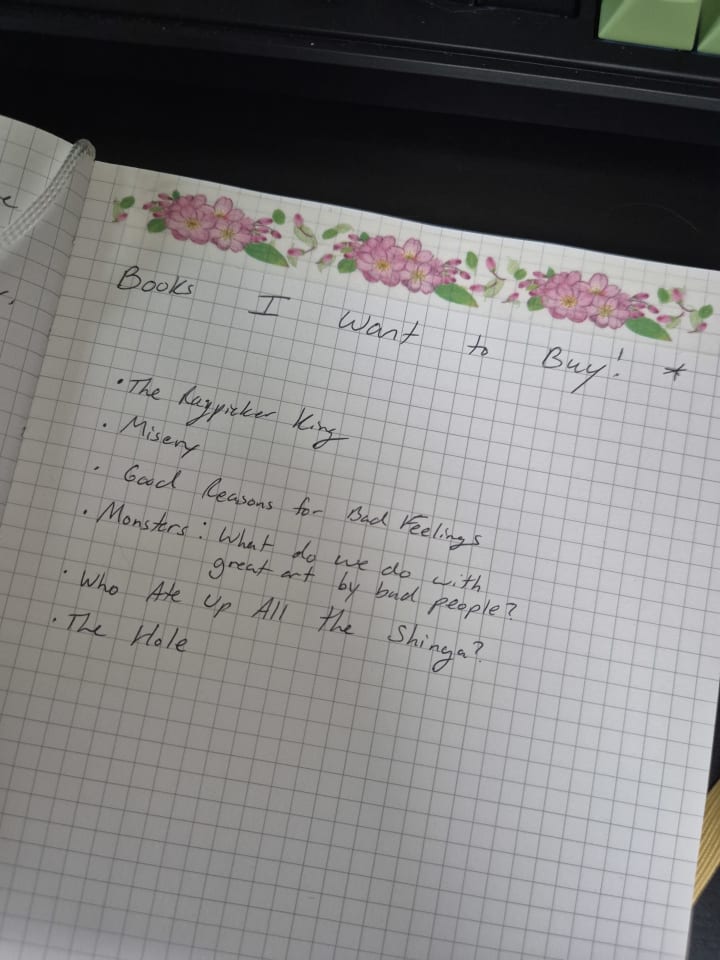
Journaling my wants has greatly helped me stop impulse purchases. Now I also write down clothes and home decor items, too.
I had to rewire my brain to avoid unnecessary purchases. Once you get accustomed to a certain lifestyle, it’s hard to downgrade.
When I was in college and throughout my early twenties, I lived paycheck to paycheck. I worked at least 2 jobs just to pay for rent, food, and my school supplies. It was a struggle, and I often had to rely on the kindness of my more economically stable friends to get by. Once I got my teaching job in South Korea, I was finally making what felt at the time, big adult money. But with making more money, I ended up wasting most of it.
E2 Visa holders have their housing provided by the school. Pay isn’t great, but it was much more than I was making as a cashier in America. From the money I was saving on rent, I could focus on repaying student loans and enjoying my money for the first time. But this was the start of my bad spending habits.
Most of my income went to alcohol, clothes, and skincare. I was so excited to be in South Korea, so I took lots of trips with friends and went out every weekend to enjoy the nightlife. I had a lot of fun, and many of those nights are fond memories for me. But ultimately, I regret wasting so much money on things that did not provide me with long-term joy or fulfillment.
Now that I’m in my thirties, I’m making twice as much money, but I’m still struggling with student loan debt and renters’ burden. I’ve learned that indulgence doesn’t equal freedom. Short term enjoyment and purchases won’t make me happy in the long run. I must have clear goals and a lot of willpower if I’m ever going to own a home, pay off these debts, and feel financially secure enough to start a family.
In June, I stuck to my new budget, and I’m so satisfied with the results. Not only did I achieve my goals of putting 300 into a high-yield savings account, but I also spent only 200 on the things that sparked joy. I got to see a movie with my husband, enjoy some delicious coffee, and buy some Pride Month merch from my favorite TV show.

Since I was able to save so much in June, I don’t feel guilty about spending a little more in July.
Spending will always be up and down. There’s always a holiday or birthday to consider. So, I hope that this new budgeting system will continue to give me the freedom I need to not only enjoy my life, but also pave the way for the future I want.
I’d recommend a No-Buy month or year to anyone looking to challenge their negative spending habits. Take your time and don’t feel guilty about enjoying the little things. Happy saving!
About the Creator
Keep reading
More stories from Kera Hollow and writers in Motivation and other communities.
My Painfully Realistic First Year of Freelancing
March 4th marked my final day as a full-time teacher. In the past five years, I worked as the head teacher at my last private academy. As Head Teacher, I worked as the middleman between Korean and Native English teachers. My duties included creating and checking lesson plans, approving schedules, leading after-school programs, pitching field trip ideas and extracurricular activities, and smoothing out any cultural miscommunication that sometimes happens in international settings. all this, plus the regular work of a full-time teacher in charge of seven-year-old students.
By Kera Hollow2 months ago in Motivation


Comments (1)
This sounds similar to what I am doing where I only give myself so much money a month for buying things. I'm starting it now and looking forward to how it changes things.