
In Defense of the Übermensch
A Journey into Friederich Nietzsche’s Most Well Known & Controversial Philosophy

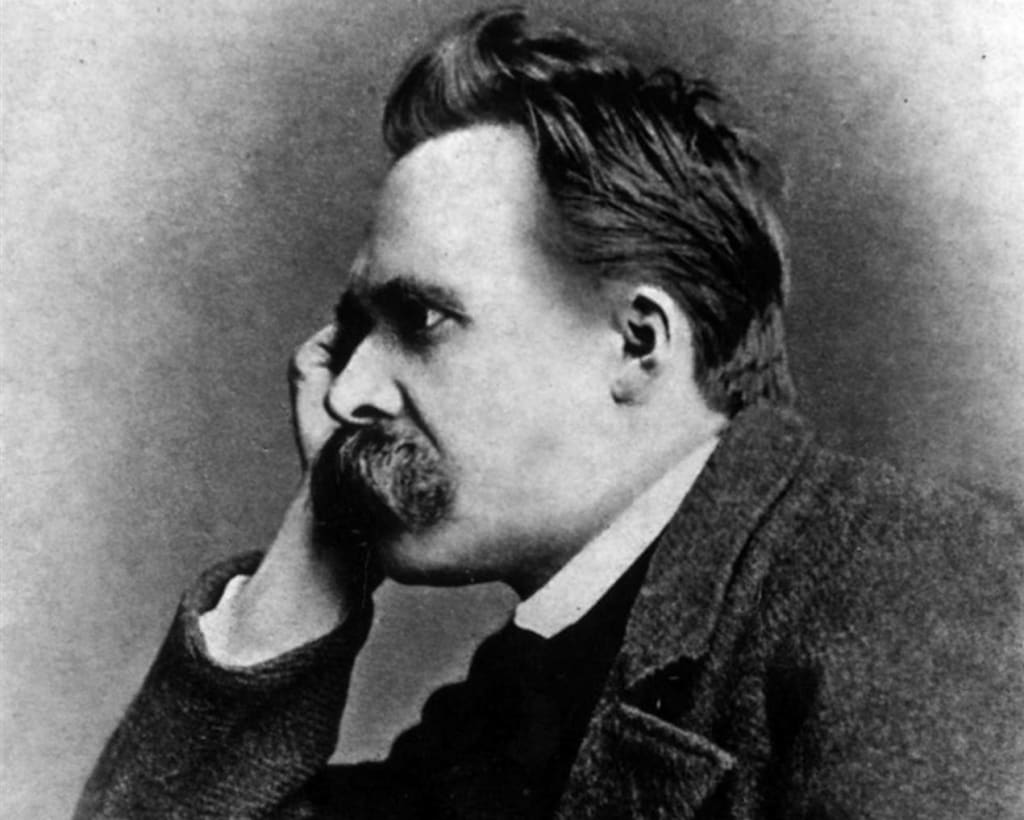
First off, the name is pronounced Nietzsche (as in “KNEE-CHA”); not “NITCH”, or “NEETCH”, or “KNEE-CHEE”. However, the pronunciation of this 19th Century German philosopher’s name doesn’t change the fact that he is one of the most referenced philosophers in pop culture. Such references range from the famous Richard Strauss composition "Also Sprach Zarathustra" (also known as the opening theme of Stanley Kubrik's 2001: A Space Odyssey or Elvis Presley's entrance cue during his "Las Vegas Jumpsuit Era"), the opening of the 1982 fantasy film Conan the Barbarian with his famous quote “That which does not kill us makes us stronger.”, to the Black Sabbath 2013 song God is Dead?. For those who know nothing of the man, Frederich Nietzsche was a philosopher who wrote and lectured in the latter half of the 1800’s, donned a walrus mustache, and believed that everything in this life is meaningless. In order to give meaning to life, we must overpower everyone else and obtain our wants and desires. To do so, makes you an “übermensch” (or superman).
However, this is anything but what the real Nietzsche and his philosophy is all about and he is just as misunderstood as the teenage loners who idolize him for all the wrong reasons. In fact, the real Nietzsche was much more subtle and complex in his philosophy than he was simple and iconoclastic. Sure, he did believe that such moral laws like “Thou shalt not kill.” shouldn’t come from an objective authority, like God, or Nature, but by no means does that make him a nihilist or a pessimist. He believed that when we remove the idea of an objective establishment of morality, we as human beings can live in a more fulfilling manner. A manner for which we are not obligated to be selfless, but also have no need to be selfish. For Nietzsche himself wrote along the lines of how the consequences of tearing down all moral truths are the opposite of what one might expect of such an act. Not at all melancholic or depressing, but something like a new and raw source of light, satisfaction, and potential. Furthermore, Nietzsche also describes his theory of the übermensch as a theory with Darwinian roots; implying that since the evolutionary scale doesn’t permanently stop at Homo Sapiens, he is trying to examine the ideas as to what that next phase will look like and perform (both physically and mentally). A mammal-like species superior to the current state of humans. A superman; an übermensch. Which just begs the question as to how a philosophy as that, became one associated with supremacy, domination, conquest, genocide, ethnic cleansing, racism, sexism, and eugenics. The answer is hidden not in plain sight, but in the open historical record.
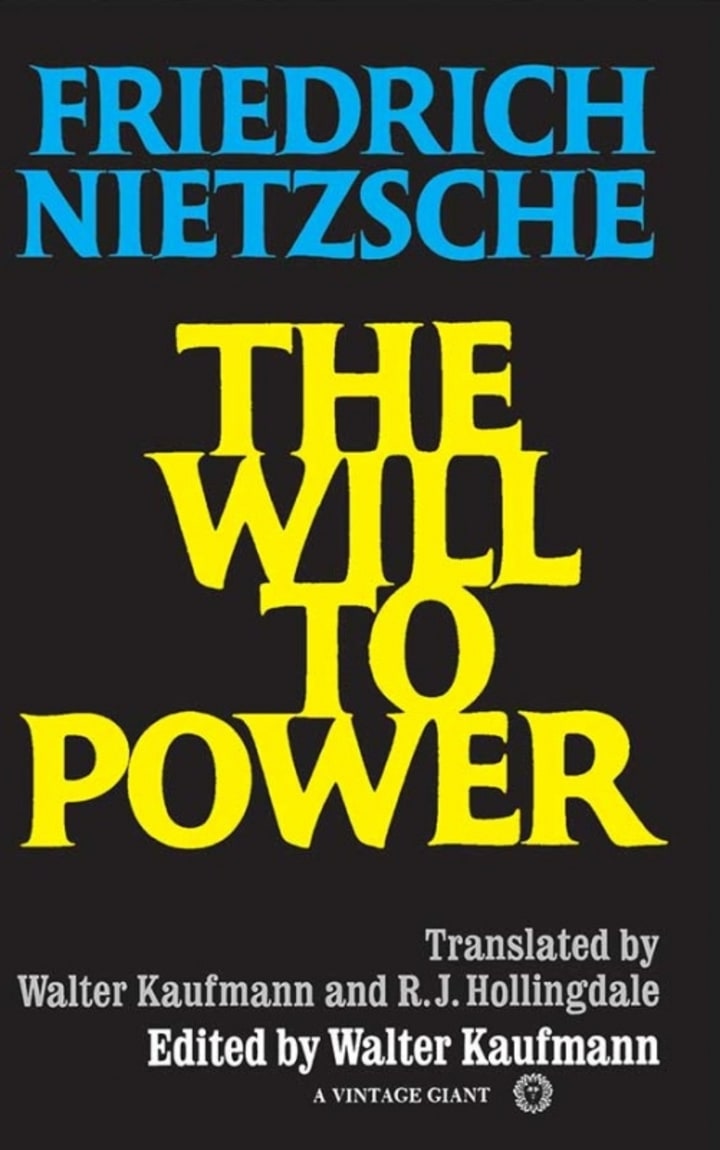
When Friederich Nietzsche died in 1900, his sister inherited his estate. Through this inheritance, she edited his writings and later published The Will to Power under his name. This posthumous publication promoted an early version of Nietzsche’s philosophy prior to his übermensch theory (the misinterpreted theory of how “might makes right” for the sake of human advancement). Furthermore, Nietzsche’s brother-in-law who married his sister was a notorious anti-semite, who indoctrinated his wife into his flawed dogma, which frequently prompted Nietzsche (during his lifetime) to write several cease and desist letters against them; referring to anti-semites as being as valuable as aborted fetuses (making Nietzsche definitively anti-anti-semetic). Nevertheless, his sister’s publication of The Will to Power was later adopted into the philosophical doctrines of Adolf Hitler and the Nazis during the Holocaust and the Second World War. So by the time Nietzsche’s writings made their way into the mainstream culture of the United States, Americans in politics, academia, and the general public were pre-disposed to proving him wrong.
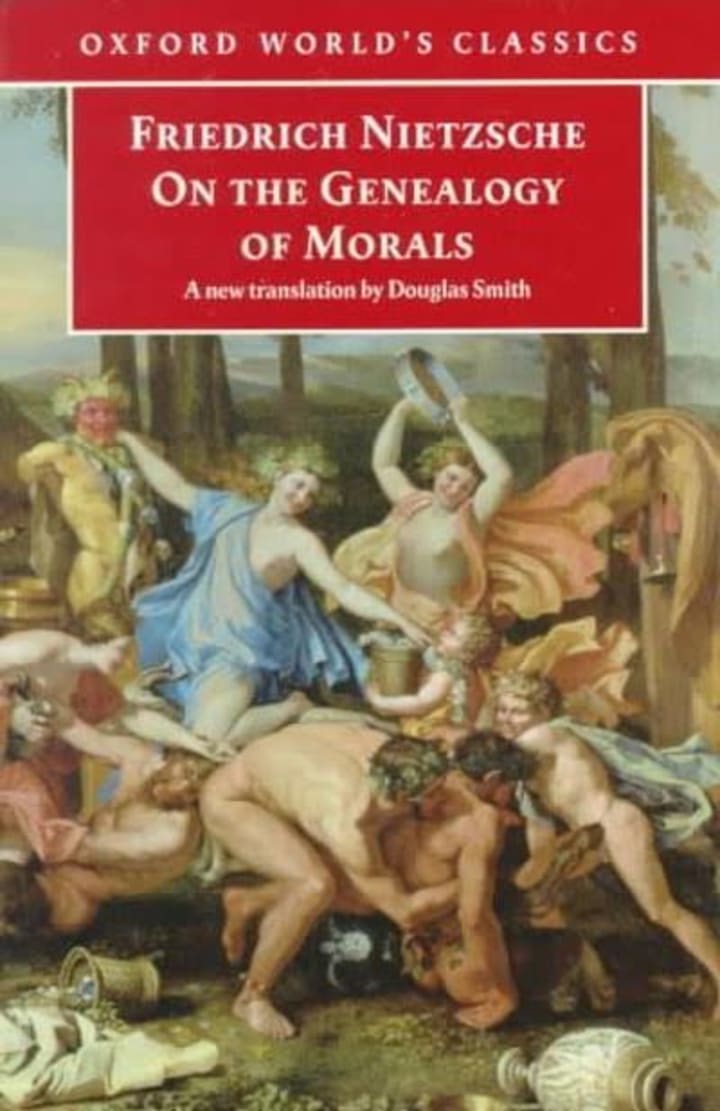
For the most common thing about Nietzsche that people tend to confuse and misunderstand is his “Master & Slave” concept. Yes, it is true that the terms “master” and “slave” and this concept appears in his book On the Genealogy of Morals. However, if one reaches the conclusion that the concept’s purpose is to prove that all humans must become masters rather than slaves, they are misunderstanding the text. In fact, the only place where you’ll find it is in Essay One of the book. It is never mentioned anywhere else (not in Essay 2, Essay 3, or even the Preface). Within the first essay, the reader is told the story of how our Judeo-Christian ethics came into being (The meek shall inherit the Earth, self-sacrifice is virtuous, pride, greed, and avarice are sinful, etc.). In a nutshell, in the days of the Bronze Age, human civilizations consisted of two demographics of people. There were the masters (nobility and aristocracy) who owned land, were wealthy, and lived well-fed and satisfactory lives, followed by the slaves (the peasantry); people who upon their subjugation, these masters depended on for their well-fed and satisfactory lives. The masters looked up on themselves while looking down on others. To express this, such rhetoric and vocabulary as “good” to refer to themselves and “bad” to describe the slaves and the peasantry. Because of this, Nietzsche referred to this mindset as “Master Morality”. Then, a cultural revolution took place. The slaves realized that they were the true bearers of power to place themselves above the masters by inverting this rhetoric. Suddenly, the high class and wealthy masters became connotated with the word “evil”, while the humbleness and poverty of the slaves became “good”. They praised themselves for their self-sacrifices and their other worldly virtues associated with the rewards of the afterlife; a form of reality beyond our own.
However, Nietzsche believed that this “Slave Morality” was harmful and unhealthy, on the grounds that it requires the necessity of human beings becoming transcendent of their earthy selves and shifts their focus away from experiencing this current life as we know it as the ultimate and full form of reality. Yet, he also believed that by no means should we return to “Master Morality”. His belief was that we could use elements from both moral standings to create an equilibrium of introspection to advance beyond all established moral systems. In fact, his main point is to showcase how it is possible to create an account of human ethics that doesn’t necessarily originate from any divine entity or objective standard. Since these ethical standards are ultimately human and historically determined, he cries out for a reevaluation or all values; which also brings up another misunderstood aspect of Freiderich Nietzsche. The idea that Nietzsche’s work is based in nihilism and depression. The argument being that since values are apparently valueless, then life itself has no meaning, and therefore, no reason to think positive or be optimistic. Not really.
Nietzsche only claims that values have no objective value and that he wants us to set aside our sense of dogmatic moral systems, because they tell us to follow the same fixed sense of ethics repeatedly, because they are associated with an eternal truth. The beauty of Nietzsche’s philosophy, is that one doesn’t need to believe in an eternal truth in order to have and experience a meaningful life. Without objective morality, we become free to live our lives by our own moral standards. Ethics become a more creative element of the human condition; like a form of art. That is Nietzsche’s true definition of an übermensch. Somebody who has transcended above the current state of humanity to a superior level. A pop star who lives by their own rules and doesn't answer to the lowly ideas of good or bad, black or white, and right or wrong, could (in theory) be an übermensch. However, they must be cautious not to not be 100% controlled by the rules for which they create; and if they really use this philosophy to justify actions that are only self-serving, they will only fall victim to the trap of being ruled by the ethical system of egotism. As far as Nietzsche is concerned, that is anything but true freedom. He believed that true freedom lies in the realm of deep introspection and psychological experimentation. We have to test out these ways of living and from these experiments, determine which way is best; suggesting from his own experimentation, that being egotistical and mean-spirited doesn’t work to make us happy or healthy.
About the Creator
Jacob Herr
Born & raised in the American heartland, Jacob Herr graduated from Butler University with a dual degree in theatre & history. He is a rough, tumble, and humble artist, known to write about a little bit of everything.
Keep reading
More stories from Jacob Herr and writers in Motivation and other communities.
Bloody Sam On the Lam
His name is one that brings memories of a mad genius; a cinema auteur with balls of steel. He was a man who would redefine the Western genre and horrifically expose the true nature of inhumanity and violence, that the old school studios and television audiences took for granted; while at the same time, serving as the ground work for the newest generations of directors and Hollywood rebels. This is the story of Sam Peckinpah.
By Jacob Herr6 years ago in Geeks
How Powerful Questions Bring Out the Best in Teams
Teams achieve their best results when curiosity guides their conversations. While clear direction matters, questions often shape stronger outcomes than instructions alone. When leaders and team members ask meaningful questions, they activate thinking, trust, and shared responsibility. As a result, teams move beyond surface-level performance and begin to unlock deeper potential together.
By Anthony Qi7 days ago in Motivation



Comments
There are no comments for this story
Be the first to respond and start the conversation.